
Classroom lesson · Wildlife · 🇱🇸 Lesotho

Bearded Vulture

The bone-dropping mountain giant with a flame-coloured chest

Photo · Wikimedia Commons

What is it?

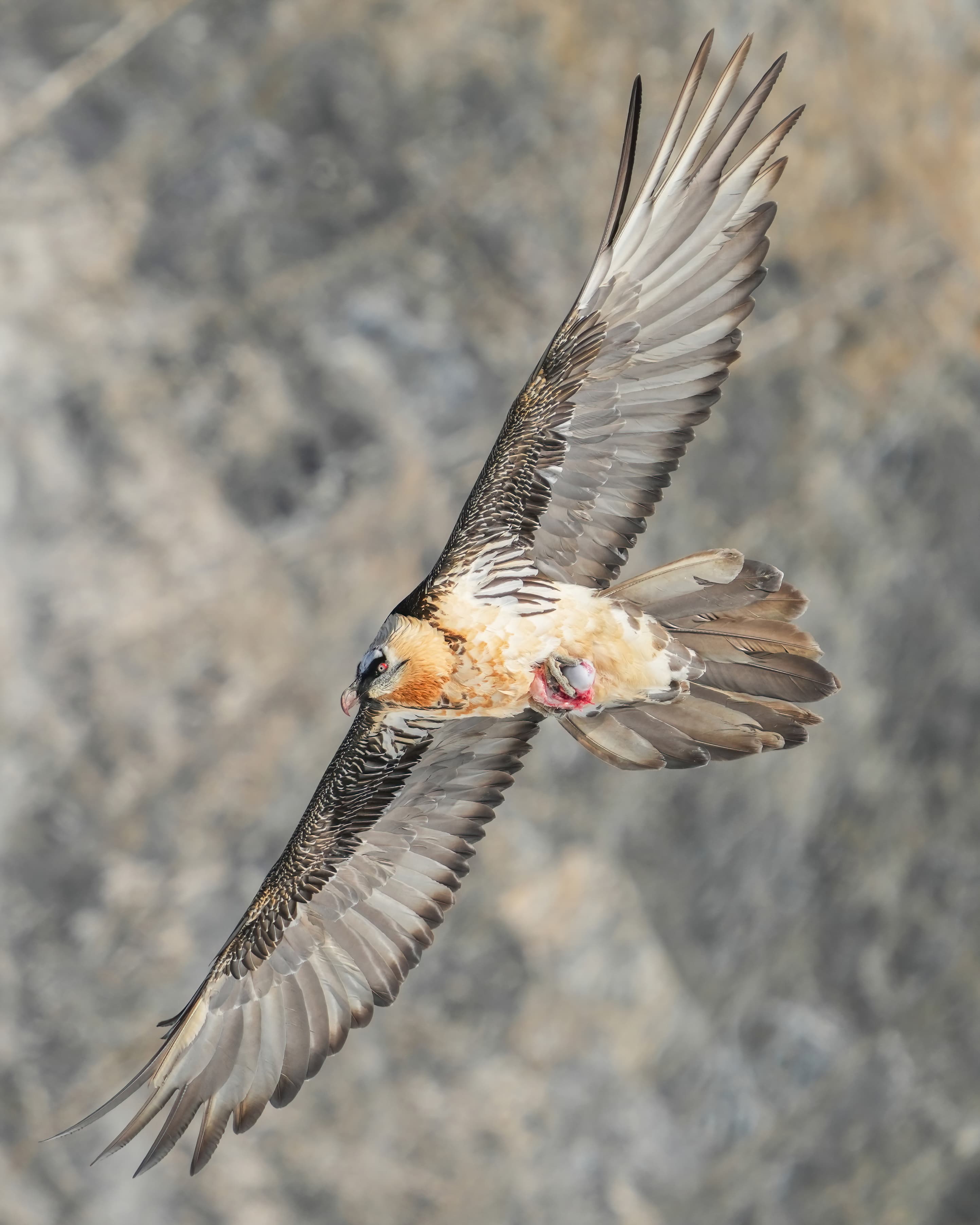
The bearded vulture — also called the lammergeier — is one of the largest and most striking birds in Lesotho's mountain skies. It has an enormous wingspan of nearly three metres, and its chest feathers glow orange or rusty red. You can spot the 'beard' from which it gets its name: a tuft of black feathers hanging below its beak.

Tell me more

The bearded vulture has an extraordinary trick for eating. It feeds mostly on bones — especially the marrow (the soft, fatty stuff inside). When a bone is too large to swallow, the bird picks it up in its talons, flies high into the sky, and drops it onto a rock below. The bone shatters on impact, and the vulture swoops down to eat the pieces. Scientists have found that certain vultures use the same rock 'anvils' for hundreds of years.

Unlike most vultures, the bearded vulture deliberately rubs its feathers in orange-red mud and dust. Nobody is entirely sure why — some scientists think it could be to look more impressive to other vultures, or perhaps the minerals in the mud are good for the feathers. The result is a bird that looks like it is on fire when it glides through the sunlight, wings spread wide.

In Lesotho and the surrounding Drakensberg mountains, bearded vultures nest on remote cliff ledges where nobody can disturb them. They raise only one chick at a time, and the parents look after it for a very long time before it is ready to fly. Because they are rare and slow to breed, every single nest is very precious for the survival of the species.

In the classroom

Walk your class through this in 15 minutes.

Talk together

Discussion prompts

  1. 01The bearded vulture learned to use rocks as tools by dropping bones on them. Can you think of other animals that use tools?
  2. 02Why might a bird that eats bones be very important for keeping a mountain environment healthy and tidy?
  3. 03The vulture colours its own feathers orange. Do you think animals can 'choose' how they look, or is it always instinct?
Try this

Classroom activity

Draw the lifecycle of a bearded vulture chick in four panels: (1) egg on a cliff ledge, (2) fluffy chick with parents, (3) juvenile learning to fly, (4) adult soaring with wings spread. Under each panel, write one interesting fact about that stage.