
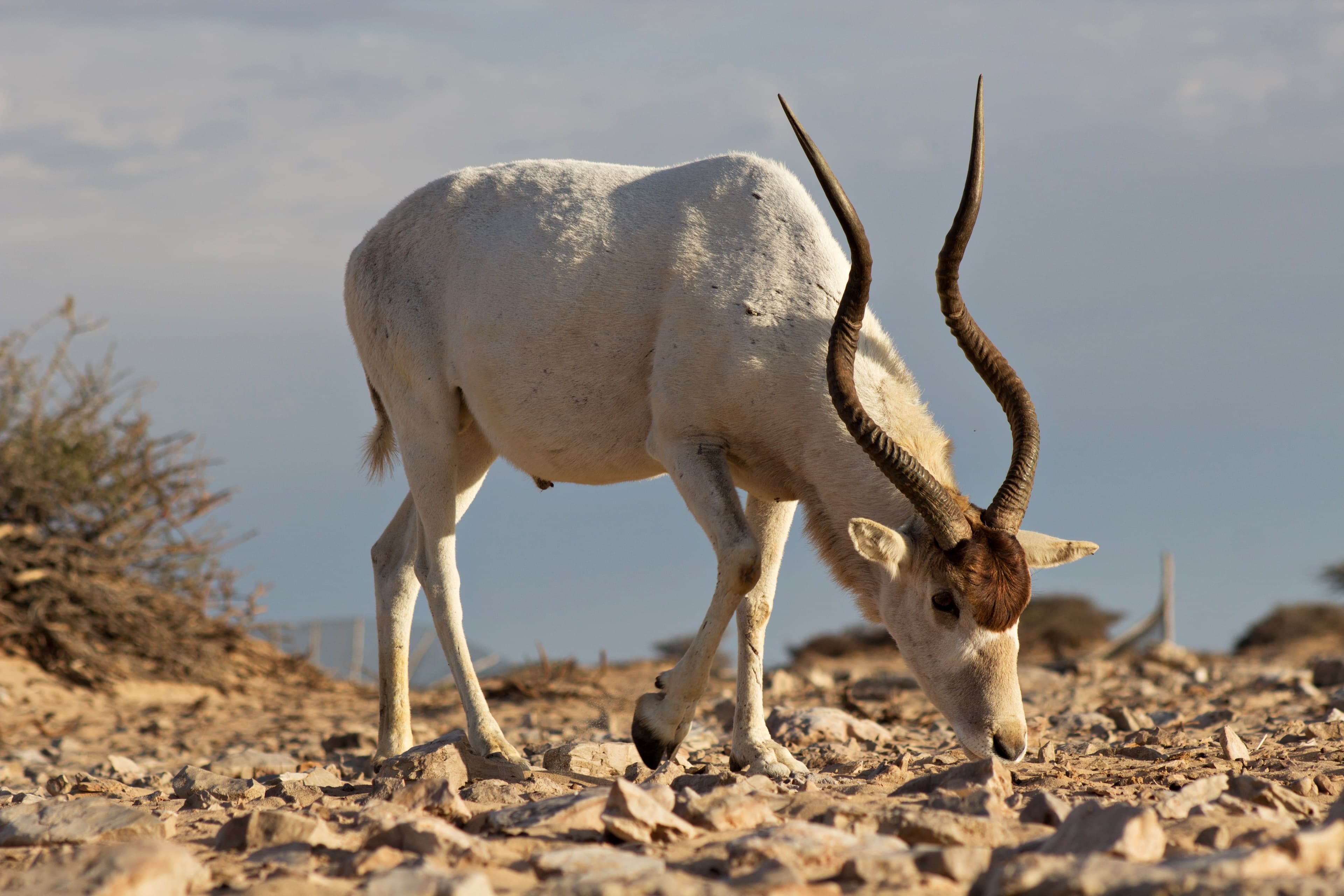
An addax can weigh up to 125 kg and has broad, flat hooves that spread its weight on soft sand - a bit like snowshoes. Its coat changes with the seasons: pale whitish in summer to reflect the scorching sun, and grey-brown in winter to absorb a little warmth. Even its body colour is a smart piece of survival engineering.
The addax's long, spiralling horns - which both males and females have - can be over a metre long. In ancient times, the addax was so common in the Sahara that cave paintings and Egyptian art showed large herds of them. Now only a very small number remain in the wild, though conservation programmes are working hard to help them recover.
Addax are nomadic, following the rains across the Sahara to find fresh grass and plants. They can detect rain from very far away - some scientists think they sense changes in air pressure - and will walk enormous distances to reach a fresh patch of vegetation.
Because they can go without water, addax were once one of the most widespread large mammals of the Sahara. Scientists and conservationists around the world are working together to breed addax in protected areas and gradually release them back into the wild.