
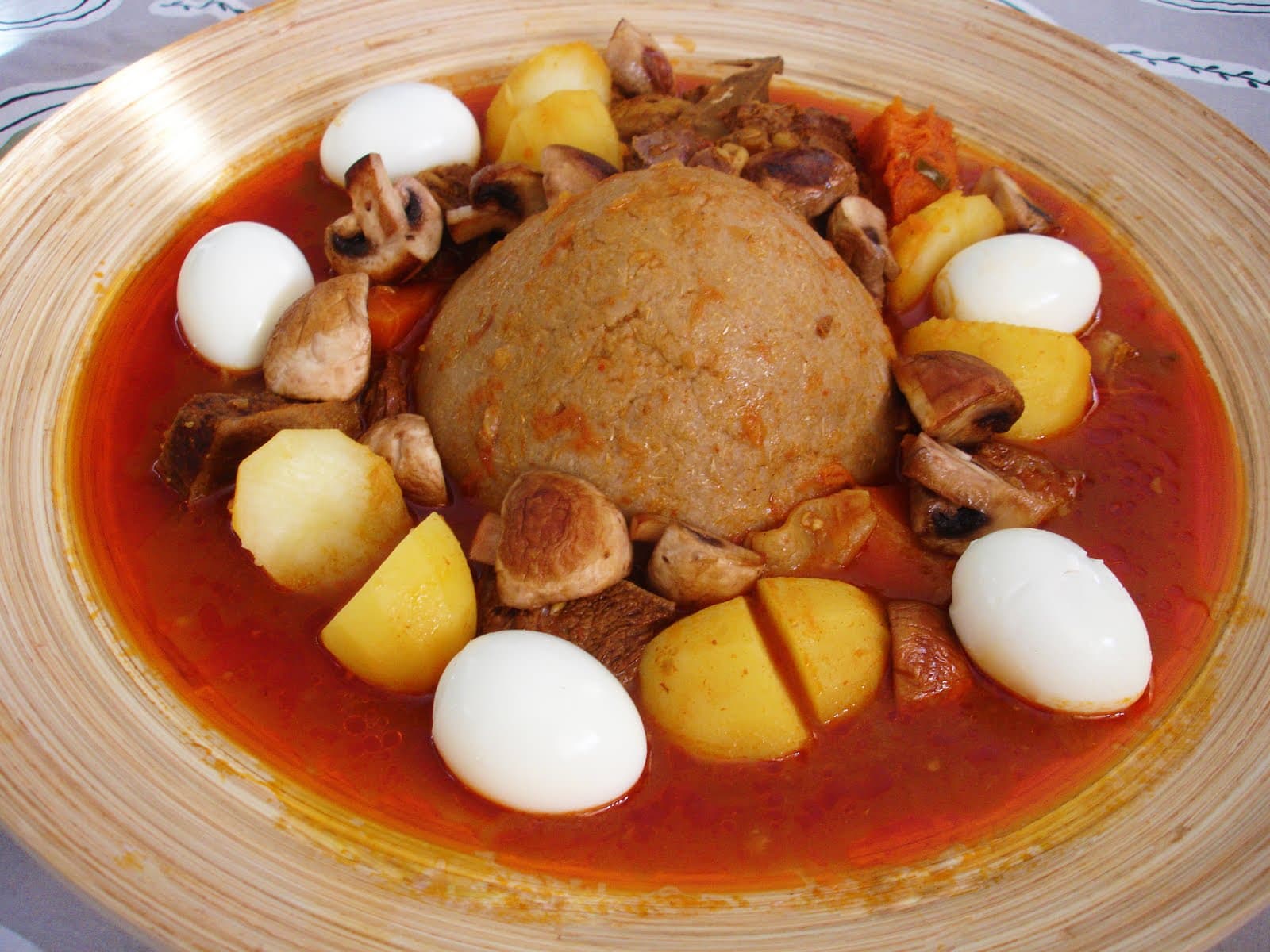
Making bazeen takes skill. The cook boils the flour-and-water mixture, stirring all the time, until it turns from a liquid batter into a stiff, smooth dough that holds its dome shape. The dough should be firm enough to scoop up stew without breaking. Getting the texture just right is considered a sign of an excellent cook.
The stew that surrounds the bazeen dome is flavoured with a Libyan spice blend that often includes turmeric, chilli, tomato, and sometimes dried chilli peppers called filfil. The golden-red colour of the stew against the pale dome of bazeen makes for a very striking dish. Eggs are often added, simmered until firm.
Bazeen is traditionally eaten as a family or community - everyone gathered around one large dish. You break off a piece of the dough, make a small well in it with your thumb, scoop in some stew, and eat it in one bite. Sharing food from the same dish is an important part of Libyan hospitality.
Because it is filling, warming, and made from simple, affordable ingredients, bazeen has been a staple food in Libya for hundreds of years. It is served at family gatherings, celebrations, and everyday meals alike.