
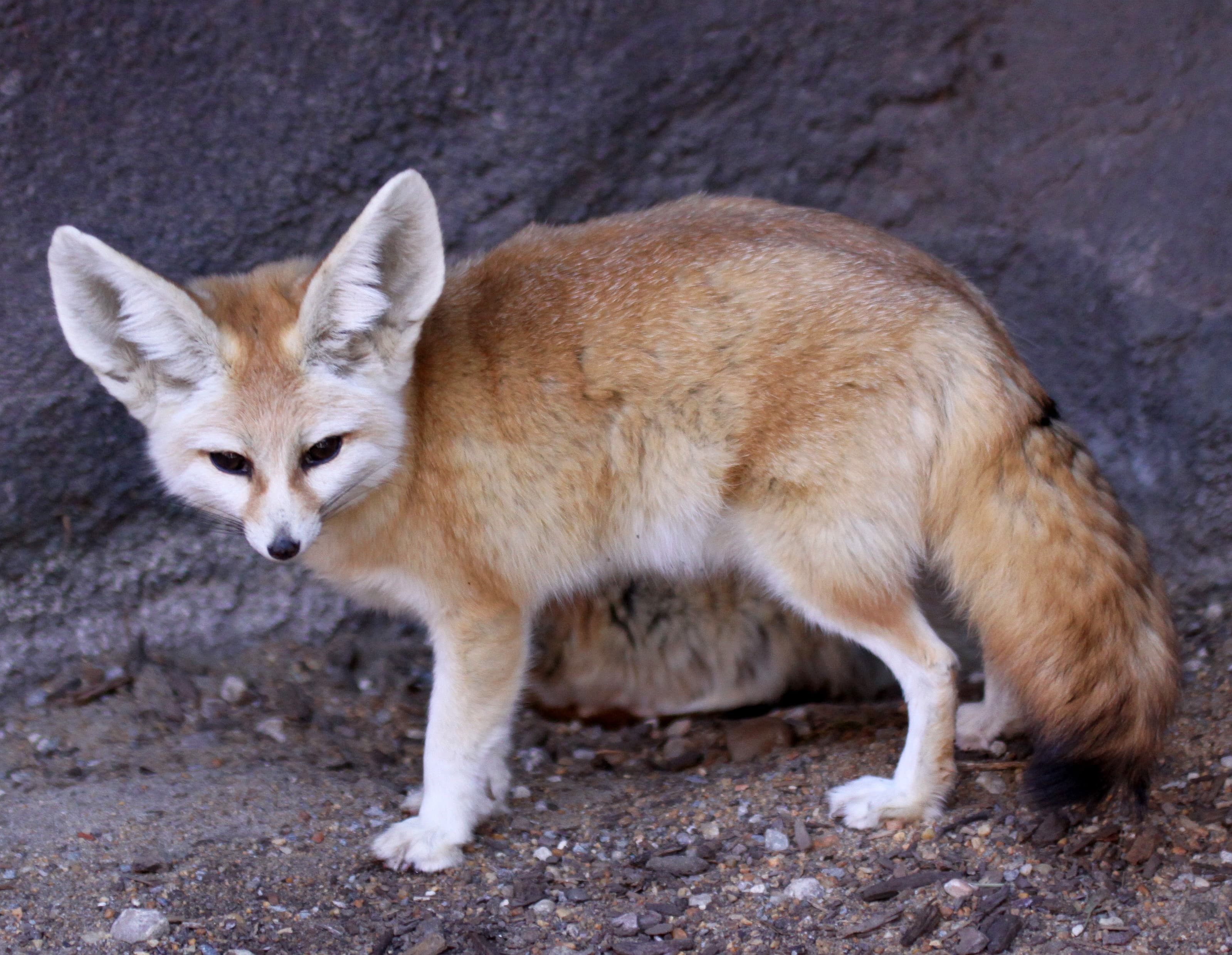
A fennec fox's ears can be up to 15 centimetres long - very big for a creature that weighs less than 1.5 kg. The ears help the fox hear tiny sounds underground, like a beetle or lizard moving beneath the sand. But they also work like radiators: blood flowing through the thin skin of the ears loses heat to the air, cooling the whole fox down in the scorching desert sun.
Fennec foxes are nocturnal - they sleep during the blazing day in burrows under the sand and come out at night when it is cooler. Their thick, pale fur reflects sunlight and also keeps them warm during cold desert nights. The pads of their feet are furry too, acting like little snowshoes on hot sand.
They eat almost anything they can find - insects, small lizards, rodents, birds' eggs, and even fruit and plants. Living in a desert means being adaptable, and the fennec fox is a champion at making the most of whatever food is available.
Fennec foxes live in family groups and communicate with each other using a wide range of sounds - purring when happy, whimpering when nervous, and a loud yapping bark when excited. In Libya and across North Africa, they are admired for their cleverness and their ability to thrive where life seems almost impossible.