
Classroom lesson ยท Food ยท ๐Ÿ‡ฑ๐Ÿ‡พ Libya

Mint Tea

Libya's favourite warm welcome โ€” sweet, fresh, and shared

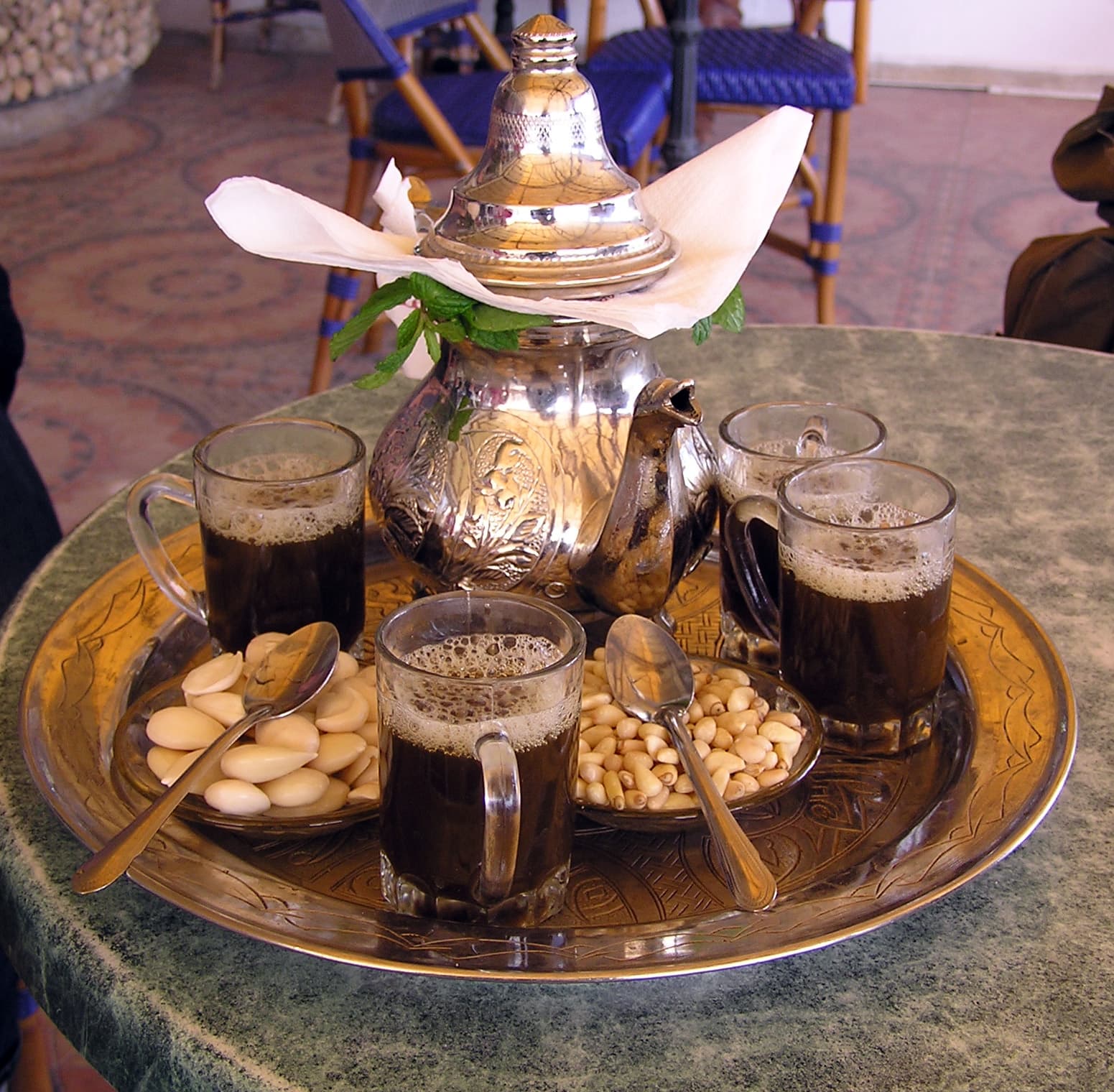
Photo ยท Wikimedia Commons

What is it?

Mint tea is one of the most important parts of Libyan hospitality. When you visit someone's home in Libya, you will almost certainly be offered a glass of sweet mint tea โ€” it is the way people welcome guests, slow down, and enjoy each other's company. Making and sharing tea is a tradition taken very seriously.

Tell me more

Libyan mint tea is made with green tea leaves (often Chinese gunpowder green tea), a huge amount of fresh mint leaves, and several teaspoons of sugar. The tea is brewed in a small pot, then poured into small glasses from a height โ€” this creates a froth on top that many people consider the best part.

Traditionally, tea is served in three rounds, each slightly different. The first glass is strong and only lightly sweet. The second is sweeter and more minty. The third is the sweetest and mildest. There is a famous saying about the three glasses: 'The first is like life โ€” strong and bitter; the second is like love โ€” sweet and smooth; the third is like death โ€” gentle and final.'

The ritual of making and serving tea is as important as the tea itself. The host prepares it carefully, often on a small tray, and serves each guest personally. It is considered very rude to refuse tea that is offered โ€” accepting a cup is a sign of respect and friendship.

Mint tea is popular across the whole of North Africa and the Sahara region. Tuareg communities in the desert have their own elaborate version of the ceremony. The tea provides not just warmth and refreshment but also a moment to pause, connect, and talk.

In the classroom

Walk your class through this in 15 minutes.

Talk together

Discussion prompts

  1. 01In Libya, offering tea is how people welcome guests. How do people in your family or community welcome visitors?
  2. 02The three rounds of tea have a meaning โ€” strong, sweet, gentle. If you were designing a three-course meal with a theme, what would yours represent?
  3. 03Why do you think sharing food and drink is so important in so many different cultures around the world?
Try this

Classroom activity

Hold a classroom 'tea ceremony' using fruit squash or juice. Each child serves the person next to them, holding the jug high to pour. Discuss: how did it feel to serve someone? How did it feel to be served? Write three words to describe the experience.