
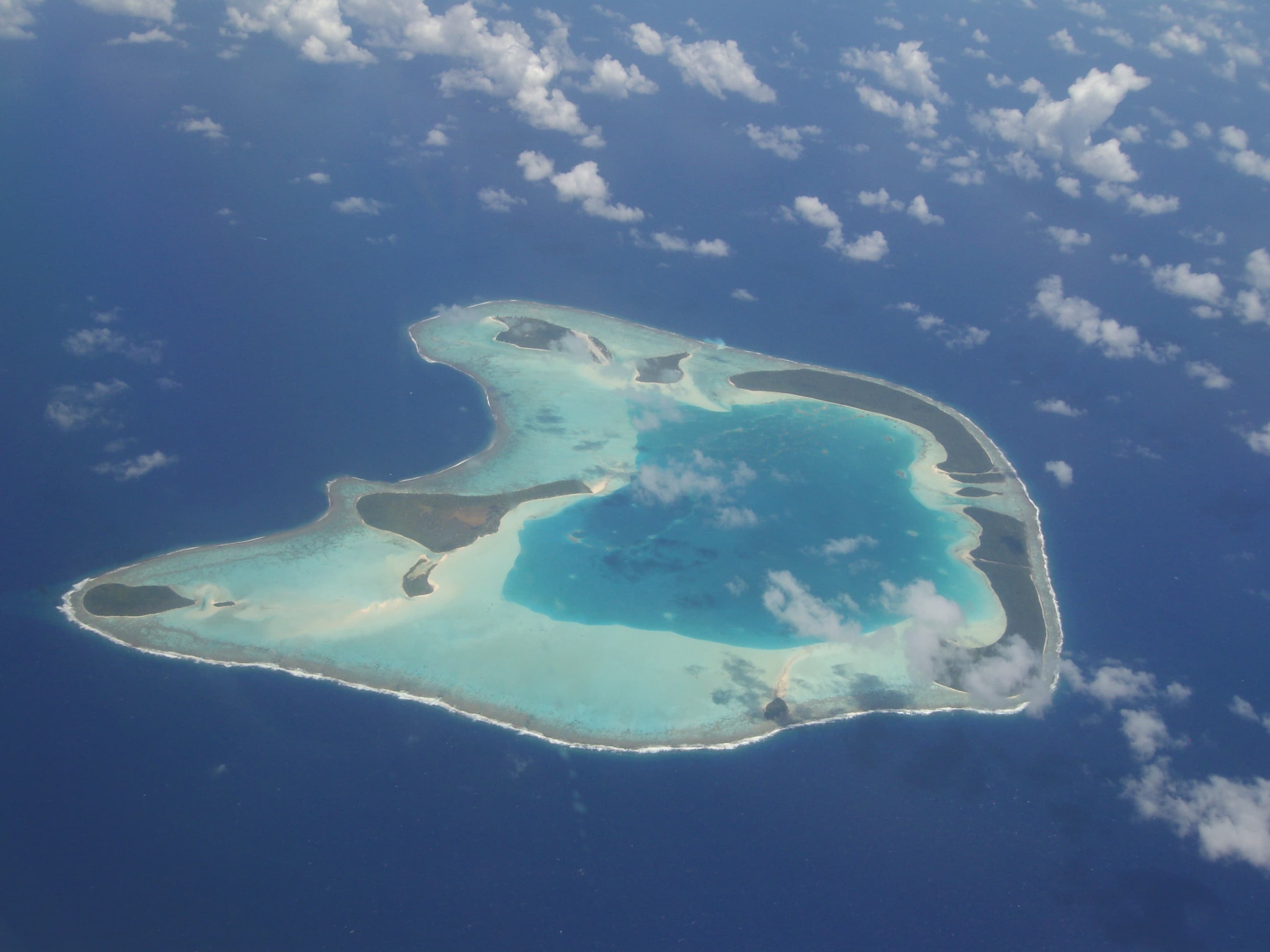
Atolls form over millions of years. A volcano rises from the ocean floor, and coral slowly grows around its edges. Over a very long time, the volcano sinks back down while the tough coral ring stays, leaving a circular reef with a calm lagoon trapped inside. The flat, sandy islands of the Maldives sit on top of those ancient coral rings.
Inside an atoll, the lagoon water is often shallow, warm, and calm - almost like a giant natural swimming pool. Outside the reef, the ocean floor drops away steeply into deep, dark blue water. That contrast between the pale turquoise inside and the dark navy outside is visible even from aeroplanes.
Each Maldivian atoll has its own personality. Baa Atoll is famous for manta rays. Addu Atoll, the most southern one, is so far south that the weather and wildlife are slightly different from the rest. Some atolls have busy island communities; others have just one or two fishermen's villages.
The Dhivehi word 'atolu' was written down by European sailors centuries ago and gradually became the English word 'atoll', used by geographers all over the world. It is the Maldives' quiet gift to the English language.