
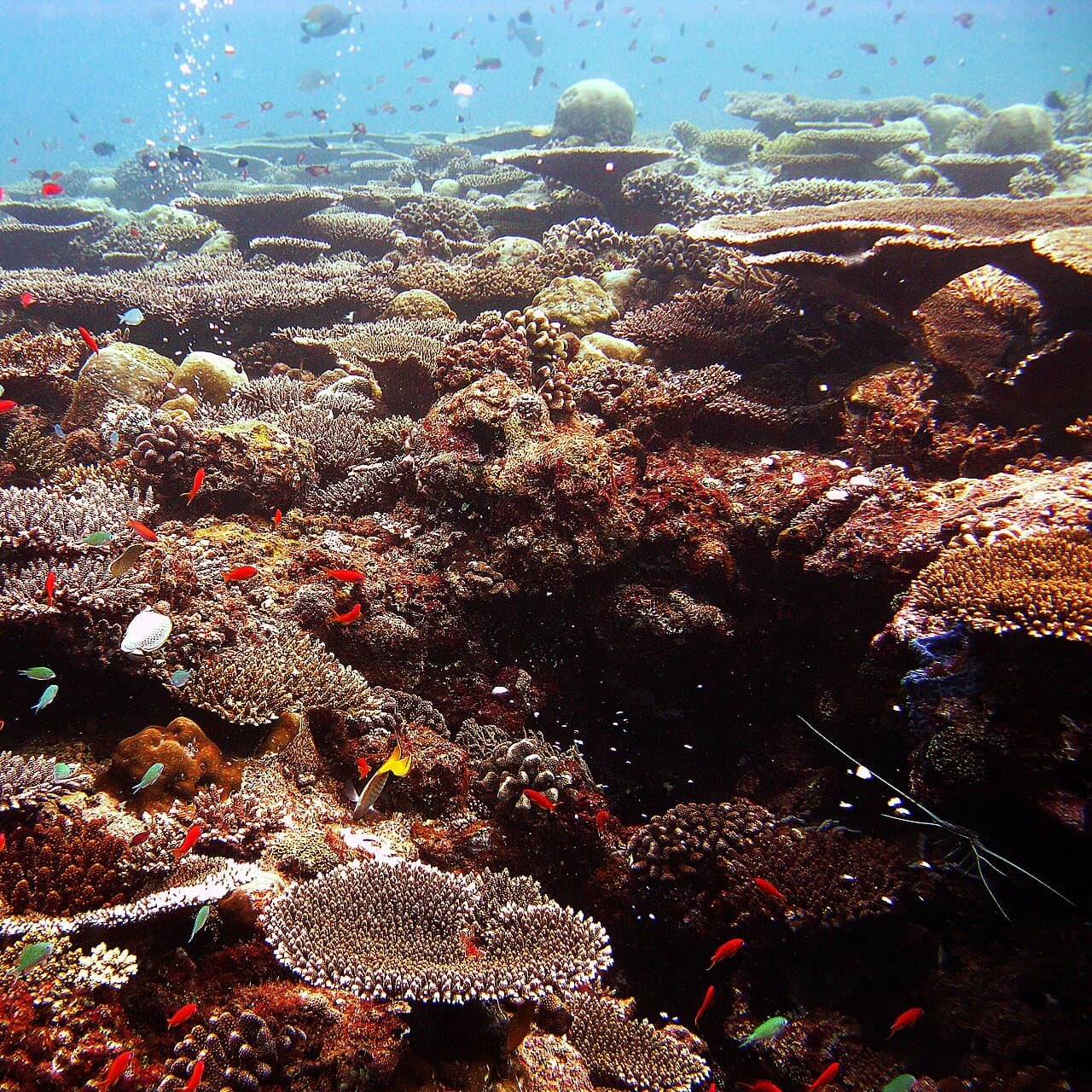
Each coral polyp is a small, soft animal - a bit like a tiny sea anemone - that builds a hard shell of calcium carbonate (similar to chalk) around itself. When billions of polyps build their shells next to each other over centuries, the result is a massive, rocky structure that fish and other sea creatures use as a home, a nursery, and a supermarket all in one.
The colours in a coral reef come from tiny algae living inside the coral. These algae use sunlight to make food through photosynthesis, just like plants do on land, and they share some of that food with the coral. This partnership means coral reefs need clear, sunlit, warm water to stay healthy and colourful.
Maldivian reefs are some of the richest on Earth. A single reef patch might be home to several hundred species of fish - snappers, parrotfish, moray eels, butterflyfish - along with sea turtles, octopuses, lobsters, and sponges. Parrotfish are especially important: they crunch up dead coral with their beak-like teeth and poop out fine white sand. Much of the famous white sand on Maldivian beaches began as coral inside a parrotfish!
Maldivian communities and marine scientists work together to protect the reefs. Some areas have been set aside as protected zones where fishing and anchoring are not allowed. Volunteers and researchers plant new coral fragments onto underwater frames, helping reefs recover and grow stronger - a bit like gardening, but underwater.