
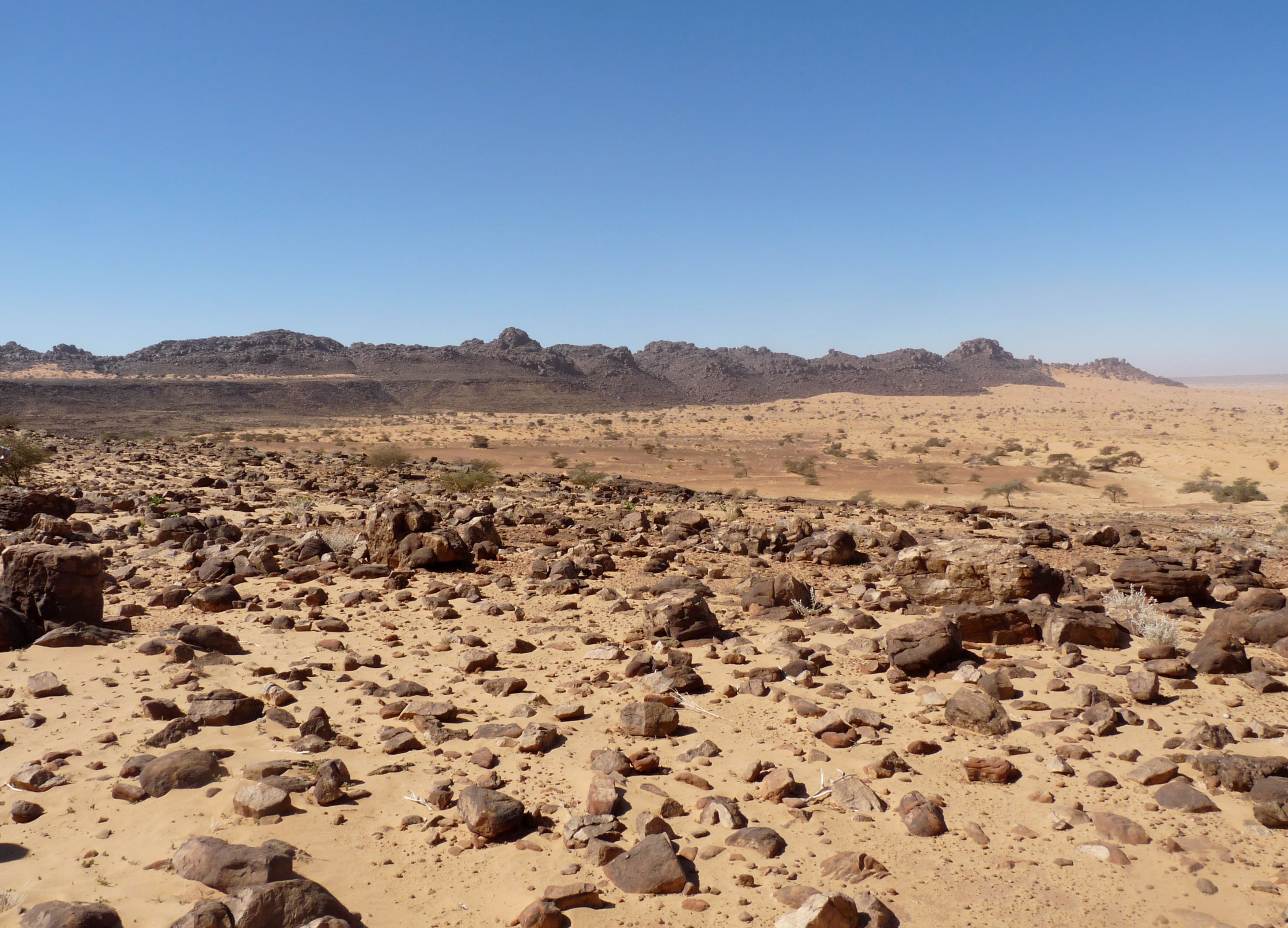
The plateau is sometimes called the 'roof of Mauritania' because it sits higher than the surrounding desert - up to about 500 metres above sea level. Gorges carved by ancient rivers cut deep into the red rock, and at the bottom of some gorges you find cool, shady oases where the ground is moist even in the fiercest heat.
The most famous oasis town in the Adrar is Terjit, where fresh spring water trickles through palm gardens. Local people grow dates, figs, and vegetables in these small fertile patches. The contrast - burning orange cliffs above, lush green palms below - is one of the most striking sights in all of West Africa.
Rock paintings made by ancient people who lived here thousands of years ago can still be found on cliff faces. They show elephants, giraffes, and crocodiles - animals that roamed here when the Sahara was green. These paintings are like messages from the past telling us that this landscape has changed enormously.
Today, travellers come to the Adrar to trek through the canyons, ride camels along old caravan trails, and sleep under the stars. Local guides, many of them Moorish nomads, know every spring and rock shelter by name.