
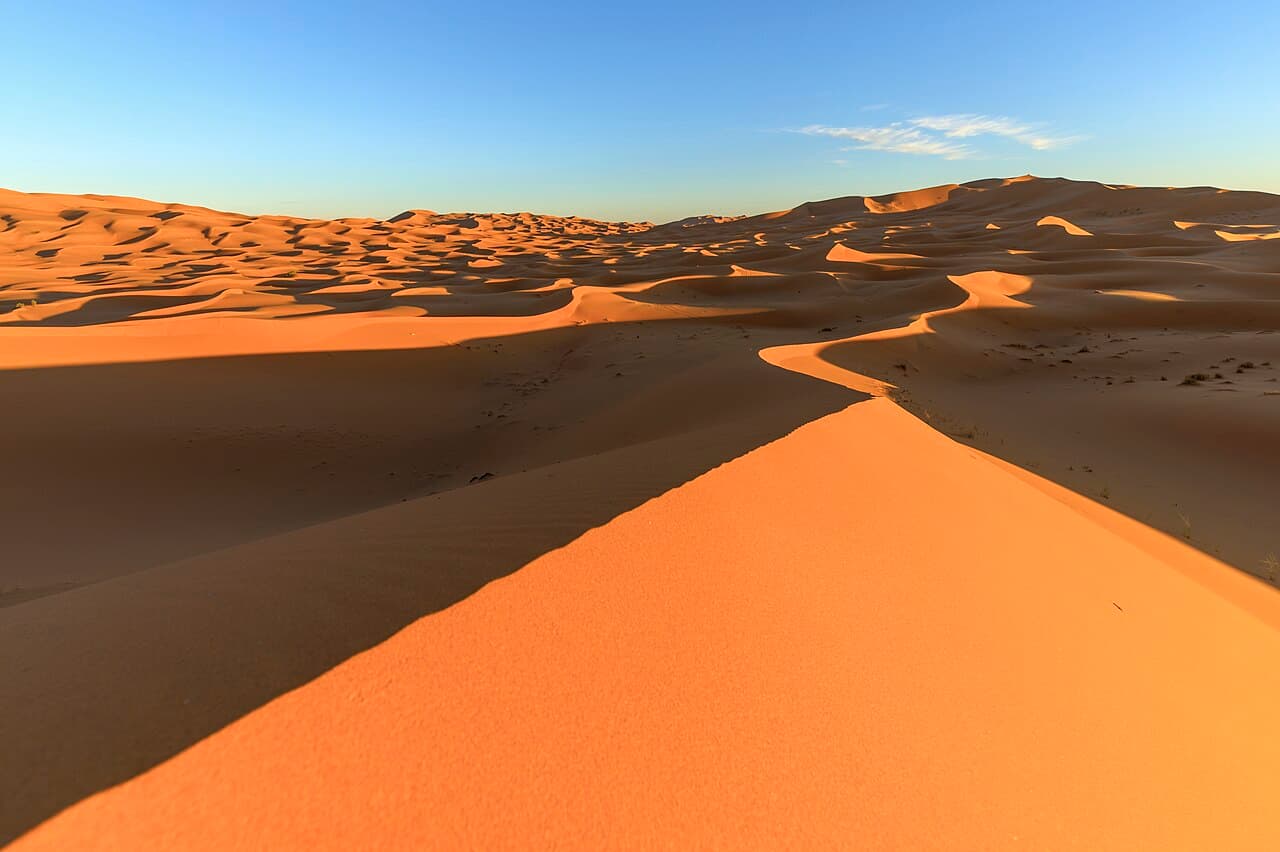
A sand dune forms when wind picks up tiny grains of sand and drops them in the same spot over and over again. Over years and decades the pile grows into a giant curved ridge. The tallest dunes in Mauritania reach over 100 metres high and are called 'ergs'. When the wind blows, you can actually hear the sand singing - a low humming sound called 'singing sand'.
Despite looking empty, the desert is full of life. Lizards, beetles, and snakes shelter under rocks during the hot day and come out at night when it is cooler. Acacia trees send their roots deep underground to find water. After rare rains, tiny flowers bloom almost overnight, turning parts of the desert briefly green.
Tuareg and Moorish nomads have crossed these dunes for thousands of years, using camels as their transport. Camels are perfectly built for the desert: they store fat (not water) in their humps, have two rows of eyelashes to keep out the sand, and can close their nostrils. They can go many days without drinking and then gulp 100 litres at once.
The stars above the Sahara at night are breathtaking because there are almost no lights to wash them out. Travellers often say the Milky Way looks like a river of silver dust pouring across the sky.