
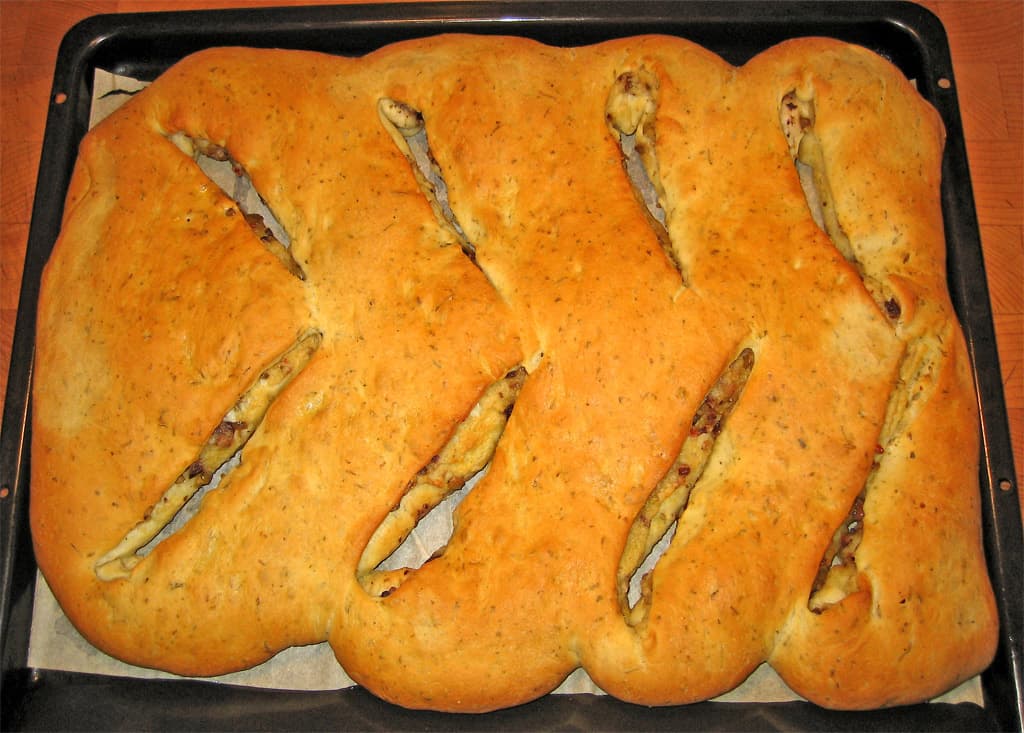
The holes in fougasse are not just for decoration - they help the bread cook evenly and create a crispy crust all over, with lots of crunchy edges. The dough is enriched with olive oil, which gives it a slightly golden colour and a rich flavour. When you pull the bread apart into pieces, it has a soft, airy inside that is perfect for dipping into olive oil or soup.
The word 'fougasse' comes from an ancient Latin word meaning 'cooked under the embers'. In the days before proper ovens, flatbreads were baked directly in the hot ashes of a fire. This ancient way of baking meant you could have fresh bread even without a brick oven - just a fire and some dough. The thin shape cooked quickly and evenly in the heat.
In Monaco, fougasse is often eaten as part of a meal or as a snack. On Monaco National Day and other celebrations, sweet versions of fougasse - flavoured with orange-flower water and aniseed - are also made. These sweet fougasses are a special treat that children look forward to at festivals.