
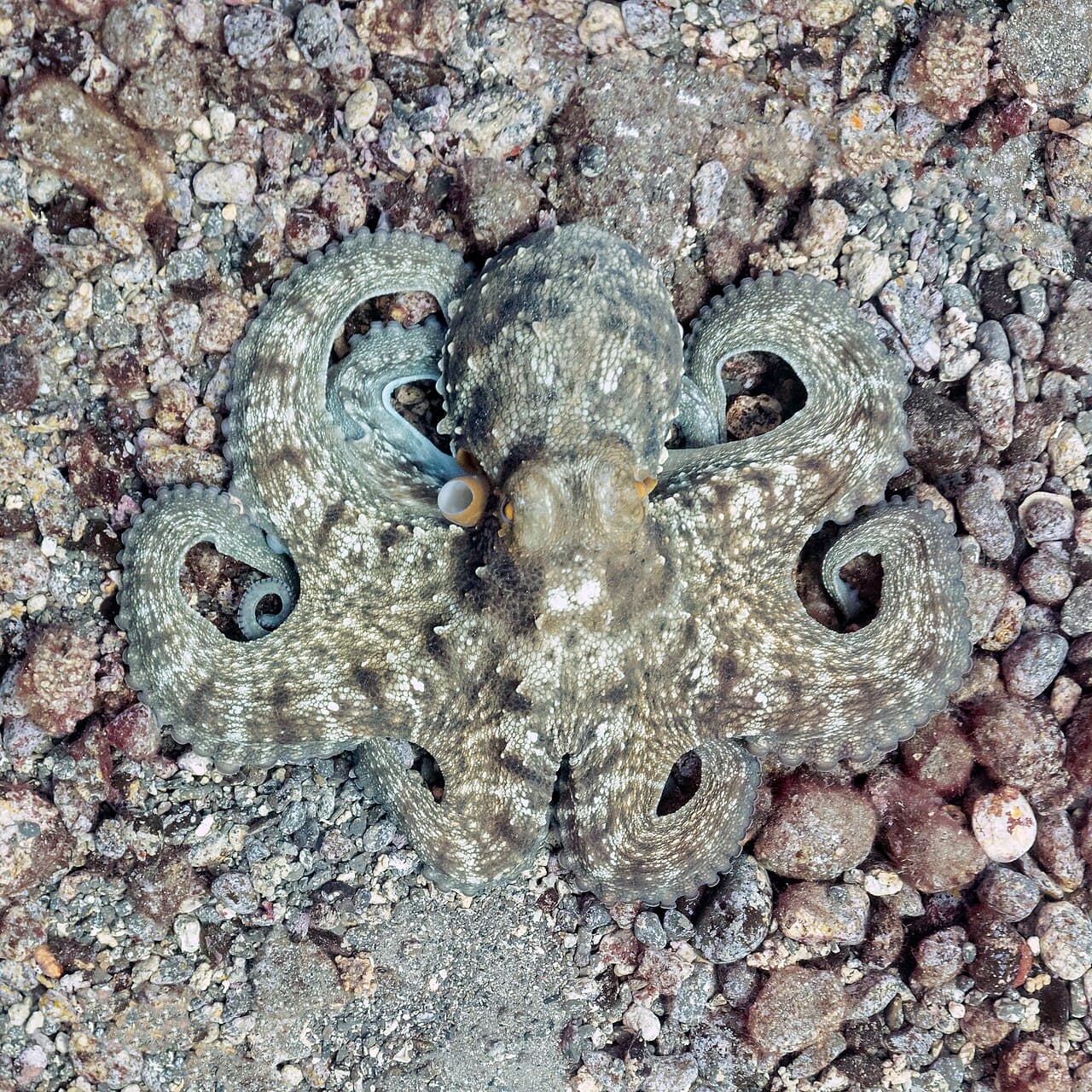
Octopuses are remarkably intelligent. They have three hearts, blue blood, and eight arms covered in suckers. They can change the colour and texture of their skin in less than a second - which is how they hide from predators and sneak up on prey. Each of an octopus's eight arms can act slightly independently, almost as if each arm has a small brain of its own. The octopus's main brain coordinates everything from the centre.
Sea urchins look like spiky balls and live attached to rocky surfaces on the sea floor. Their spines protect them from fish and other predators. Underneath, they have a mouth with five teeth arranged in a circle - an ancient structure called Aristotle's Lantern, named after the philosopher who first described it over 2,000 years ago. Sea urchins move very slowly using hundreds of tiny tube feet hidden under their spines.
Both animals are an important part of the Mediterranean ecosystem. Sea urchins graze on algae, keeping rocks clean. Octopuses hunt crabs and shellfish, controlling those populations. In Monaco, both animals can be found along the rocky sections of the coast and in the aquarium of the Oceanographic Museum, where you can observe them up close.