
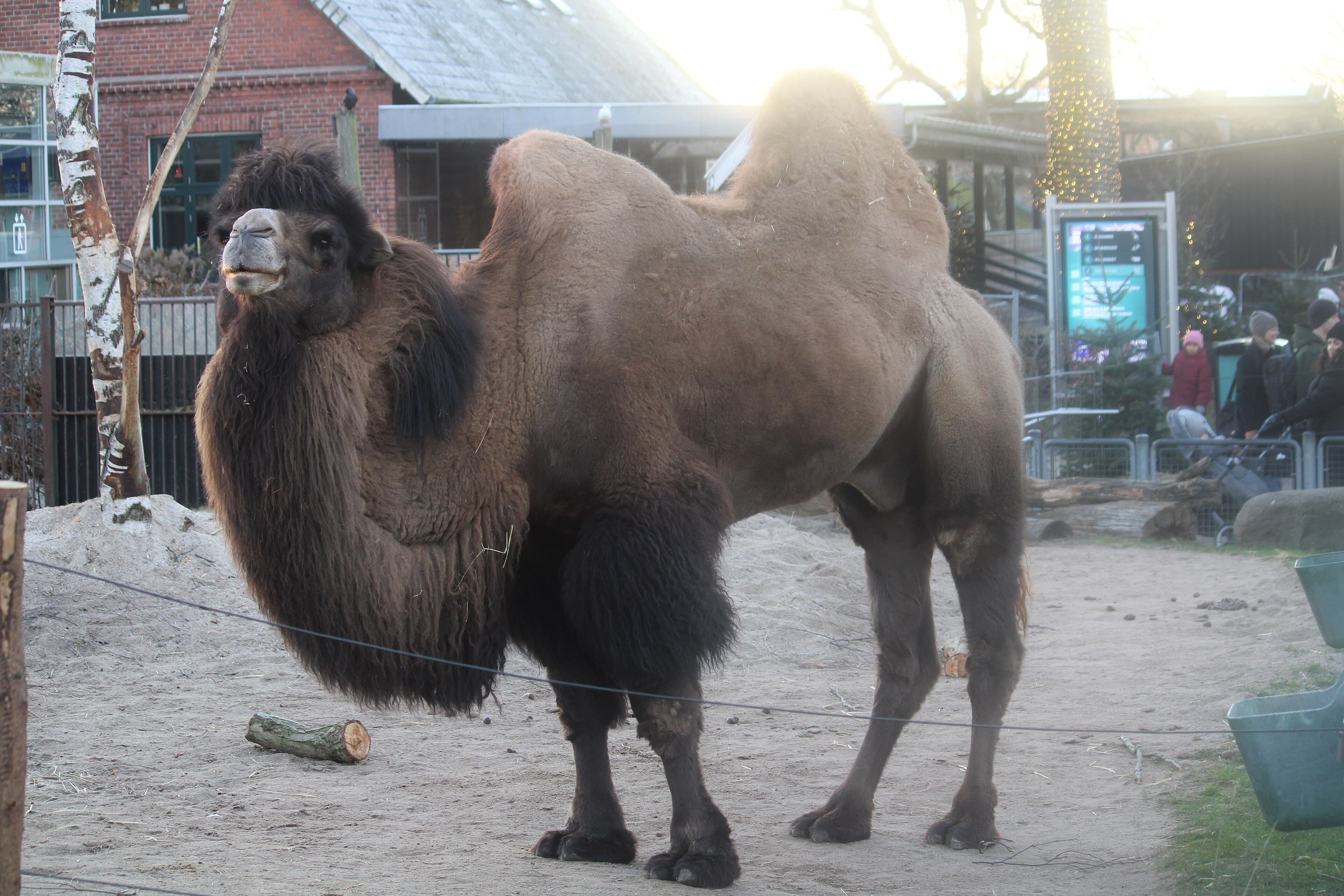
The two humps of a Bactrian camel are not full of water - that is a common myth! They are actually full of fat. The camel's body burns this fat for energy when food and water are scarce, so the humps shrink when the camel is tired and hungry, and plump back up again when it has eaten well. You can tell how well a camel is doing just by looking at its humps.
Bactrian camels have amazing adaptations for desert and cold steppe life. Their nostrils can close completely to block out sand in a storm. Their eyes have three eyelids - two regular ones and a thin transparent one that works like built-in goggles. Their huge padded feet spread wide so they do not sink into sand or snow. They can survive temperatures from −40°C in winter to +40°C in summer - an 80-degree swing!
Wild Bactrian camels are critically endangered. Fewer than 1,000 are left in the wild, all in remote parts of the Gobi in Mongolia and China. They are slightly different from domestic camels - leaner, with smaller humps and a more cautious nature. Mongolian herders treasure their domestic camels for their wool (which is wonderfully soft), their milk, and their strength for carrying goods.