
Classroom lesson ยท Przewalski's Horse ยท ๐Ÿ‡ฒ๐Ÿ‡ณ Mongolia

Przewalski's Horse

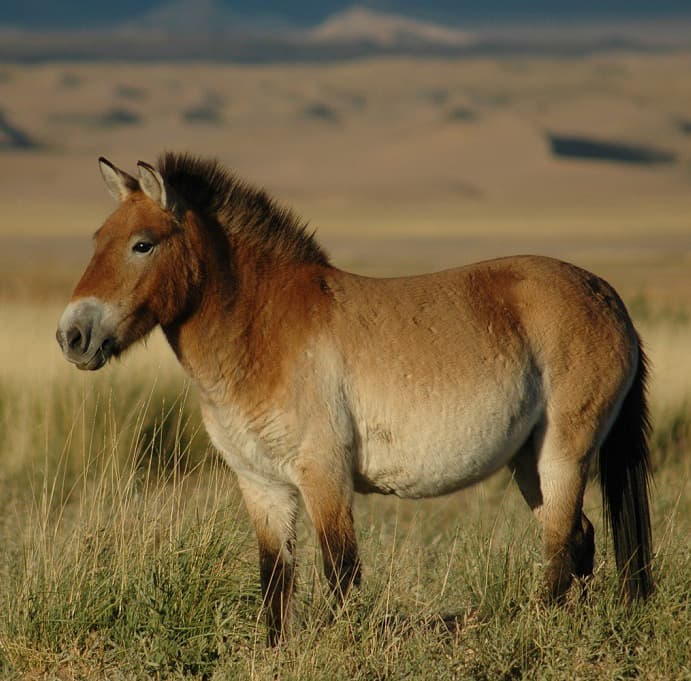
The only truly wild horse in the world โ€” saved from extinction

Photo ยท Wikimedia Commons

What is it?

Przewalski's horse (say it: sheh-VAL-skee) is the last truly wild horse species on Earth โ€” every other horse in the world has been domesticated by humans at some point. This small, sturdy horse with its stiff upright mane once roamed the steppes of Mongolia and Central Asia. It was extinct in the wild for decades, but thanks to a careful international rescue programme, wild herds are running free again in Mongolia.

Tell me more

By the 1960s, Przewalski's horses had completely disappeared from the wild. The last wild one was seen in Mongolia in 1969. They survived only in zoos around the world. Scientists and conservationists knew they had to act โ€” they set up careful breeding programmes, making sure horses from different zoos had foals together to keep the population healthy and varied.

Starting in 1992, Mongolian and international scientists began releasing Przewalski's horses back onto the Mongolian steppe. The horses had to learn to be wild again โ€” how to find food through the snow, how to spot predators, how to live in herds. Slowly but surely they did. Today more than 2,000 Przewalski's horses are alive, with growing herds living wild in Mongolia.

In Mongolia, Przewalski's horse is called takhi, meaning 'spirit' or 'worthy of worship'. Local people feel a strong connection to it as a symbol of Mongolia's wild, free landscape. Seeing a herd of takhi galloping across the steppe โ€” manes bristling, hooves thundering โ€” is considered one of the most amazing wildlife sights in Asia. Their return is one of the great conservation success stories of our time.

In the classroom

Walk your class through this in 15 minutes.

Talk together

Discussion prompts

  1. 01Przewalski's horses went extinct in the wild but survived in zoos. Why are zoos sometimes important for saving species?
  2. 02If you could bring any extinct animal back, what would it be and why?
  3. 03What does it tell you about Mongolia that they call this horse 'spirit'?
Try this

Classroom activity

Create a 'conservation timeline' for Przewalski's horse. Draw a long line and mark the key moments: when they disappeared from the wild, when breeding programmes started, when they were released back to Mongolia, and today. Illustrate each stage with a small drawing.