
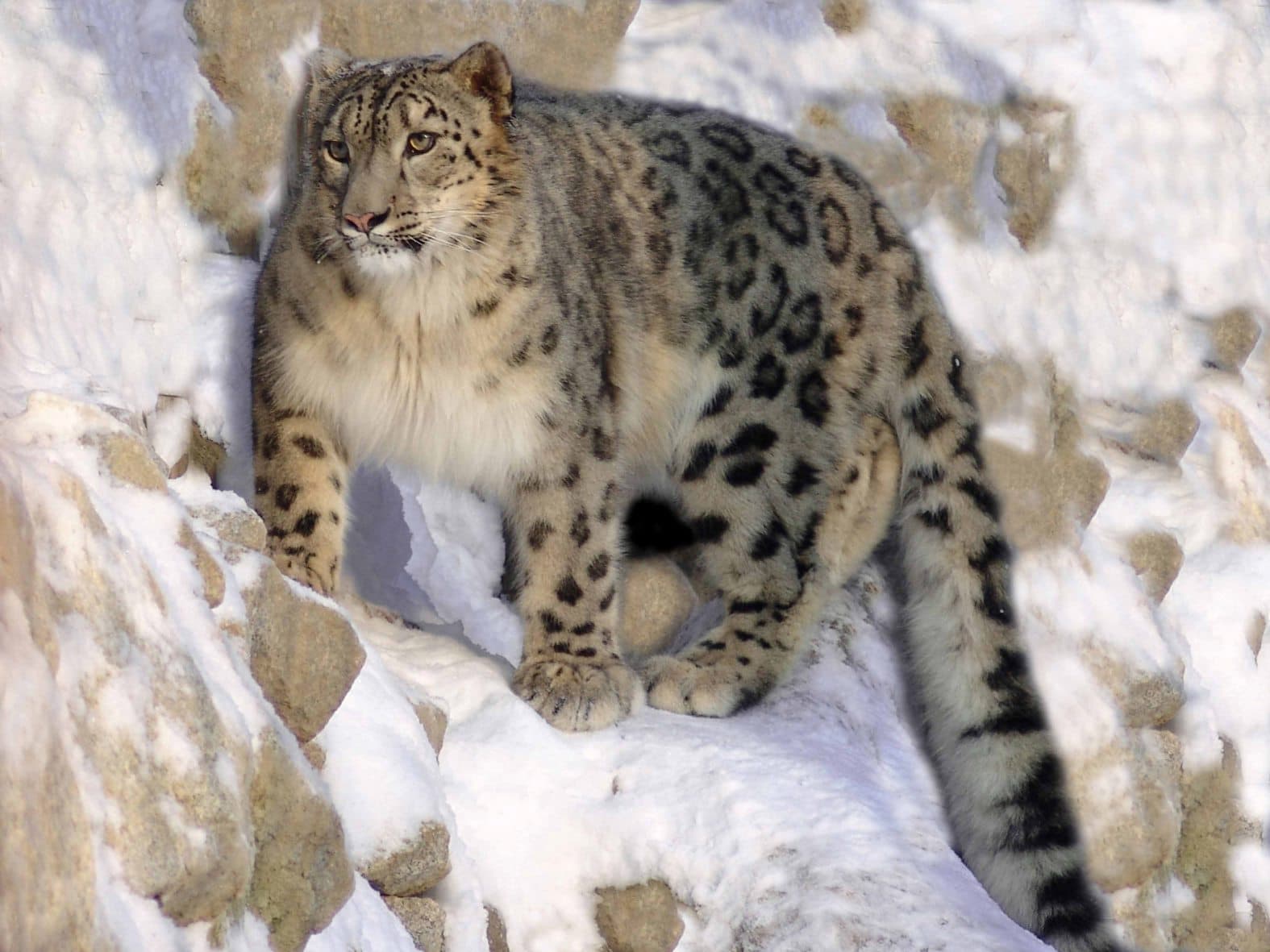
Snow leopards are perfectly built for life at high altitude. Their thick, pale spotted fur keeps them warm at temperatures well below freezing and camouflages them against snowy rock. Their huge, wide paws work like snowshoes - spreading their weight so they do not sink into deep snow. Their long, thick tail (sometimes as long as their body) is used for balance on steep cliffs and as a warm scarf to wrap around their face while sleeping.
A snow leopard's home territory can cover hundreds of square kilometres of mountain. They are naturally shy and mostly hunt alone at dawn and dusk, silently stalking blue sheep and ibex across the steep ridges. They are extraordinary athletes - able to leap six metres in one jump and run down a cliff face that would terrify most animals.
About 1,000 snow leopards are thought to live in Mongolia, making it one of the most important countries in the world for their survival. Scientists track them using camera traps hidden in the mountains - motion-sensitive cameras that photograph any animal that passes. Local communities in Mongolia help protect snow leopards, understanding that a landscape healthy enough for a snow leopard is healthy enough for everyone.