
Classroom lesson Β· Wildlife Β· πŸ‡²πŸ‡ͺ Montenegro

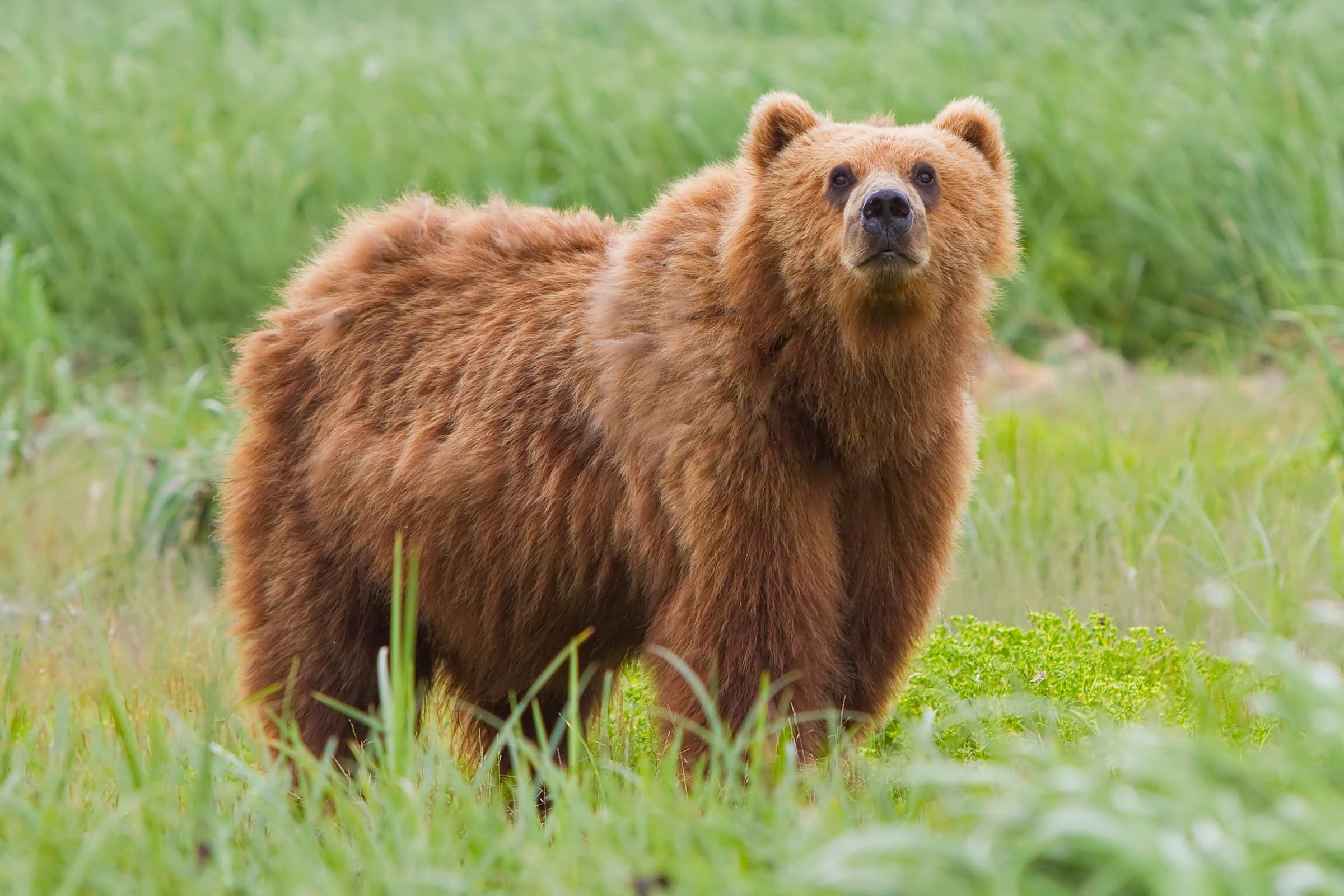
Brown Bear

Europe's largest land predator roams Montenegro's wild forests

Photo Β· Wikimedia Commons

What is it?

Brown bears are the largest wild mammals living in Montenegro. These big, shaggy animals roam the forests of Durmitor and other wild mountain areas, eating everything from berries and roots to fish and honey. Despite their huge size β€” a large male can weigh as much as 300 kilograms β€” brown bears are usually shy around people and prefer to stay deep in the forest.

Tell me more

Brown bears are omnivores, which means they eat both plants and animals. In summer they spend most of their time eating β€” berries, fruits, insects, roots and whatever else they can find β€” because they need to build up a thick layer of fat before winter. In autumn they go into a deep sleep called torpor inside a den they have prepared, and they do not properly wake up until spring.

Bear cubs are born during winter while their mother is in torpor. The tiny cubs β€” no bigger than a guinea pig at birth β€” snuggle up to their sleeping mother and drink her milk, growing quickly. By spring, when the mother wakes up and leads them outside, the cubs have grown into fluffy, playful animals that tumble over each other in the forest.

In Montenegro, brown bears live mainly in the national parks and wilder mountain regions. They play an important role in the forest β€” when bears eat berries and move around, they scatter seeds far and wide in their droppings, helping new plants to grow. Scientists call animals that do this kind of helpful work 'ecosystem engineers'.

In the classroom

Walk your class through this in 15 minutes.

Talk together

Discussion prompts

  1. 01Bears sleep through winter to survive when food is scarce. What other animals do this, and why might it be a useful trick?
  2. 02Bears are 'ecosystem engineers' β€” they help the forest by spreading seeds. Can you think of other animals that help their habitats without meaning to?
  3. 03Brown bears eat both plants and animals. What would a day's menu look like for a bear in summer?
Try this

Classroom activity

Make a 'bear year' circular calendar. Draw a large circle divided into 12 months. Colour the winter months (roughly November to March) in blue for torpor/den time. In the remaining months, write or draw what a bear is eating and doing. Compare your calendar with a partner.