
Classroom lesson · Durmitor National Park · 🇲🇪 Montenegro

Durmitor National Park

A UNESCO mountain wilderness with glacial lakes and ancient forest

Photo · Wikimedia Commons

What is it?

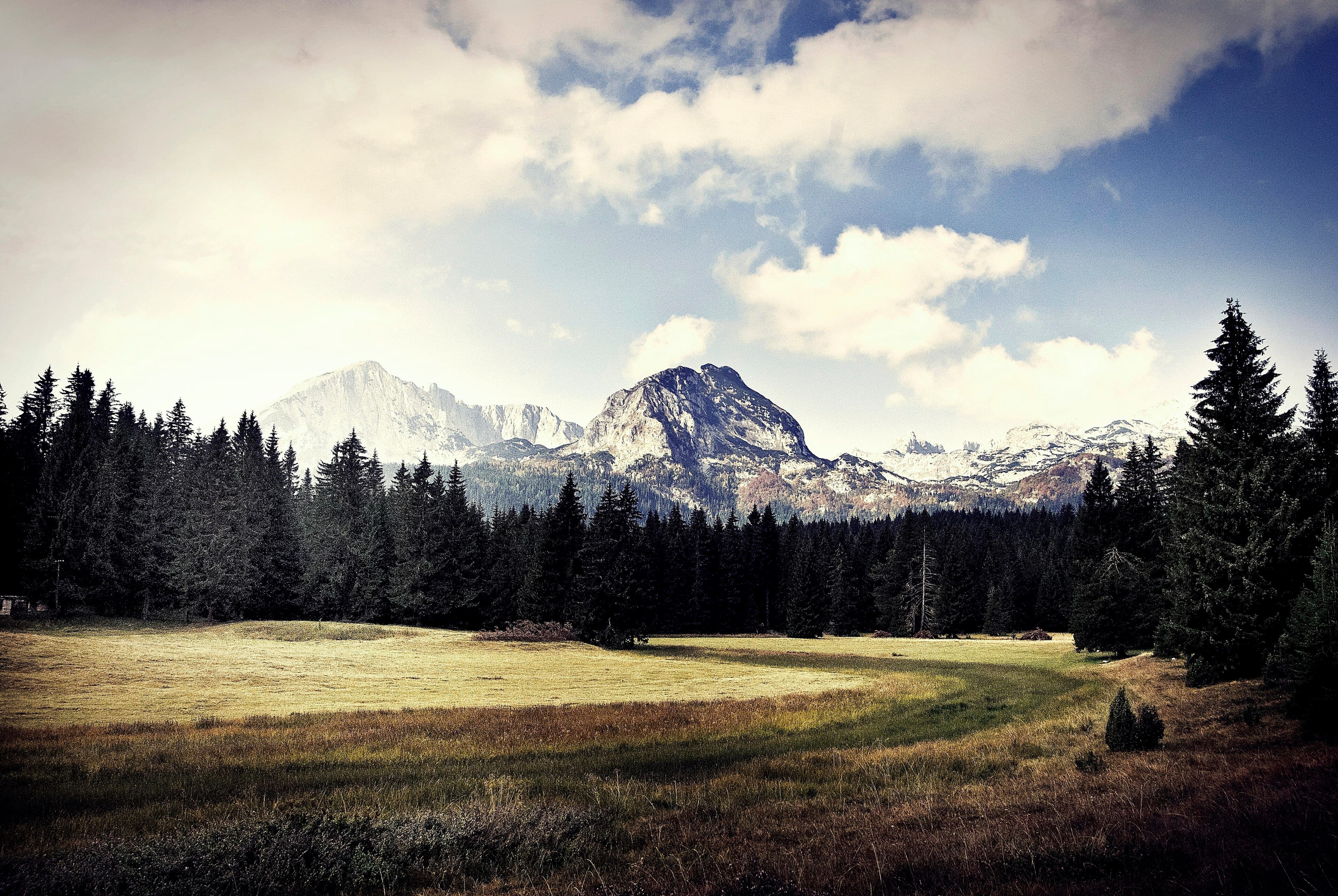
Durmitor National Park is a wild mountain area in northern Montenegro where jagged rocky peaks rise above deep forests of pine and beech. Hidden among the mountains are glacial lakes — pools of crystal-clear water left behind by ancient glaciers. It is a UNESCO World Heritage Site, one of only a handful of places on Earth that earns that title for both its natural beauty and its geology.

Tell me more

The most famous spot inside Durmitor is Black Lake, or Crno Jezero in Montenegrin. It looks dark from above because the tall fir trees around it reflect into the water, turning it a deep green-black. In winter the lake freezes and the snowy peaks behind it glow pink at sunrise — visitors say it looks like a painting.

Durmitor has 18 glacial lakes, all formed when enormous glaciers ground across the rock thousands of years ago and scooped out hollows that filled with water when the ice melted. The park also has karst — a type of landscape where rainwater has dissolved the limestone over millions of years to create caves, pits and strange rocky towers.

The forests of Durmitor are some of the oldest in Europe. Some of the black pines here have been growing for more than 400 years — they were already tall trees when Christopher Columbus first crossed the Atlantic. Bears, wolves and the extremely rare Balkan lynx all live inside the park, hidden among the ancient trees.

In the classroom

Walk your class through this in 15 minutes.

Talk together

Discussion prompts

  1. 01A glacier is a slow-moving river of ice. How do you think a giant block of ice moving across the land could scoop out a lake?
  2. 02Some trees in Durmitor are 400 years old. What events in history were happening when those seeds first sprouted?
  3. 03Why might it be important to protect wilderness areas where almost no people live?
  4. 04If you could visit Durmitor in any season, which would you choose and why?
Try this

Classroom activity

Make a model glacier in a tray. Fill a plastic bag with ice and press it slowly across a tray of damp sand. Lift the bag and look at the shape left behind — that hollow is how glacial lakes form. Draw your result and label it.