
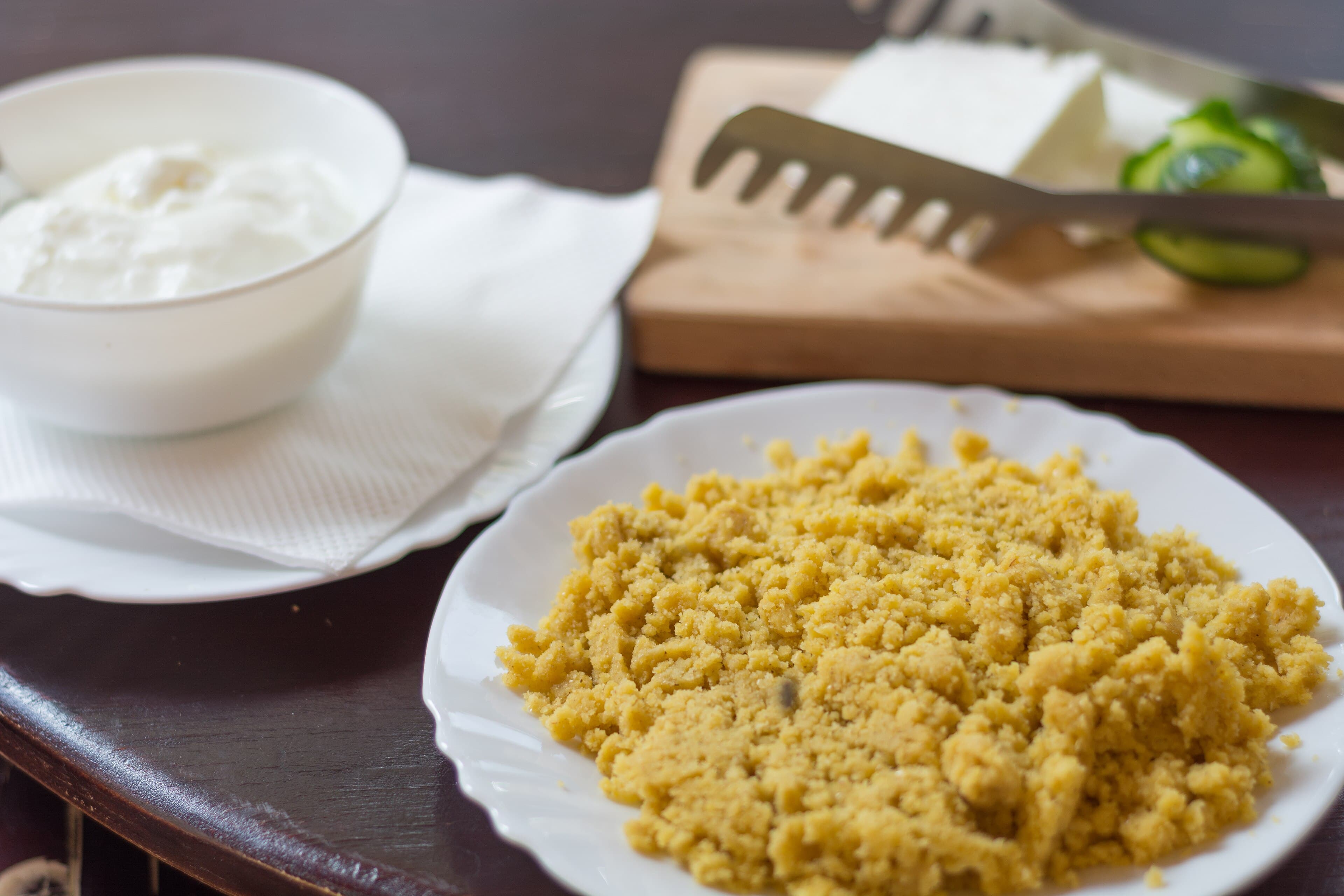
Making kačamak properly takes patience and strong arms. The cook stirs the cornmeal into boiling water and then stirs and stirs and stirs - sometimes for half an hour - until the mixture becomes thick and smooth. Then butter and kajmak (a rich local cream cheese) are folded in, turning the pale yellow porridge into something glossy, golden and completely irresistible.
Kačamak was traditionally a peasant food - simple ingredients that could be stored through winter in the mountain villages. Corn, which came to Europe from the Americas in the 16th century, became a staple crop in Montenegro because it grew well even in poor mountain soils. A pot of kačamak could feed a whole family and keep them warm and full on a freezing mountain morning.
Today kačamak appears on the menus of restaurants all over Montenegro, often topped with extras like sour cream, cured ham, or a fried egg. It is especially popular in the mountain towns of the north, where winters are long and cold and a hot, buttery bowl of kačamak feels like the most sensible meal in the world.