
Classroom lesson Β· Festival Β· πŸ‡²πŸ‡ͺ Montenegro

Kolo Circle Dance

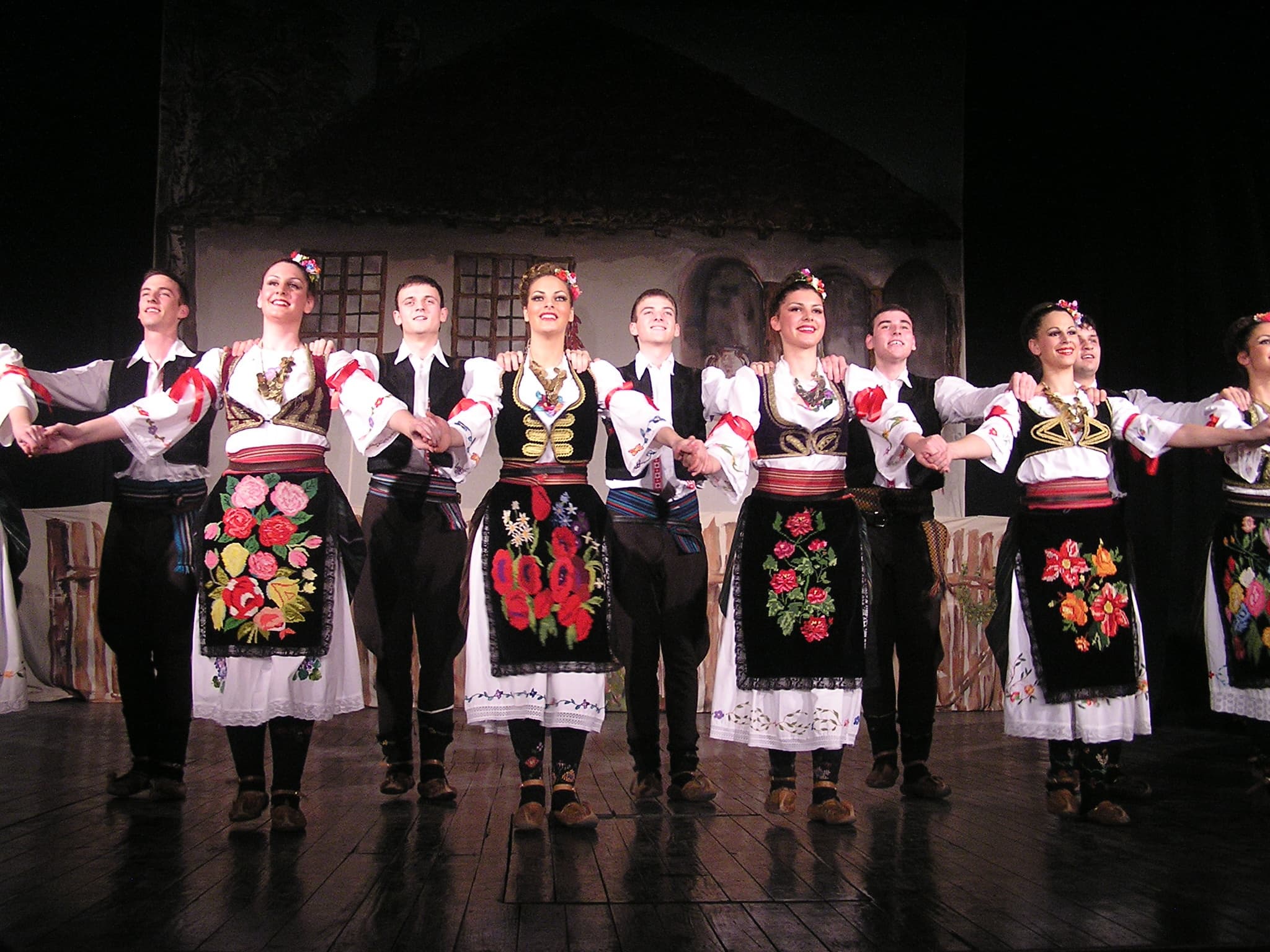
A joyful group dance where everyone joins hands in a moving circle

Photo Β· Wikimedia Commons

What is it?

Kolo is a traditional circle dance performed across Montenegro and much of the surrounding region. The name simply means 'circle' or 'wheel' in Montenegrin. Dancers hold hands or link arms and move together in a circle β€” sometimes slowly and gracefully, sometimes fast and energetic β€” following steps that families and communities have passed down for hundreds of years. Kolo is danced at weddings, festivals and village celebrations.

Tell me more

A kolo can have any number of dancers β€” from just a few people to a huge circle of hundreds. The circle moves together, stepping left, stepping right, stamping feet and swaying. What makes kolo special is that everyone participates β€” young children, grandparents, beginners and experts all dance together. There is no audience and no stage; the whole community joins in.

Different regions of Montenegro have their own versions of kolo, each with slightly different steps, rhythms and costumes. Some kolos are gentle and flowing; others are energetic and stomping, with dancers letting out shouts and whoops of joy. The music is usually played on traditional instruments β€” flutes, drums and brass instruments β€” and gets faster and faster as the dance goes on.

Learning kolo is a natural part of growing up in Montenegro. Children learn by watching older family members and then joining in at the edge of the circle. UNESCO has recognised the kolo as an important part of intangible cultural heritage in the region β€” a tradition that connects communities and brings generations together through shared movement.

In the classroom

Walk your class through this in 15 minutes.

Talk together

Discussion prompts

  1. 01Kolo has no audience β€” everyone dances together. How does that feel different from watching a performance?
  2. 02Circle dances exist in cultures all around the world. Why do you think humans in so many different places invented the idea of dancing in a circle?
  3. 03Children learn kolo by watching and joining in β€” not from a book. What other skills do we learn best by watching and doing rather than reading?
Try this

Classroom activity

Learn a simple circle dance as a class. Stand in a circle holding hands. Start with a simple step: two steps to the left, two steps to the right, one step in, one step back. Repeat together. Now try adding a clap or a stamp. Discuss how it feels to move as one group.