
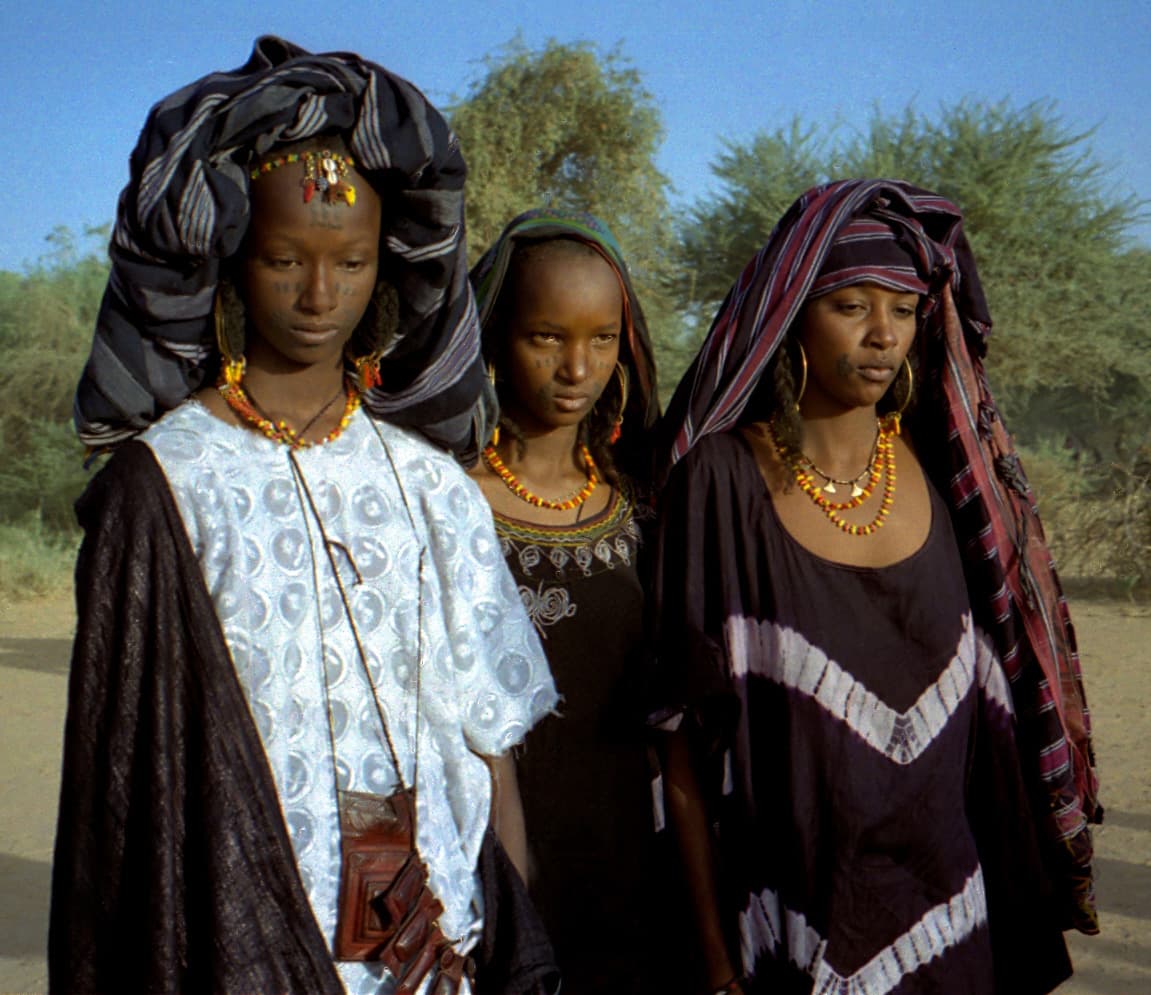
Getting ready for Gerewol takes hours. The men apply yellow and red paint to their faces, outline their eyes with kohl to make them appear brighter, and file their teeth. They wear tall feathered headdresses, beaded jewellery and flowing robes in vivid colours. The aim is to look as striking as possible - to show that you take pride in your community's traditions.
The dancing itself is extraordinary. Performers line up and perform a slow, rhythmic dance called the yaake, rolling their eyes, showing their teeth and moving with great precision for long stretches of time. The women of the community watch and appreciate the performances. It takes skill and stamina to perform well, and the dancers practise for months beforehand.
Gerewol takes place at the end of the rainy season when the nomadic families gather at water sources. It is not just a dance competition - it is a great annual reunion where families who have been spread across the Sahel meet again, share news, trade animals and celebrate being part of the same community. Music, storytelling and laughter fill the air for several days.