
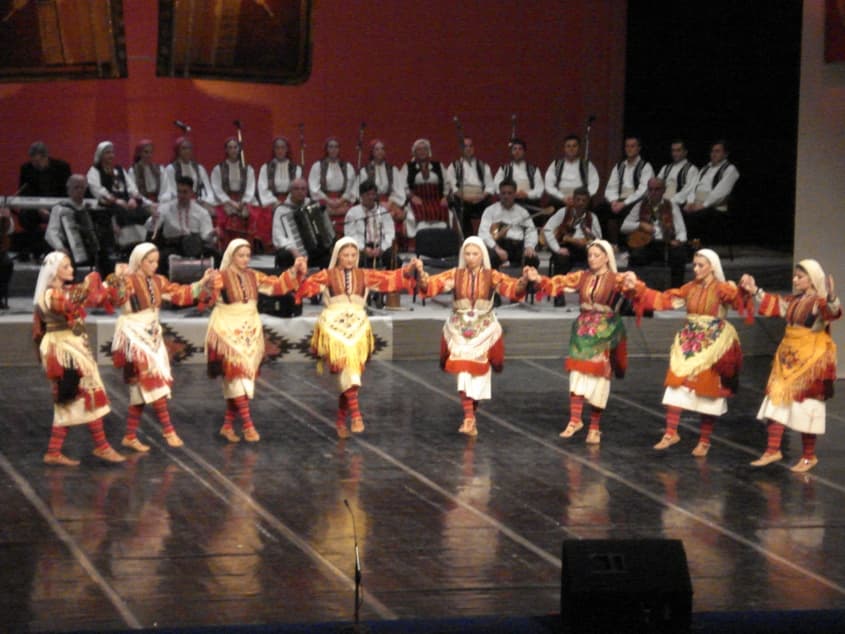
In an oro, dancers form a long chain or a circle, each person holding the hand or the belt of their neighbour. The lead dancer at the front sets the steps - which can range from simple walking rhythms to very fast, bouncy footwork - and everyone else follows. The music builds and builds, and the circle grows faster and more joyful. It is almost impossible to watch an oro without wanting to join in.
There are many different styles of oro across North Macedonia - each region has its own favourite steps, rhythms, and costumes. Women often wear dresses with embroidered aprons and headscarves, while men wear decorated trousers and waistcoats. The patterns on the costumes tell stories about where a person comes from, using colours and shapes that have been used for hundreds of years.
The most important thing about oro is that it is for everyone. Unlike some dances that need years of training, basic oro steps can be picked up in minutes. At a Macedonian wedding, you might see grandparents, parents, teenagers, and young children all holding hands in the same circle, dancing together. It is a beautiful way of bringing a whole community together through movement and music.