
Classroom lesson ยท Babeldaob Stone Monoliths ยท ๐Ÿ‡ต๐Ÿ‡ผ Palau

Babeldaob Stone Monoliths

Ancient carved stones, some as tall as a person, dotting the jungle

Photo ยท Wikimedia Commons

What is it?

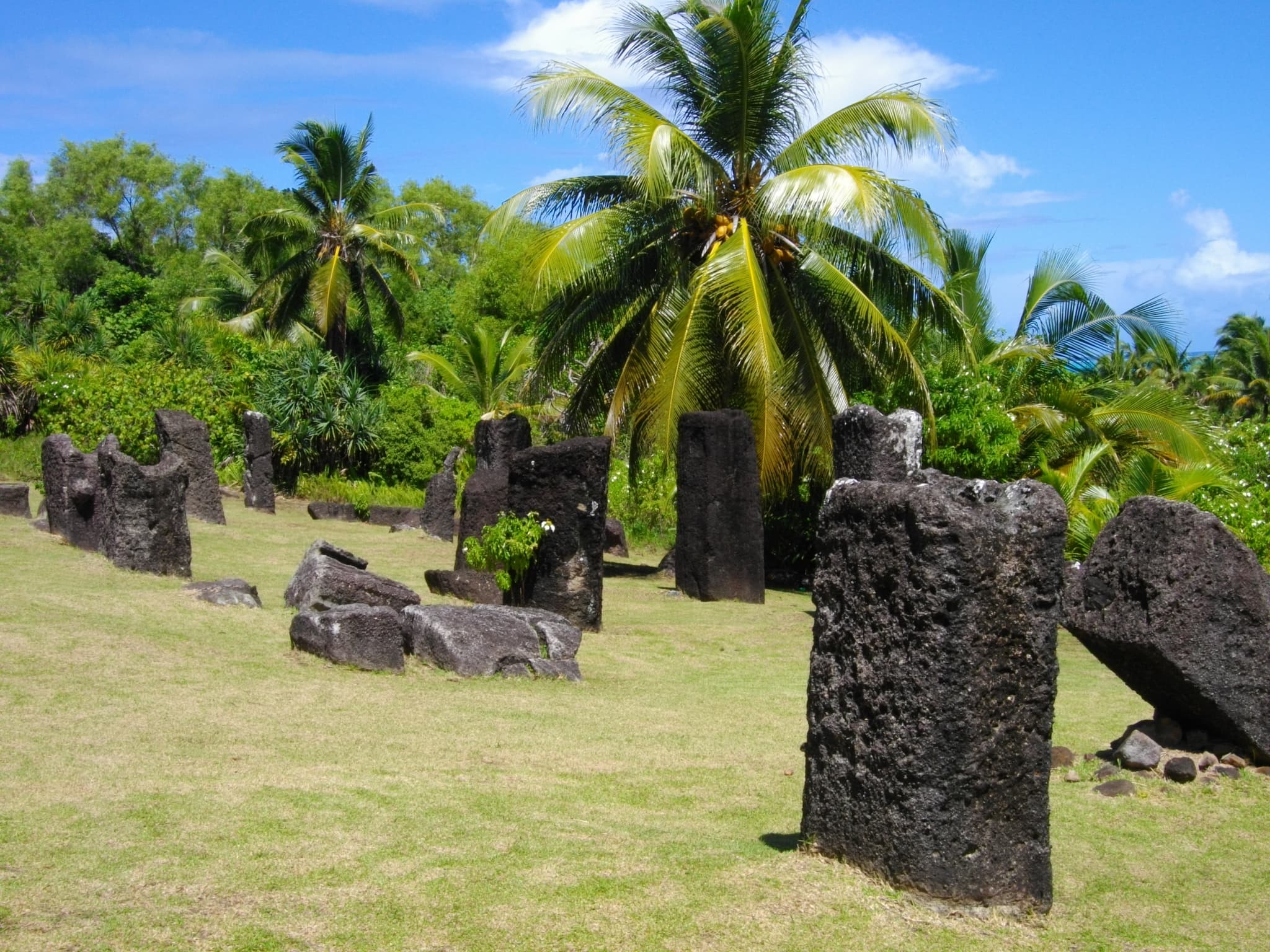
Scattered across the jungle of Babeldaob island, Palau's largest island, stand ancient carved stones called monoliths. Some are as tall as an adult, and some show carved faces and patterns. Nobody knows exactly how old they are, but archaeologists believe ancient Palauans put them in place long, long ago โ€” possibly thousands of years.

Tell me more

Babeldaob is the biggest island in Palau and still covered with thick jungle and rolling grassy hillsides. Hidden among the trees and grass are these mysterious stone slabs, many of them carved with designs that have special meaning in ancient Palauan culture. Some stones mark the sites of old villages; others may have marked important meeting places.

Carving stone is hard work โ€” ancient Palauans would have used other hard stones and shells as tools. Moving large stones through the jungle without wheels or machines is even harder. The fact that people managed to do it shows how skilled and organised early Palauan communities were.

Archaeologists are still studying the monoliths to understand their meaning. Palauan elders sometimes share stories passed down through generations about what the stones represent. Together, the stories and the stones help paint a picture of a rich, creative culture that has existed in these islands for a very long time.

In the classroom

Walk your class through this in 15 minutes.

Talk together

Discussion prompts

  1. 01Ancient Palauans had no machines โ€” how do you think they moved heavy stones through the jungle?
  2. 02Why do you think communities all around the world carve and build things to remember the past?
  3. 03If you found a mysterious carved stone in your local park, what questions would you want answered about it?
Try this

Classroom activity

Design your own stone monolith! On grey or brown card, sketch a tall rectangular slab and fill it with symbols that represent things important to your school or community โ€” perhaps a book, a tree, or a local animal. Write a short paragraph explaining what each symbol means.