
Classroom lesson ยท Wildlife ยท ๐Ÿ‡ต๐Ÿ‡ผ Palau

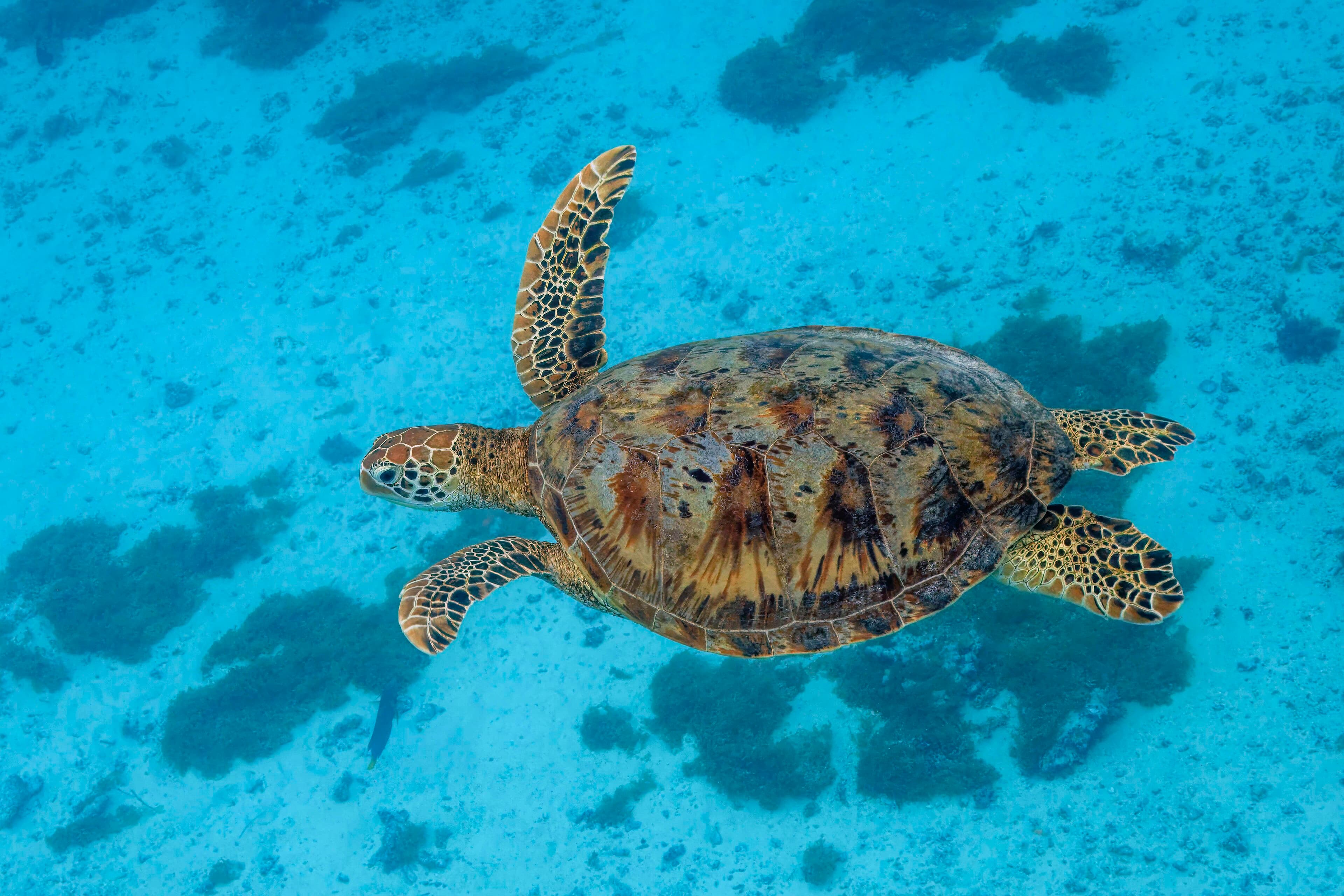
Green Sea Turtle

Ancient ocean traveller that nests on Palau's beaches

Photo ยท Wikimedia Commons

What is it?

The green sea turtle is one of the ocean's most graceful travellers, gliding through the warm waters of Palau on flippers as wide as a child's arm-span. These ancient reptiles have been swimming in Earth's oceans for more than 100 million years, and Palau's protected lagoons and reefs are an important home and nesting ground for them.

Tell me more

Green sea turtles get their name not from the colour of their shell โ€” which is usually brown or olive โ€” but from the greenish colour of the fat inside their body, caused by all the sea grass they eat. They are mostly herbivores as adults, grazing on sea grass meadows and algae in shallow, calm waters.

Female green sea turtles return to the very same beach where they were born to lay their own eggs โ€” even if that beach is thousands of kilometres away. They remember it using Earth's magnetic field, almost like an internal compass. They dig a hole in the sand, lay around 100 eggs, cover them up, and return to the sea. The eggs hatch after about two months.

Palau takes turtle protection seriously. Hunting turtles is not allowed, and protected areas around the reefs and beaches give them places to feed and nest safely. Visiting schoolchildren sometimes get to see turtle tracks on beaches in the morning โ€” the marks left by a mother turtle that came ashore in the night.

In the classroom

Walk your class through this in 15 minutes.

Talk together

Discussion prompts

  1. 01Green sea turtles return to the beach where they were born even after many years. How do you think they remember the way?
  2. 02Why might it be important for Palau to protect the beaches where turtles nest?
  3. 03A turtle lays about 100 eggs at once. What challenges do you think the tiny hatchlings face on their way from the nest to the sea?
  4. 04If you could follow a sea turtle on its ocean journey, where do you think it might travel?
Try this

Classroom activity

On a world map, mark Palau with a dot. Then draw a dotted line showing a possible journey a green sea turtle might make โ€” travelling to feeding grounds in other parts of the Pacific and then returning to Palau to nest. Research one real turtle migration route to make it accurate.