
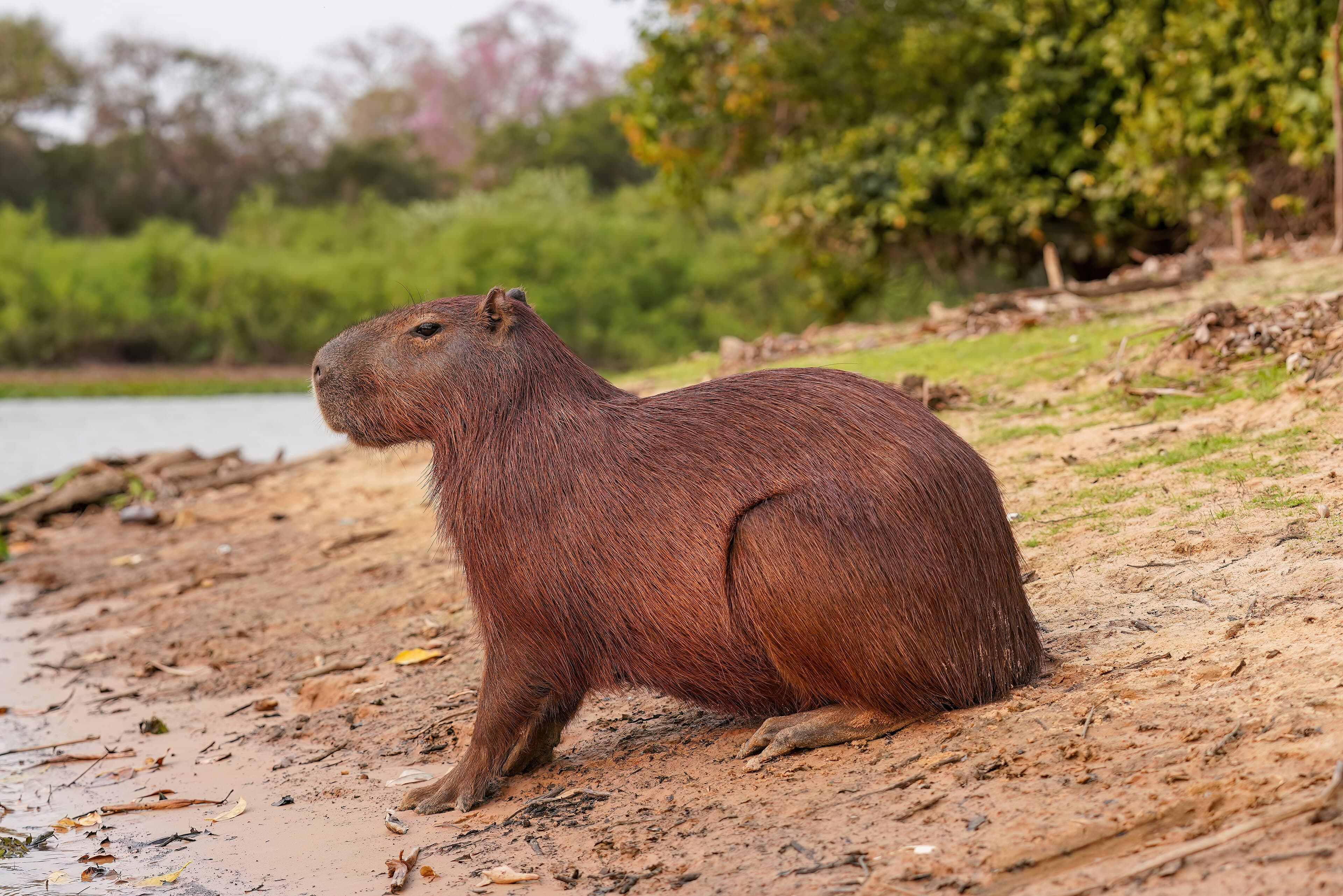
A full-grown capybara can weigh up to 65 kilograms - about as much as an adult human - and can be over a metre long. Despite their size, they are gentle herbivores, munching on grasses, water plants, and fruit. Their slightly webbed feet make them excellent swimmers, and they can hold their breath underwater for up to five minutes.
Capybaras are deeply social animals who live in groups of 10 to 30, sometimes even more. The group works together: while some animals eat or rest, others keep watch and bark or whistle to warn of danger. Their calls sound surprisingly like a mix between a dog's bark and a bird's whistle. Younger capybaras in the group are looked after by all the adults, not just their own parents.
In Paraguay, capybaras are found in the wetlands of the Pantanal region and along the banks of the Paraná and Paraguay rivers. Caimans, anacondas, and jaguars are their main predators, but capybaras are not easy to catch - they run fast on land and disappear into the water in seconds. Some Paraguayan farmers allow capybaras to graze in their fields because they control weeds.