
Classroom lesson · Itaipu Dam · 🇵🇾 Paraguay

Itaipu Dam

One of the world's biggest hydroelectric dams

Photo · Wikimedia Commons

What is it?

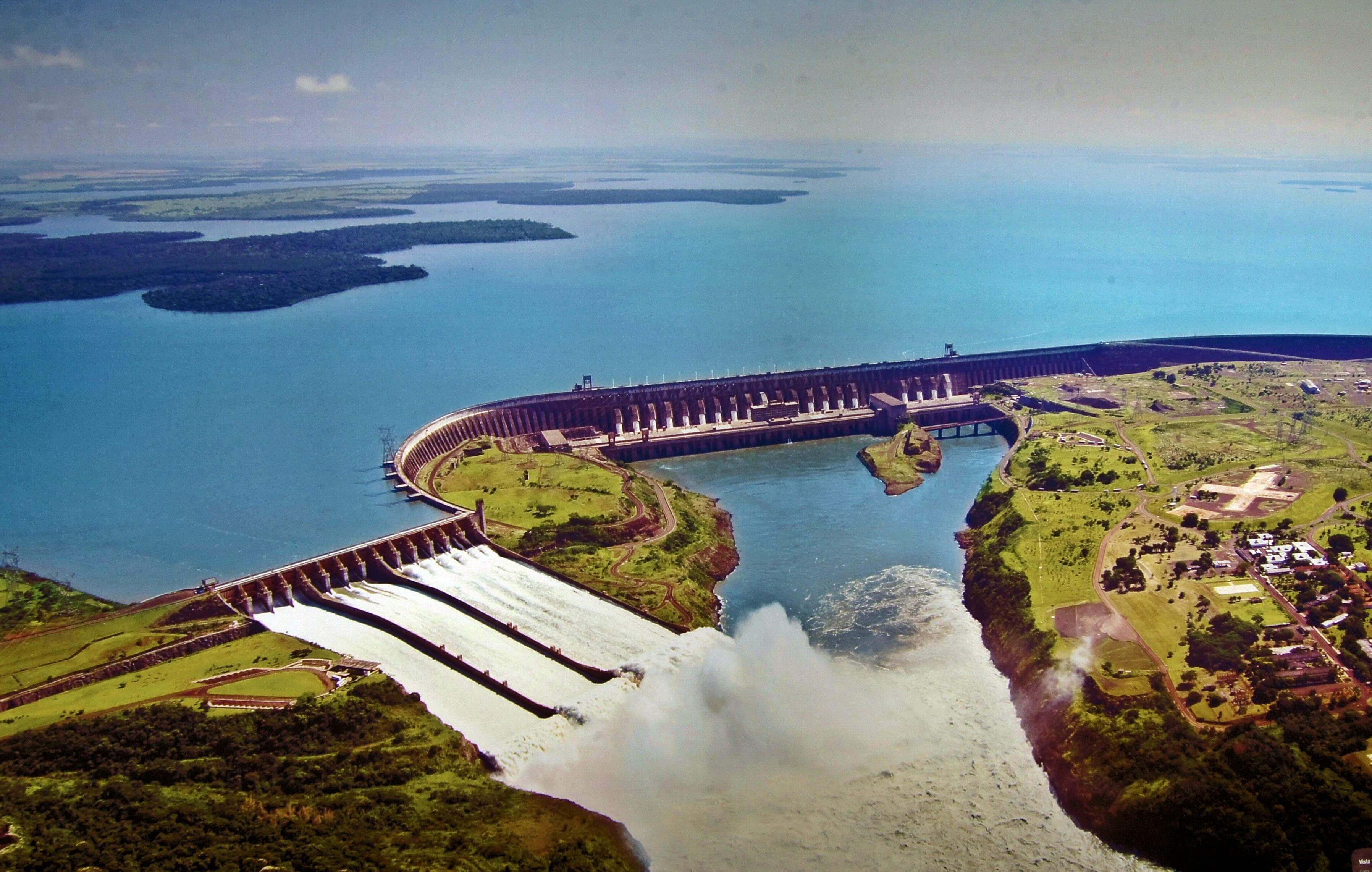
Itaipu is a giant dam on the Paraná River, shared between Paraguay and Brazil. It uses the force of rushing water to make electricity — enough electricity to light up millions and millions of homes. For many years it held the record as the most powerful dam on Earth.

Tell me more

The Itaipu Dam was built across the wide Paraná River and took many years and thousands of workers to finish. When the engineers closed the gates and let the water build up behind the dam, an enormous lake — called a reservoir — formed upstream. The whole thing is so long that if you walked from one end to the other it would take you about half an hour.

Inside the dam are huge machines called turbines. The weight of all that water pressing down spins the turbines, and the spinning makes electricity — just like a bicycle dynamo but enormously bigger. Paraguay uses some of that electricity itself and sends the rest to Brazil through thick cables. In fact, most of Paraguay's electricity comes from Itaipu.

The dam did not just change the river — it changed the whole area around it. A giant nature reserve now surrounds Itaipu Lake, sheltering tapirs, capybaras, deer, and hundreds of species of birds. Visitors can take boat tours on the lake and see wildlife from the water.

In the classroom

Walk your class through this in 15 minutes.

Talk together

Discussion prompts

  1. 01Water can make electricity — what other things in nature have energy that people use?
  2. 02The dam belongs to two countries. How do you think Paraguay and Brazil decide how to share the electricity it makes?
  3. 03If you lived near the lake, what animals would you most want to spot on a boat trip?
Try this

Classroom activity

Draw a simple diagram showing how a hydroelectric dam works: draw the reservoir, the dam wall, the turbine inside, and arrows showing electricity travelling to a house. Label each part. Compare your diagram with a partner and see if you both included the same steps.