
Classroom lesson · Hyacinth Macaw · 🇵🇾 Paraguay

Hyacinth Macaw

The biggest parrot in the world, and the brightest blue

Photo · Wikimedia Commons

What is it?

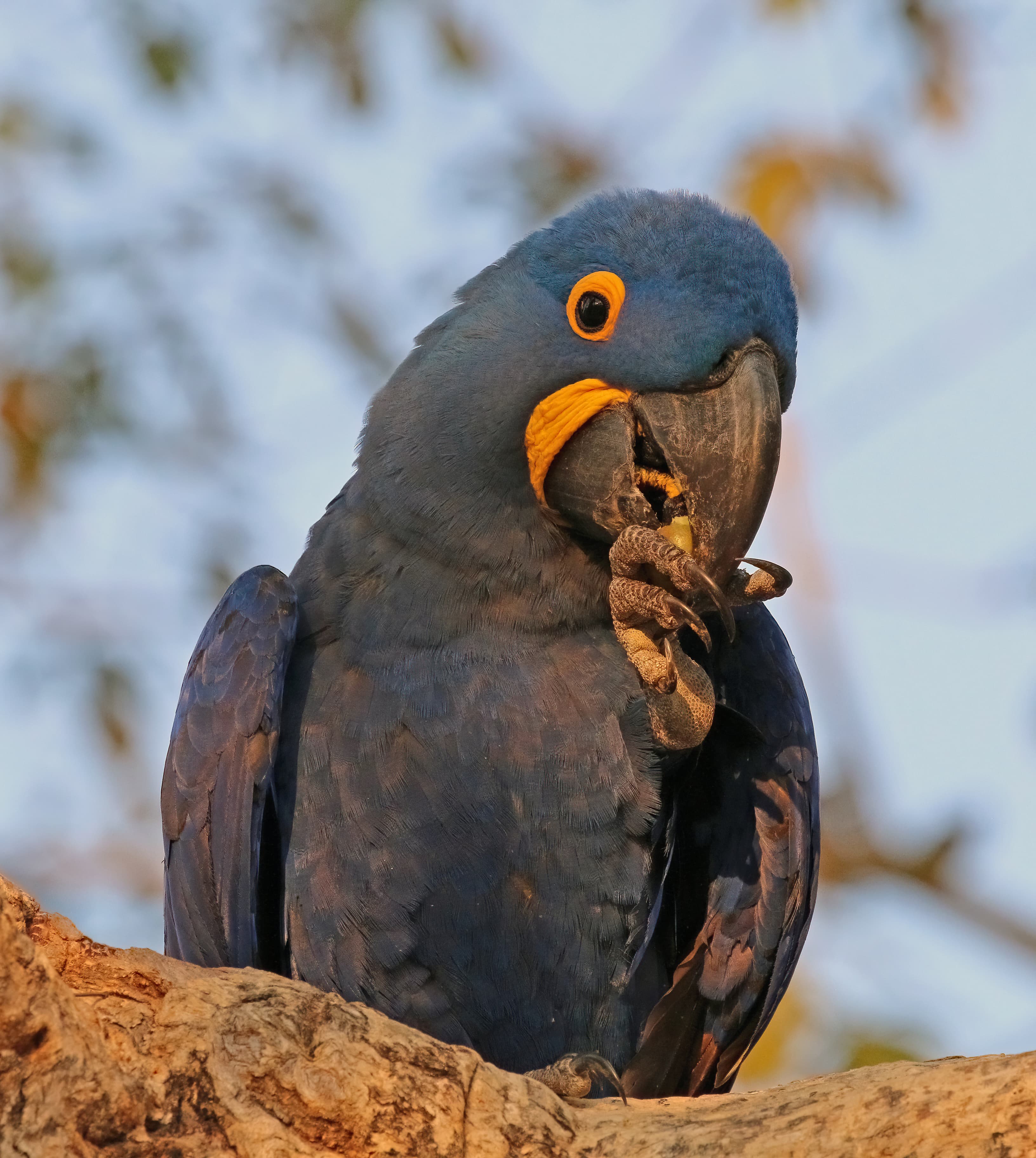
The hyacinth macaw is the largest parrot on Earth and is covered head to toe in the most electric cobalt-blue feathers you have ever seen. It lives in the wild palm forests and wetlands of Paraguay and neighbouring countries, cracking open rock-hard palm nuts with a beak that can bend iron wire.

Tell me more

Hyacinth macaws can measure over a metre from beak-tip to tail-tip — longer than most six-year-olds are tall. That magnificent blue colour comes not from pigment in the feathers but from the way the feather structure scatters light, in the same way that the sky looks blue. The bright yellow patches around their eyes and beaks are bare skin, not feathers.

Their enormous curved beak is strong enough to crack open palm nuts that most animals cannot get into. A hyacinth macaw pair often stays together for life, flying side by side and grooming each other's feathers. They nest in holes in tall palms or in cliff faces, and both parents take turns keeping the eggs warm.

Hyacinth macaws are known to be curious and gentle with people who earn their trust. In the wild they live in small flocks and communicate with loud, raspy calls that carry over long distances. They are vulnerable in the wild because their nesting trees are sometimes cut down, but conservation work in Paraguay and across South America has helped populations begin to recover.

In the classroom

Walk your class through this in 15 minutes.

Talk together

Discussion prompts

  1. 01The macaw's blue colour is caused by light scattering, not by blue pigment. Can you think of other things in nature that get their colour from light rather than from a dye or pigment?
  2. 02Hyacinth macaws pair up for life. What do you think are the advantages of that for raising chicks?
  3. 03If hyacinth macaws can live for 60 years, they might outlive their owners if kept as pets. What problems could that cause?
Try this

Classroom activity

Create a fact poster about the hyacinth macaw. Include: its size compared to something familiar, how it gets its blue colour, what it eats, and one fact that surprised you most. Illustrate it with your best attempt at drawing that extraordinary blue.