
Classroom lesson Β· Museum of Islamic Art Β· πŸ‡ΆπŸ‡¦ Qatar

Museum of Islamic Art

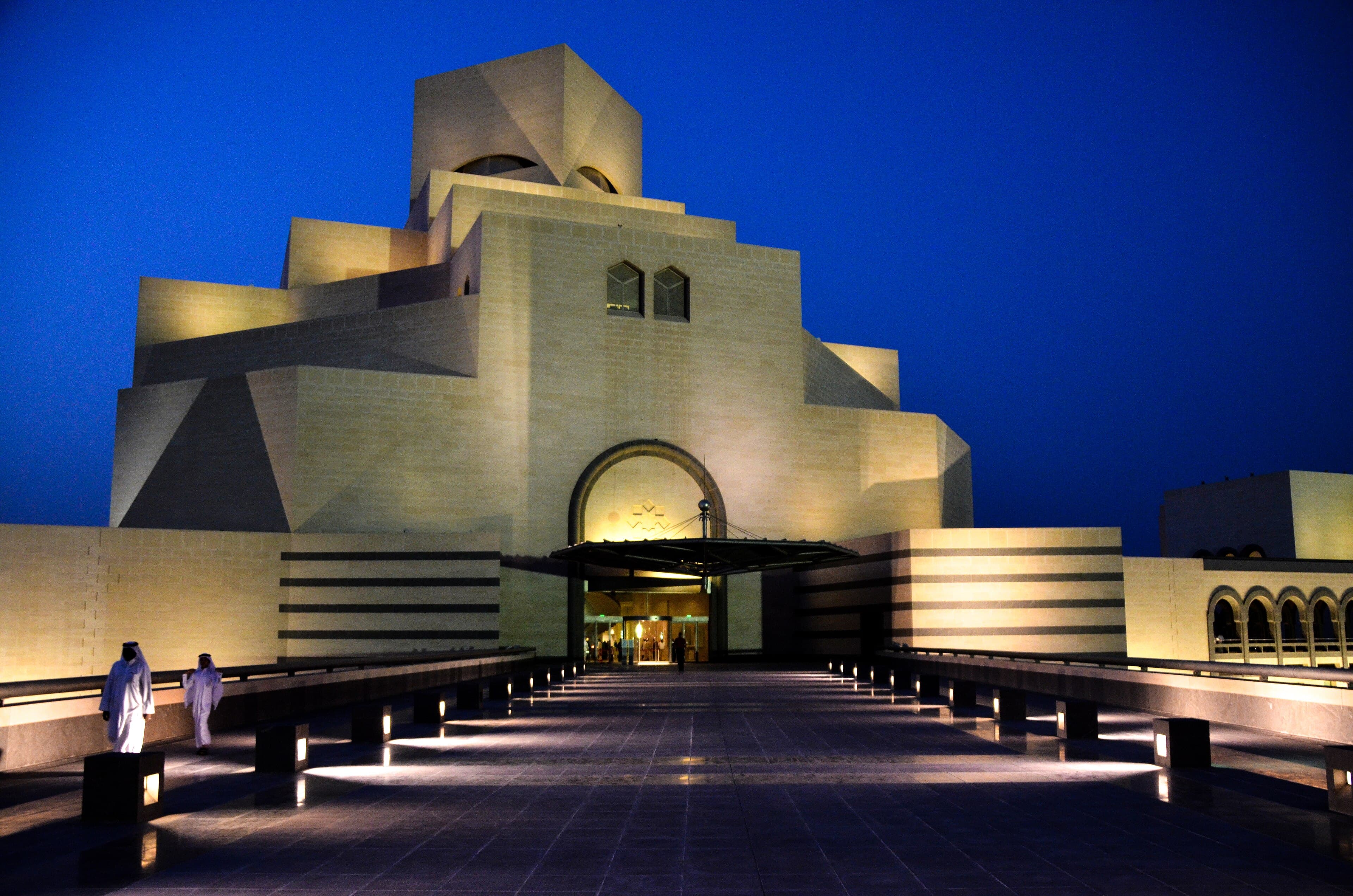
A stunning building filled with 1,400 years of beautiful treasures

Photo Β· Wikimedia Commons

What is it?

The Museum of Islamic Art in Doha sits on its own small island in the harbour, connected to the mainland by a bridge. Inside, you can find beautiful objects made by artists and craftspeople from across the Islamic world over the last 1,400 years. The building itself looks like a giant geometric puzzle in white stone.

Tell me more

The museum was designed by a famous architect called I.M. Pei, who was inspired by the shapes found in traditional Islamic architecture – squares, octagons, and arches layered on top of each other. The building rises five storeys and is surrounded by calm water on three sides, so it seems to float.

Inside there are more than 8,000 objects: gold jewellery, painted manuscripts, carved wood, glittering ceramics, and silks from countries stretching from Spain all the way to China. Each one was made by a skilled artist whose name we may never know but whose work has lasted centuries.

The atrium – the inside space in the centre – is spectacular. Sunlight pours in through tall windows and bounces off geometric patterns on the walls. Children who visit often describe it as feeling like standing inside a kaleidoscope.

In the classroom

Walk your class through this in 15 minutes.

Talk together

Discussion prompts

  1. 01Why do you think people keep beautiful objects safe in museums for hundreds of years?
  2. 02The building is made of squares and octagons stacked up. Can you spot these shapes around your classroom?
  3. 03If you made an object that you wanted people to admire in 1,000 years, what would you make?
Try this

Classroom activity

Give each child a sheet of squared paper and some coloured pencils. Using only straight lines and right angles, design a repeating geometric tile pattern. Discuss how Islamic artists used maths to make beautiful art.