
Classroom lesson ยท Wildlife ยท ๐Ÿ‡จ๐Ÿ‡ฌ Republic of the Congo

Mandrill

The world's largest monkey, with a dazzling painted face

Photo ยท Wikimedia Commons

What is it?

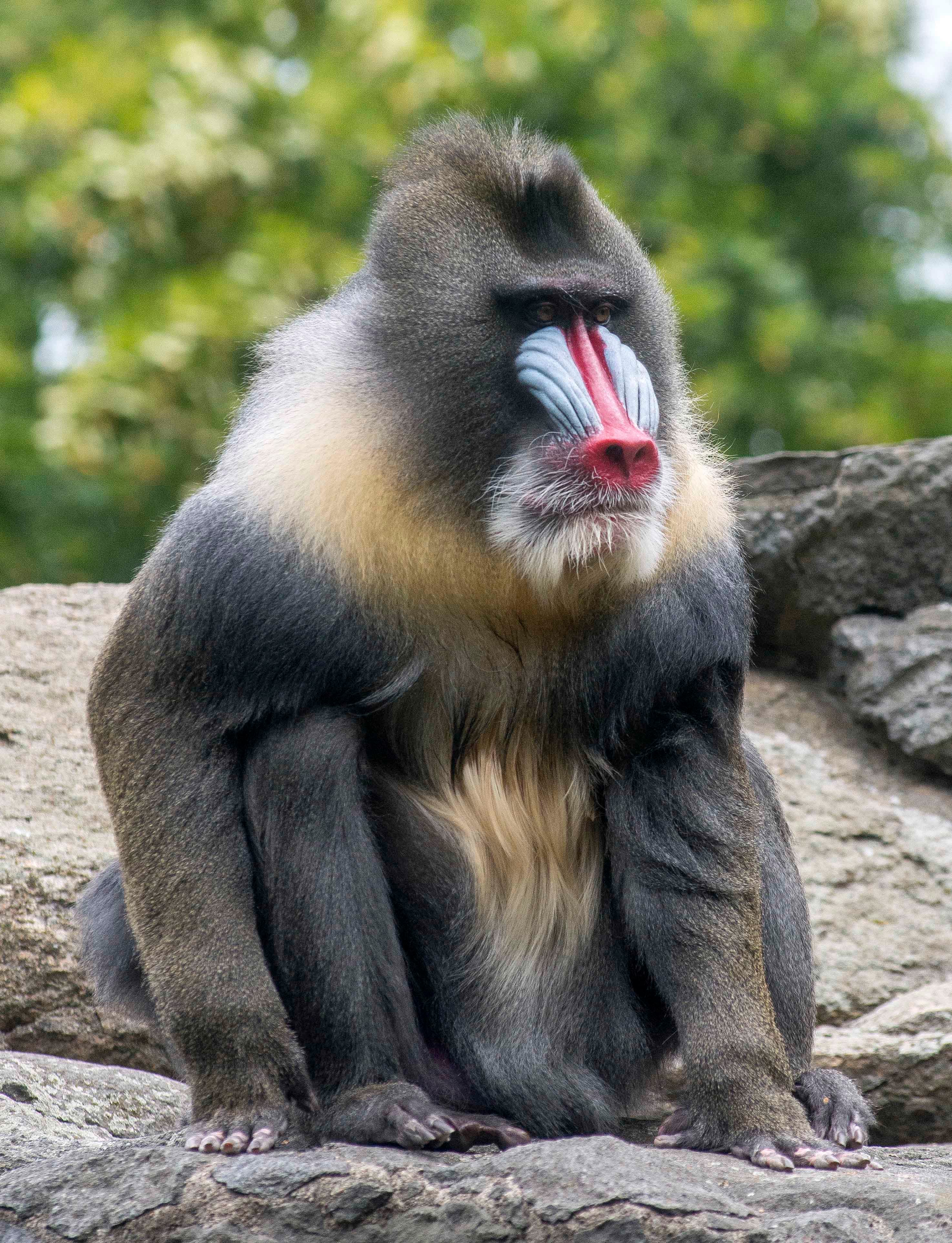
The mandrill is the world's largest monkey and one of the most colourful animals on the planet. Male mandrills have spectacular blue and red patches on their faces and bottoms โ€” these vivid colours actually get brighter when the mandrill is excited or healthy. They live in the rainforests of Central Africa, including the Republic of the Congo.

Tell me more

Mandrills live in large groups called hordes that can contain hundreds of individuals โ€” some of the biggest social groups of any primate. Moving through the forest together, they make a tremendous amount of noise as they call to each other, dig for roots and chase each other through the trees.

They eat almost anything the forest offers: fruits, nuts, roots, insects, and sometimes small lizards or frogs. Their cheek pouches โ€” stretchy pockets inside their cheeks โ€” work like lunchboxes. They stuff food in while foraging and then sit safely somewhere else to chew and swallow it properly.

The bright colours of a male mandrill's face are connected to how healthy and strong he is. A very healthy male will have the most vivid blue and red colouring. Females and young mandrills have duller colours but the same intelligent, curious eyes. Mandrills are smart animals and have been observed using tools in the wild.

In the classroom

Walk your class through this in 15 minutes.

Talk together

Discussion prompts

  1. 01A mandrill's colours signal how healthy it is. Can you think of other animals that use colour to send signals to each other?
  2. 02Mandrills live in groups of hundreds. What are some advantages of living in a very large group?
  3. 03Mandrills use cheek pouches to carry food. What human inventions do a similar job?
Try this

Classroom activity

Using bright paints or coloured pencils, draw a large portrait of a male mandrill's face. Label the blue cheek ridges, the red nose stripe, the yellow beard and the brown fur. Then write a two-sentence caption explaining what the colours are for, as if you were writing a label for a nature museum exhibit.