
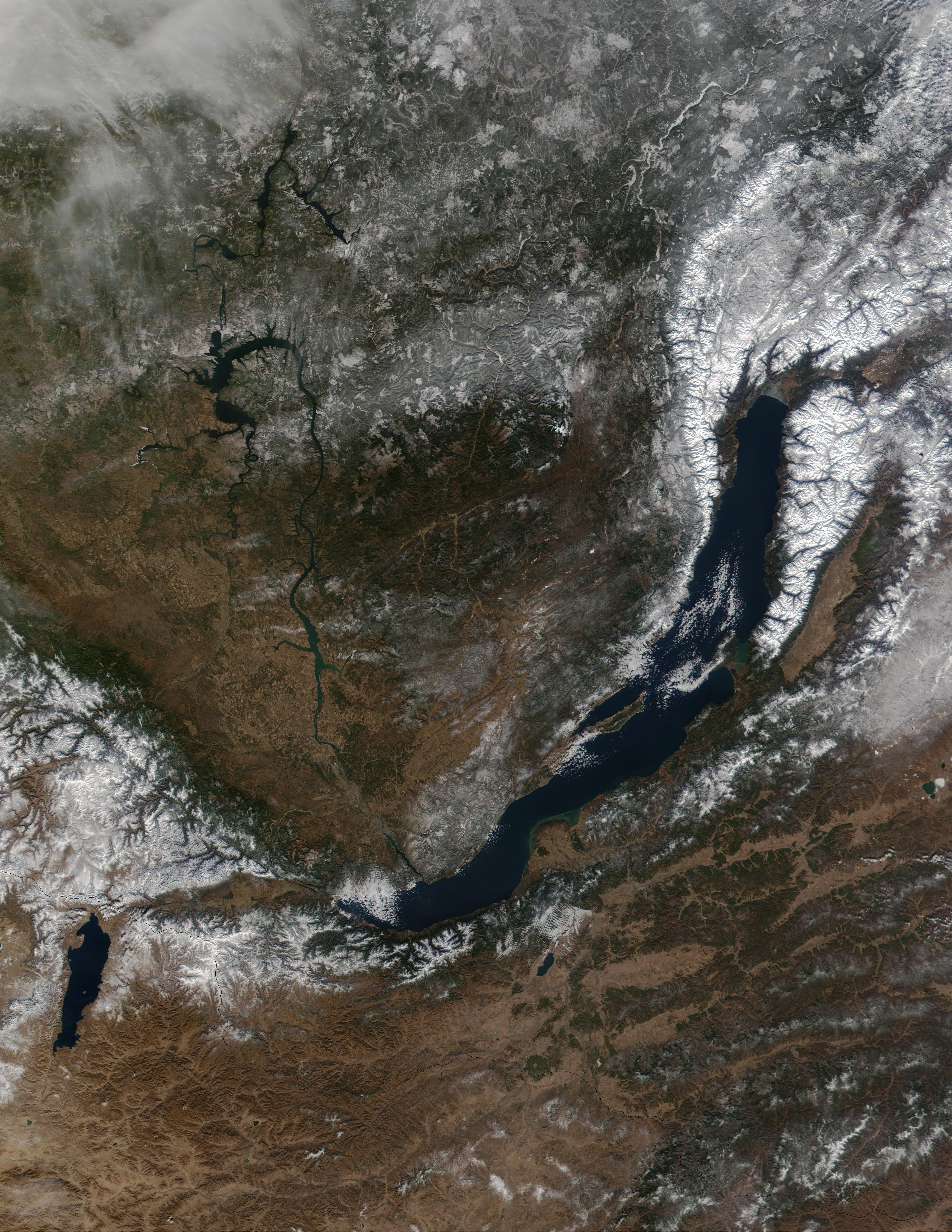
Lake Baikal sits in the middle of Russia's vast Siberian wilderness, surrounded by mountains, thick forests and small villages. It is about 636 kilometres long - roughly the same distance as driving from London to Edinburgh and back. The lake is thought to be about 25 million years old, which makes it one of the oldest lakes on the planet.
Because the lake is so old and isolated, hundreds of animals live here and nowhere else on Earth. The Baikal seal, called a nerpa, is the only freshwater seal in the world - it lives only in this lake. The lake is also home to a see-through shrimp called an amphipod and a fish called the golomyanka, which is so full of oil that it is almost transparent.
In winter, the surface of Lake Baikal freezes over completely, forming thick, clear ice. The ice is so transparent that you can see fish swimming underneath it. People walk, drive and even cycle across the frozen lake. In summer the lake sparkles blue, and the forests around it are home to bears, lynx and deer. Scientists call Baikal the 'Galapagos of Russia' because it has so many unique creatures.