
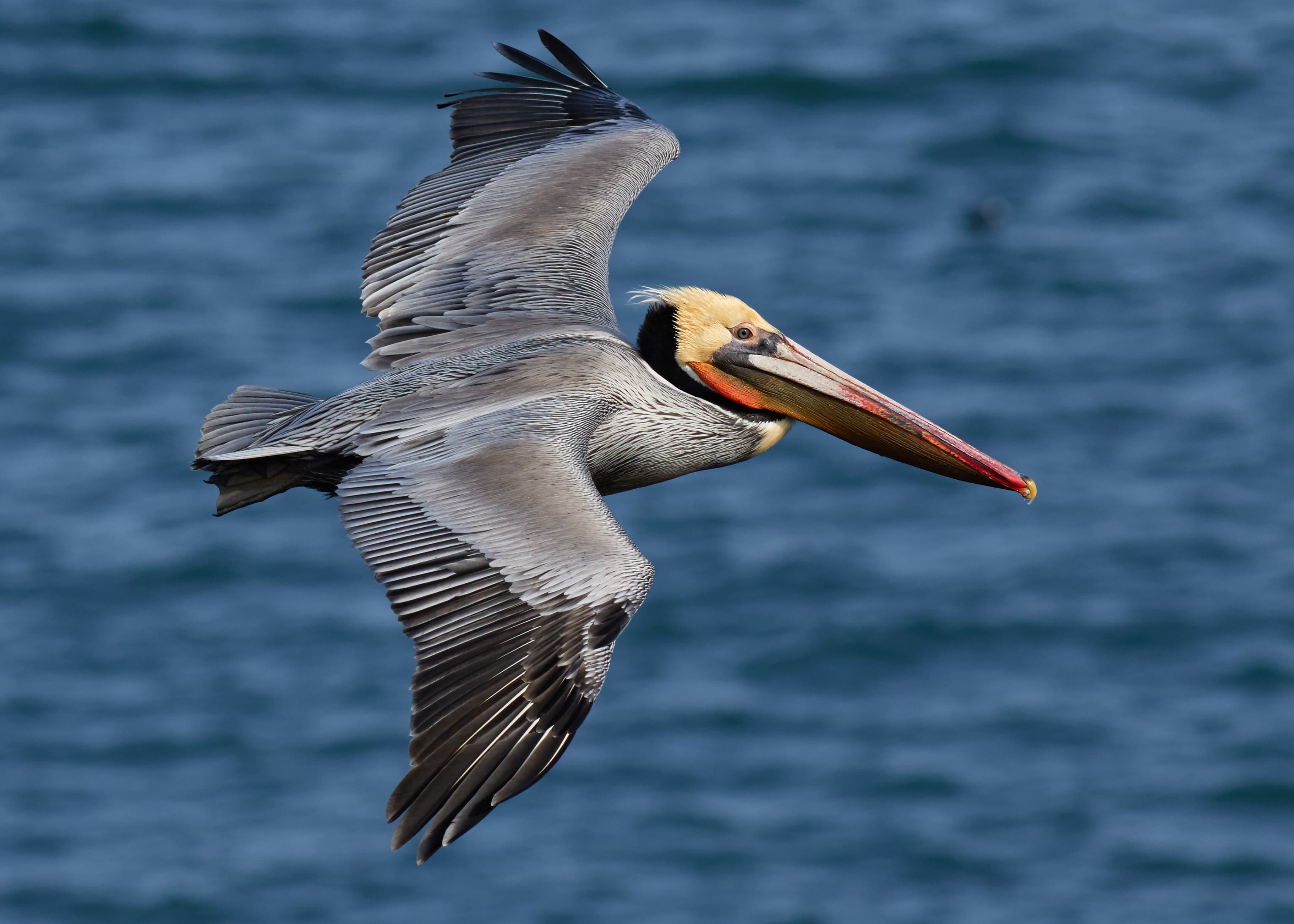
Brown pelicans are the smallest of the world's eight pelican species, but they are still impressively big birds. With their wings fully open, they can span nearly 2.5 metres - that is wider than most people are tall. Despite their size, they are graceful in the air, often gliding in a line just above the water's surface, their wingtips almost skimming the waves.
The fishing dive of a brown pelican is one of nature's most dramatic shows. The bird climbs to about 10 metres above the sea, spots a fish below, tilts its head to aim, and then drops into a steep dive. Just before hitting the water it pulls its wings back and hits the surface at up to 70 kilometres per hour. The impact would knock most creatures out - but pelicans have special air sacs under their skin that cushion the blow.
When the pelican enters the water, its huge throat pouch expands to scoop up both the fish and a big gulp of water. It then tips its head to drain out the water and swallows the fish whole. The whole process happens in just a few seconds. On the beaches of Nevis you can sometimes watch pelicans doing this over and over again just offshore.
Young brown pelicans are brownish all over, but adults develop a striking pattern - white and yellow head, dark brown body, long pinkish bill. They nest in colonies on offshore rocks and small islands, and the parents take turns keeping the chicks warm and bringing them fish.