
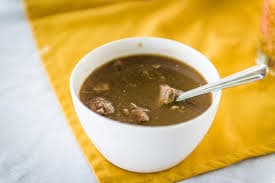
Making goat water is an event in itself. The meat is first marinated (soaked in a mix of herbs and spices) overnight to build up deep flavour. Then it is slow-cooked for hours with vegetables, breadfruit, dumplings, and aromatics like cloves, cinnamon, and thyme. The long cooking makes the meat incredibly tender and fills the whole house with a wonderful, spicy aroma.
Goat water is particularly associated with the island of Nevis, where it has been made for generations. On celebration days - birthdays, local festivals, after cricket matches, and especially during Culturama - families and neighbours gather around big pots of goat water to eat together. It is a dish that brings people together.
The stew is usually served with thick slices of crusty bread or dumplings to soak up the rich broth. Local cooks often have their own secret touches - a particular combination of herbs, or the exact right amount of scotch bonnet pepper - that make their goat water uniquely their own. Recipes are passed down from grandparents to grandchildren.
Goats have been raised on both islands for a very long time. They are well-suited to the Caribbean climate and can graze on the hillsides without much help. Seeing goats wandering on the green slopes of Nevis Peak or ambling along a roadside is a common and charming sight on both islands.