
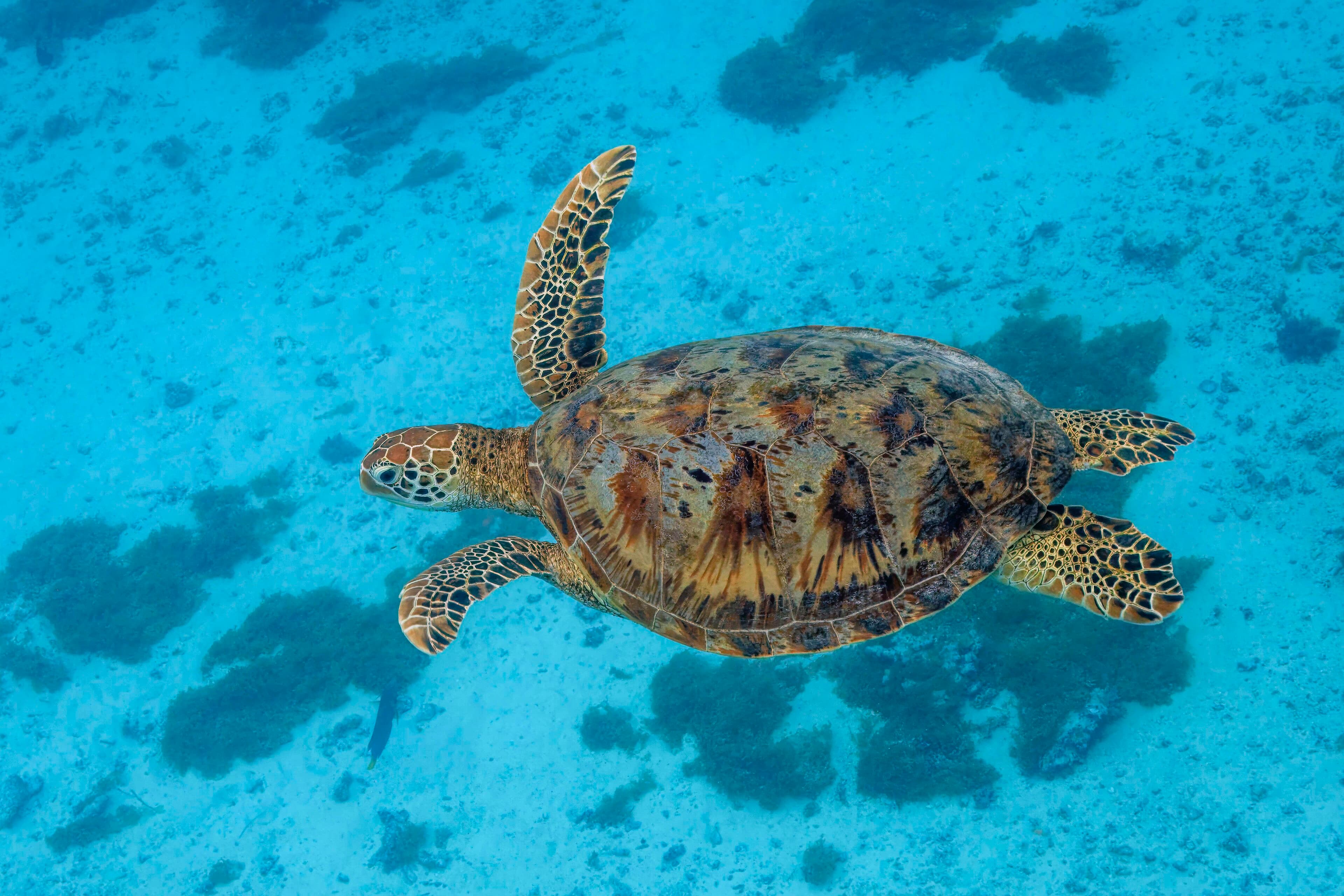
Despite being called 'green' sea turtles, their shells are actually brownish or olive-coloured. The 'green' name comes from the colour of the fat beneath their skin, which turns green because of all the sea grass and algae they eat. They are herbivores - plant eaters - and spend their days grazing on underwater sea grass meadows like underwater cows.
Female green sea turtles return to the same beach where they were born to lay their own eggs - even if that beach is thousands of kilometres away. Scientists think they navigate using the Earth's magnetic field, like a built-in compass inside their bodies. A female might travel across an entire ocean and still find the exact beach where she hatched decades before.
On Nevis and Saint Kitts, conservation volunteers patrol the beaches at night during nesting season, watching for turtles hauling themselves up the sand. Each female digs a deep hole, lays around 100 eggs the size of ping-pong balls, covers them carefully, and returns to the sea. About two months later, the tiny hatchlings dig their way out and scramble towards the moonlit water.
Green sea turtles can live for over 80 years and grow to about 1.5 metres long - roughly the height of a tall adult. They are very strong swimmers despite their size, using their large front flippers like wings to 'fly' through the water.