
Classroom lesson · Wildlife · 🇱🇨 Saint Lucia

Leatherback Turtle

The world's largest turtle — an ancient ocean giant that nests on Saint Lucia's beaches

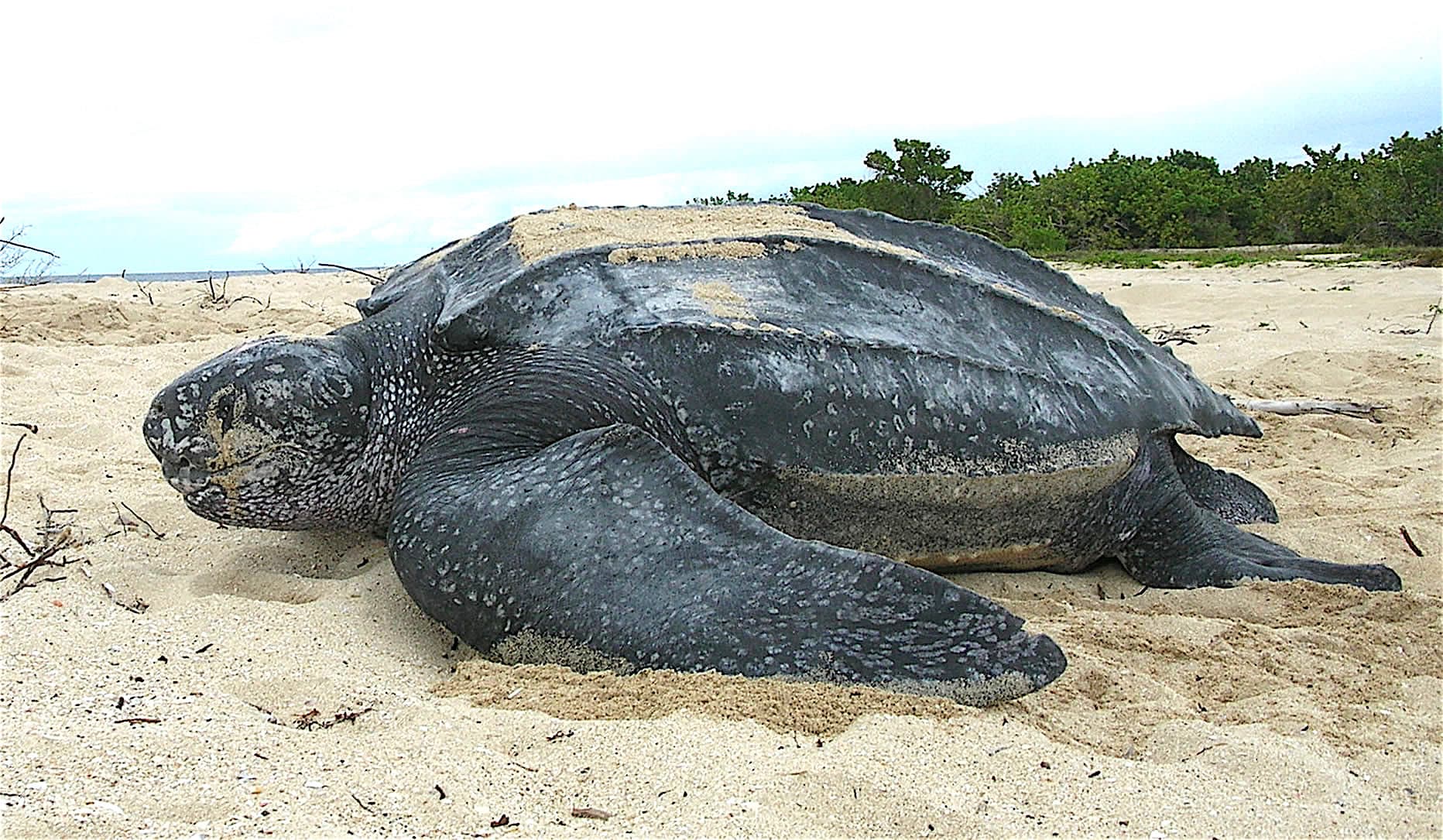
Photo · Wikimedia Commons

What is it?

The leatherback turtle is the biggest turtle in the world — it can grow as long as a small car and weigh as much as a grand piano. Instead of a hard shell, it has a tough, rubbery, leathery skin covering its back, which gives it its name. Leatherback turtles travel thousands of kilometres across the ocean and come to Saint Lucia's beaches to lay their eggs.

Tell me more

Leatherbacks have been swimming in the world's oceans for over 100 million years — they are older as a species than many of the dinosaurs. They can dive deeper and travel further than any other turtle, sometimes crossing entire oceans. Their powerful front flippers can be as long as 2.7 metres from tip to tip, propelling them through the water.

Female leatherbacks come ashore on quiet beaches at night to lay their eggs in the sand. Grand Anse beach in Saint Lucia is one of the most important leatherback nesting beaches in the Eastern Caribbean. The females dig a deep hole with their back flippers, lay about 80 eggs, cover the nest carefully, and then return to the sea. The eggs hatch about two months later.

Leatherbacks eat mainly jellyfish. A leatherback can eat its own body weight in jellyfish every day, which means these giant turtles help control jellyfish numbers in the ocean. Conservation teams in Saint Lucia monitor the nests and protect the beaches during nesting season, because leatherbacks need safe, quiet beaches to reproduce successfully.

In the classroom

Walk your class through this in 15 minutes.

Talk together

Discussion prompts

  1. 01Leatherback turtles travel thousands of kilometres but return to the same beaches to nest. How do you think they find their way across the ocean?
  2. 02Conservationists protect nesting beaches at night. How does protecting one animal help the whole ocean ecosystem?
  3. 03Leatherbacks have existed for over 100 million years. What does it make you think about when you imagine an animal that has been around so much longer than humans?
Try this

Classroom activity

On a world map, draw the Atlantic Ocean and mark Saint Lucia. Then draw arrows showing a leatherback turtle's journey from feeding grounds near Africa all the way to Saint Lucia's nesting beaches. Measure the approximate distance in centimetres on the map and use the scale to estimate the real distance in kilometres.