
Classroom lesson · Mangrove Forests · 🇱🇨 Saint Lucia

Mangrove Forests

Trees that grow in the sea and protect the coastline

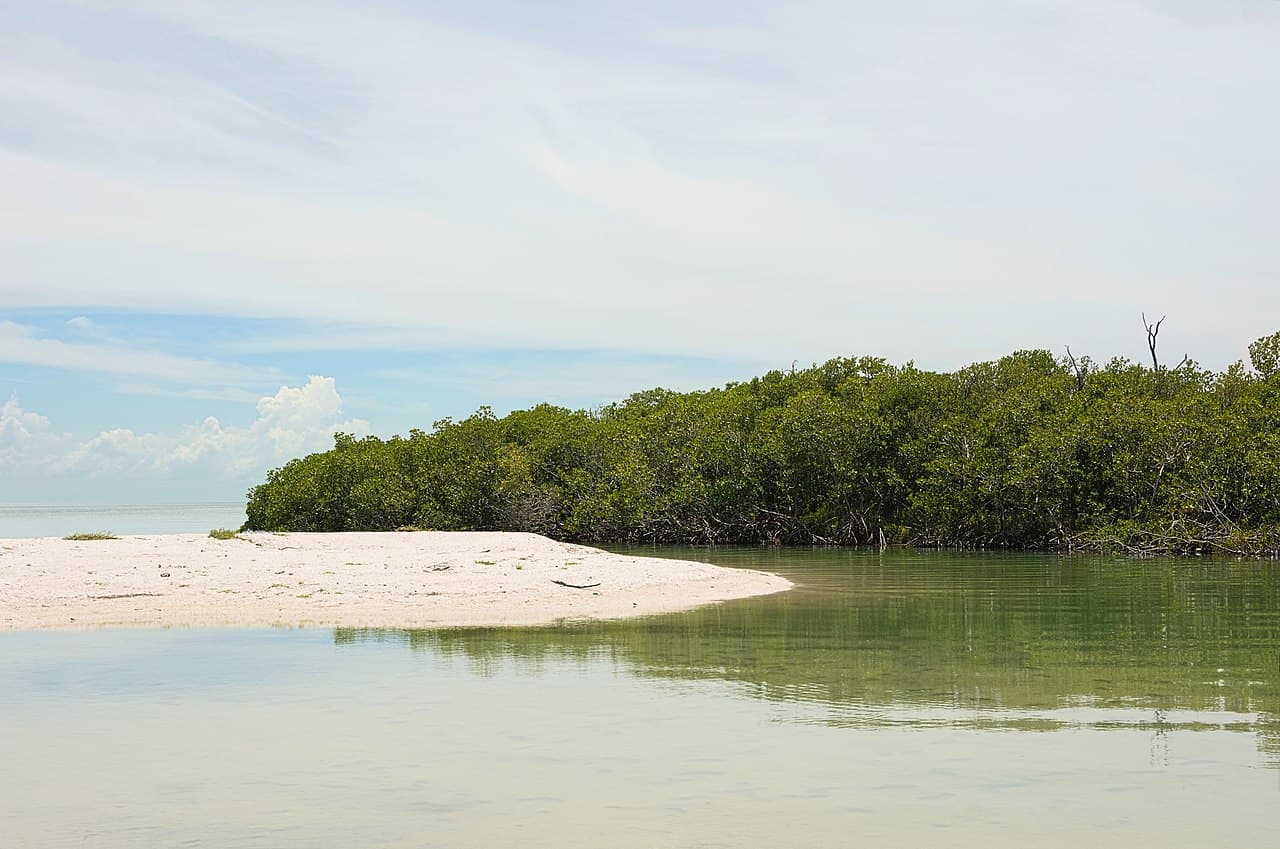
Photo · Wikimedia Commons

What is it?

Mangrove forests are special trees that grow right at the edge of the sea, with their roots submerged in salt water. Saint Lucia has several healthy mangrove areas along its coast, and these forests do an amazing job of protecting the land, sheltering young fish and keeping the water clean. They look like a tangle of arching roots holding the trees above the waves.

Tell me more

Mangroves have a remarkable trick — they can live in salty sea water that would kill most other plants. Their roots grow in long arching curves called prop roots or stilt roots, which anchor the tree in the soft mud and also stick up above the water like snorkels to help the tree breathe. From above, a mangrove forest looks like a green jigsaw puzzle floating on the water.

The root network is one of the best nurseries in nature. Hundreds of species of small fish, shrimps, crabs and other sea creatures shelter among the roots when they are young and vulnerable. The thick tangles of roots protect baby animals from bigger predators. When those animals grow up and move to the reef or the open sea, the whole ocean ecosystem is healthier because of the mangroves.

Mangroves also protect Saint Lucia's coastline. When big waves arrive during storms, the forest acts like a sponge and a wall — slowing the water down and stopping it from washing away the land behind it. Scientists consider mangroves to be one of the most valuable ecosystems on Earth, because they do so many important jobs at the same time.

In the classroom

Walk your class through this in 15 minutes.

Talk together

Discussion prompts

  1. 01Mangroves protect baby fish among their roots. Can you think of other places in nature where a special environment protects young animals?
  2. 02Mangrove forests protect the coastline from storm waves. What other natural barriers protect land and people from strong forces of nature?
  3. 03If mangroves were removed, what might happen to the reef fish and the coastline behind them?
Try this

Classroom activity

In pairs, build a mangrove root model using strips of brown card bent in arching curves stood in a tray of blue tissue paper (the sea). Place small paper cut-out fish and crabs among the roots. Then simulate a 'wave' by tilting the tray — which fish stay safe among the roots?