
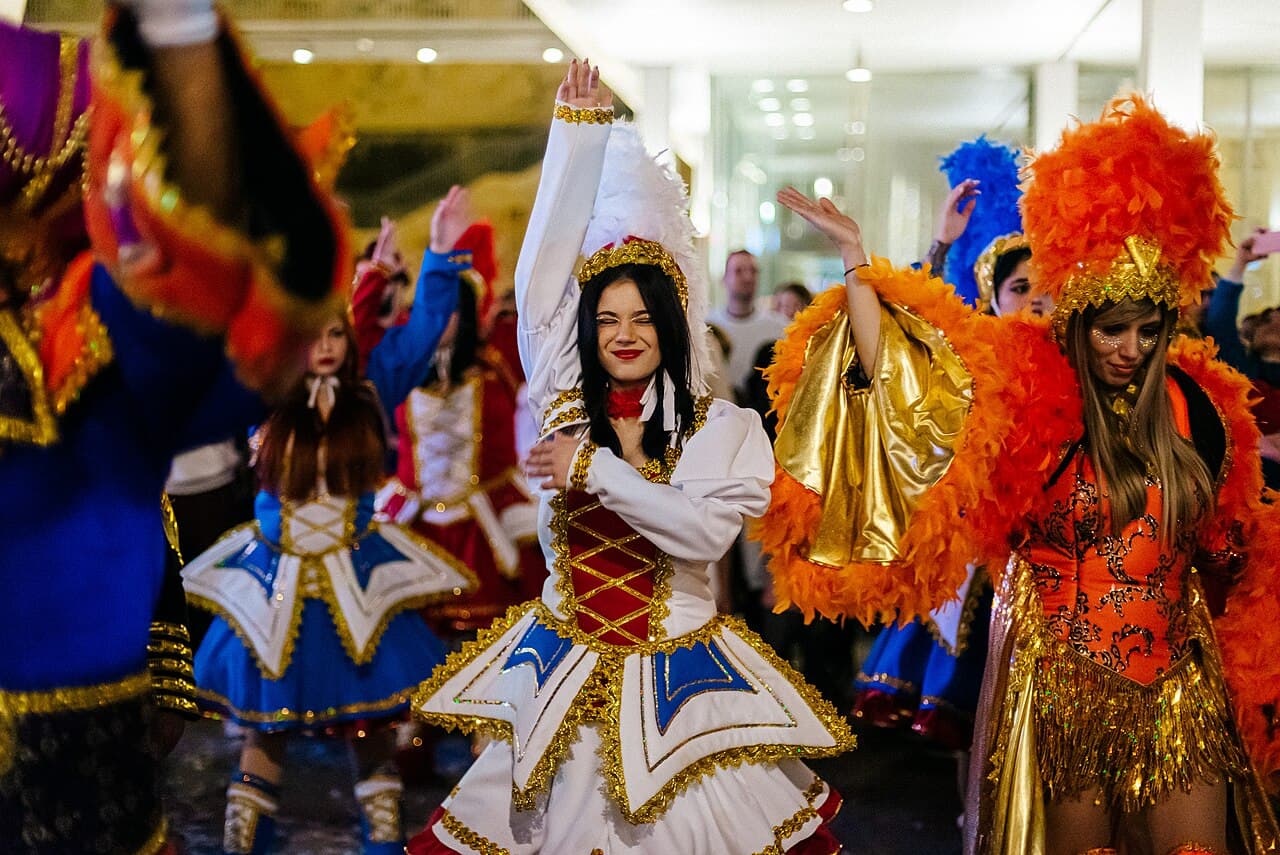
Carnival in Saint Lucia - as in much of the Caribbean - has its roots in a tradition of joyful community celebration and creative expression. In the weeks leading up to carnival, costume designers and bands work day and night to create spectacular outfits covered in feathers, sequins, beads and bright fabric. Some costumes are so large and elaborate that the wearers cannot sit down while wearing them.
The carnival schedule is packed with events. Jouvert (pronounced 'joo-vay') starts at the crack of dawn when revellers paint themselves in colours and take to the streets dancing. The Parade of the Bands is the main daytime event - huge groups dressed in matching costumes march through the streets to the music of their 'band' (which really means their costumed group, not just musicians). Soca competitions, pageants and concerts fill the rest of the schedule.
Calypso and steelpan music are also central to carnival. Calypso is a tradition of singing witty, clever songs that tell stories and make social observations - calypsonians (calypso singers) compete for the title of Calypso Monarch. Steelpan instruments, made from oil drums and invented in Trinidad, produce a bright, joyful sound that is deeply associated with Caribbean carnival culture.