
Classroom lesson · Wildlife · 🇱🇨 Saint Lucia

Saint Lucia Warbler

A tiny songbird with a big voice, found only in Saint Lucia's forests

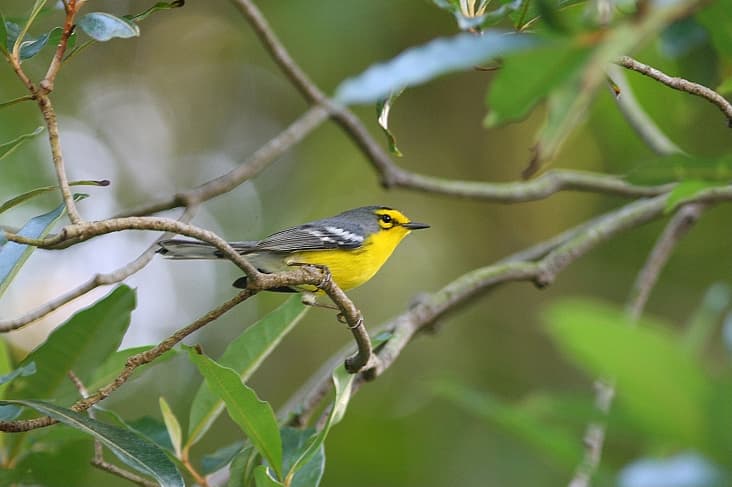
Photo · Wikimedia Commons

What is it?

The Saint Lucia warbler is a small bird — about the size of your fist — that lives in the forests and gardens of Saint Lucia. Despite its tiny size, it has an impressively loud and cheerful song that fills the trees. It has a bright yellow underside with a grey-green back, and a bold black mask across its face.

Tell me more

Warblers are a huge family of small songbirds found across the Americas. The Saint Lucia warbler is one of the so-called yellow warblers, and it is one of the most commonly seen birds on the island. It is not shy — you will often spot one hopping among low branches, or even in garden bushes close to people.

The warbler feeds mainly on insects, picking them off leaves, bark and flower heads with its fine, pointed bill. It moves with quick, bouncy hops and constantly flicks its tail as it hunts. In gardens and parks it helps control insect populations, so farmers and gardeners consider it a helpful neighbour.

Warblers build small, neat cup-shaped nests tucked into a fork of branches. Both parents help to feed the chicks, which grow very quickly and leave the nest in only a couple of weeks. Young warblers look duller than their parents at first, but they gradually develop their full bright colours over their first year.

In the classroom

Walk your class through this in 15 minutes.

Talk together

Discussion prompts

  1. 01The warbler's song is very loud for such a tiny bird. Why might it be useful for a small bird to have a loud voice?
  2. 02Both parents take care of the warbler chicks. How do parent animals caring for young compare to the way human families look after children?
  3. 03Warblers help control insect numbers in gardens. Can you think of other animals that people might consider helpful neighbours?
Try this

Classroom activity

Listen to a recording of a Saint Lucia warbler's song online (with your teacher's help). Then draw a picture of the bird and write three words that describe the sound. Next, try to invent a bird call of your own by humming or whistling — teach it to a partner and see if they can copy it.