
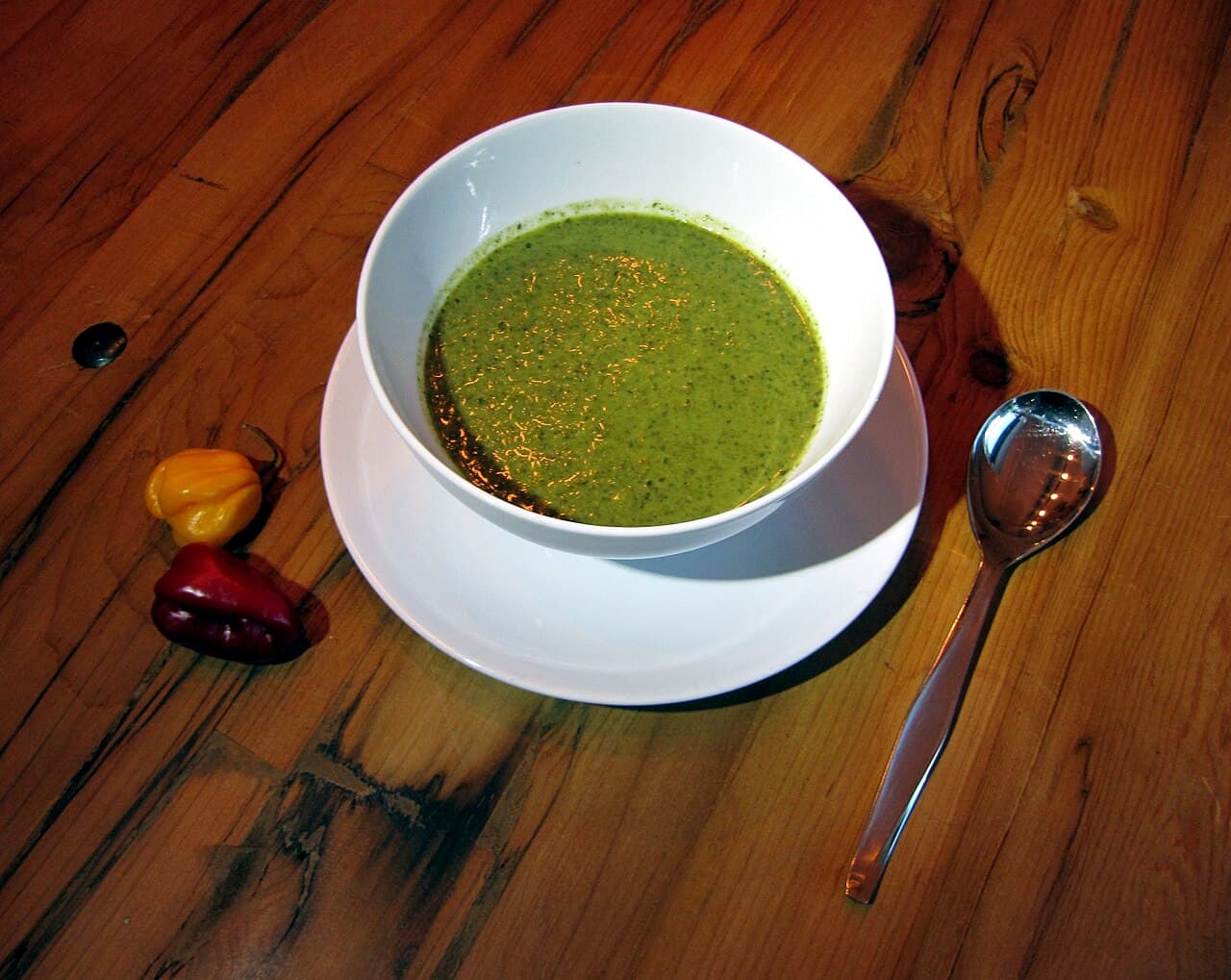
The dasheen plant grows widely across Saint Vincent. Its large, heart-shaped leaves are the key ingredient in callaloo - they are washed, chopped and simmered in a pot until they break down into a thick, silky soup. The leaves are full of vitamins and iron, making callaloo one of the most nutritious dishes in Caribbean cooking. In fact, many Vincentian families serve it to their children as a strength-building meal.
Every family has their own version of callaloo. Some add crab claws, bringing a sweet seafood flavour to the soup. Others stir in salted fish or chicken. Coconut milk gives a creamy richness, while scotch bonnet peppers can be added for grown-ups who like a bit of heat. In Saint Vincent, doughboys - small, dense dumplings made from flour and water - are often dropped into the pot to make the meal even more filling.
Callaloo is also eaten across other Caribbean islands, including Trinidad, Barbados and Jamaica, but each island has its own spin on the recipe. Vincentians are very proud of their version, and arguments about whose callaloo is best can go on quite cheerfully for a very long time at any family gathering.
On Sunday mornings across Saint Vincent, the smell of callaloo cooking fills many households. It is a dish that brings people together - grandparents, parents and children all sitting around the same table, passing the bread, sharing the soup and catching up on the week. Food is one of the most powerful ways a culture keeps its traditions alive.