
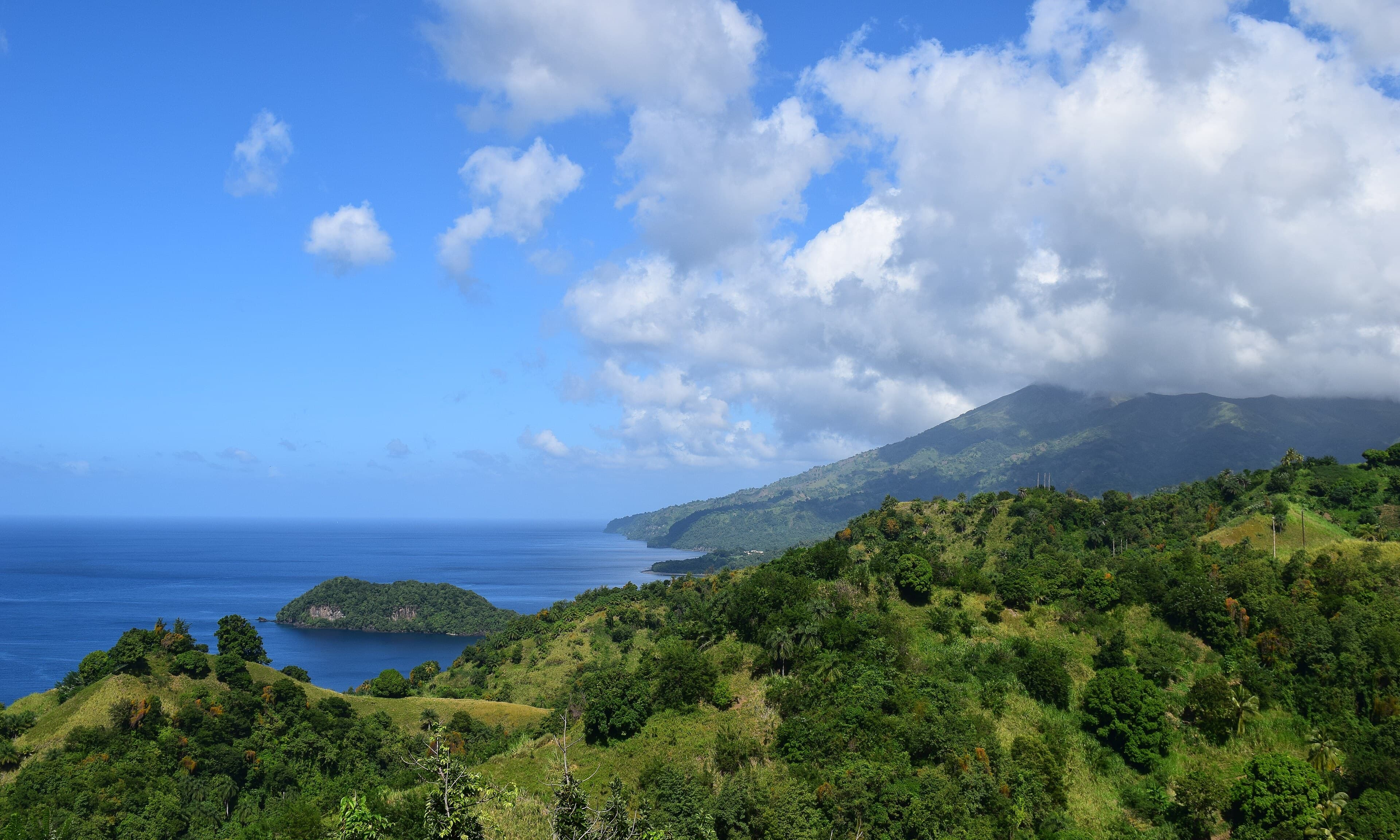
A volcano is basically a giant opening in the earth where very hot melted rock, called magma, pushes up from deep underground. La Soufrière has been doing this for thousands of years, and the lava it left behind slowly turned into the rich, dark soil that farmers on Saint Vincent use to grow bananas, sweet potatoes and all kinds of tropical fruit.
The hike to the summit takes most people about three to four hours each way, winding through lush rainforest full of tree ferns and colourful birds. As you climb higher, the trees get shorter and the wind gets stronger - and then suddenly you reach the rim and look down into a wide green crater lake that glows an almost magical colour.
The name 'Soufrière' comes from French and means 'sulphur mine'. You can sometimes smell a faint eggy whiff of sulphur gas near the top, which is just the volcano quietly breathing. Scientists called volcanologists visit regularly with special instruments to listen to what is happening deep underground.
La Soufrière's slopes are so fertile that whole ecosystems of rare plants and animals have built up around it. The Saint Vincent parrot - the national bird - nests in the forest on its flanks. Looking at it from the coast, the volcano is always there on the horizon, a reminder that this small island was built by some of the most powerful forces on Earth.