
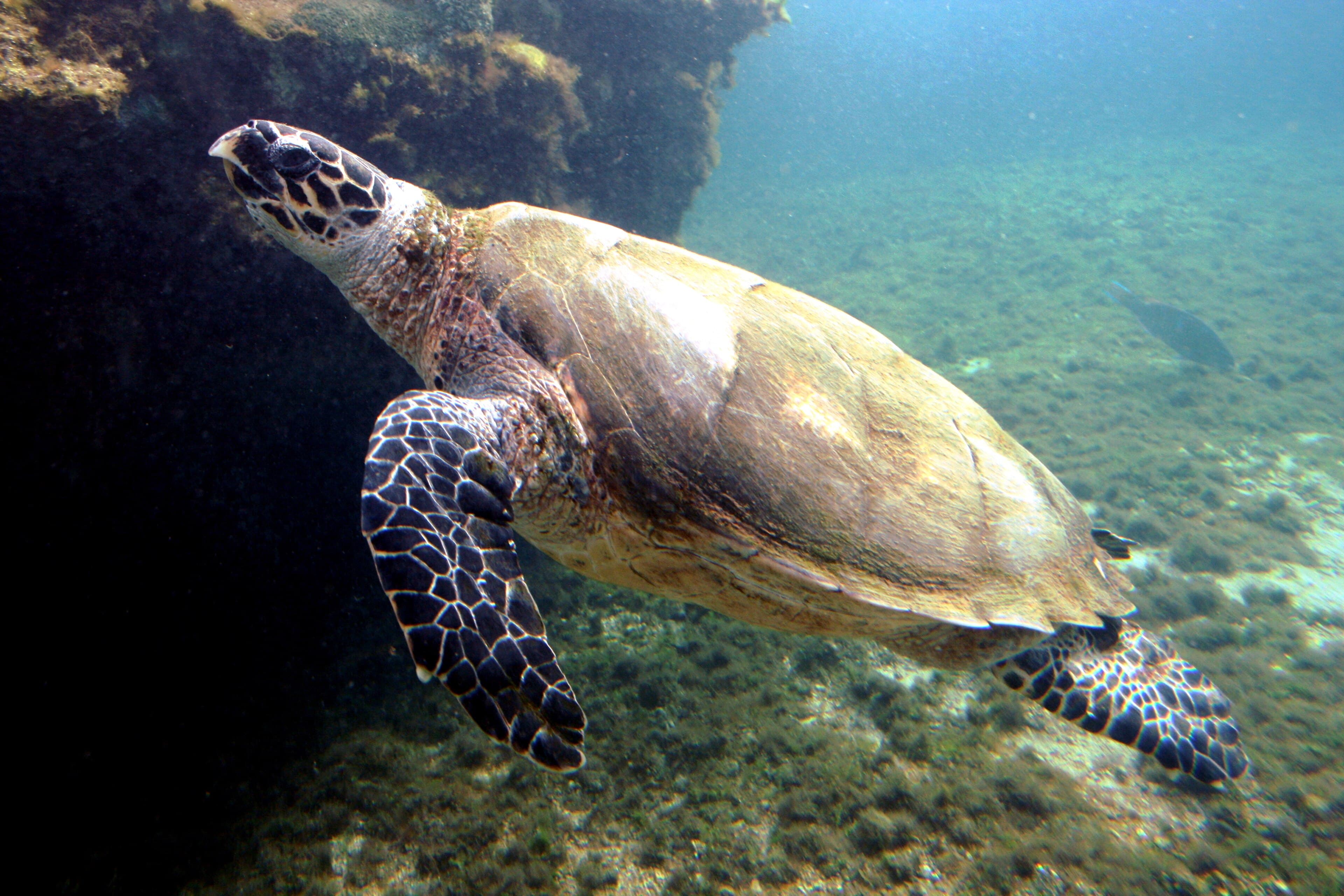
A hawksbill turtle's shell is called a carapace, and it is covered in overlapping plates that create a gorgeous amber and brown pattern. Adults can grow up to about one metre long and weigh as much as 80 kilograms - roughly the same as an adult human. Despite their size, they are graceful and almost silent in the water, steering with their large front flippers.
Hawksbills are one of the few animals that eat sea sponges, which most other creatures cannot digest. By eating sponges, they help keep coral reefs healthy - without turtles to control them, sponges can grow over corals and block out the sunlight corals need to survive. This means a healthy turtle population actually helps the whole reef ecosystem.
Every few years, female hawksbills return to the very beach where they were born to lay their eggs. At night, a female drags herself up the sand, digs a deep nest with her back flippers, lays around 130 soft eggs, covers them up and returns to the sea. About two months later, tiny hatchlings dig their way out and race towards the water.
In Saint Vincent and the Grenadines, conservation volunteers watch over nesting beaches, count eggs and make sure hatchlings reach the sea safely. The Tobago Cays Marine Park is one of the best places in the entire Caribbean to snorkel alongside these calm, curious creatures in their natural habitat.