
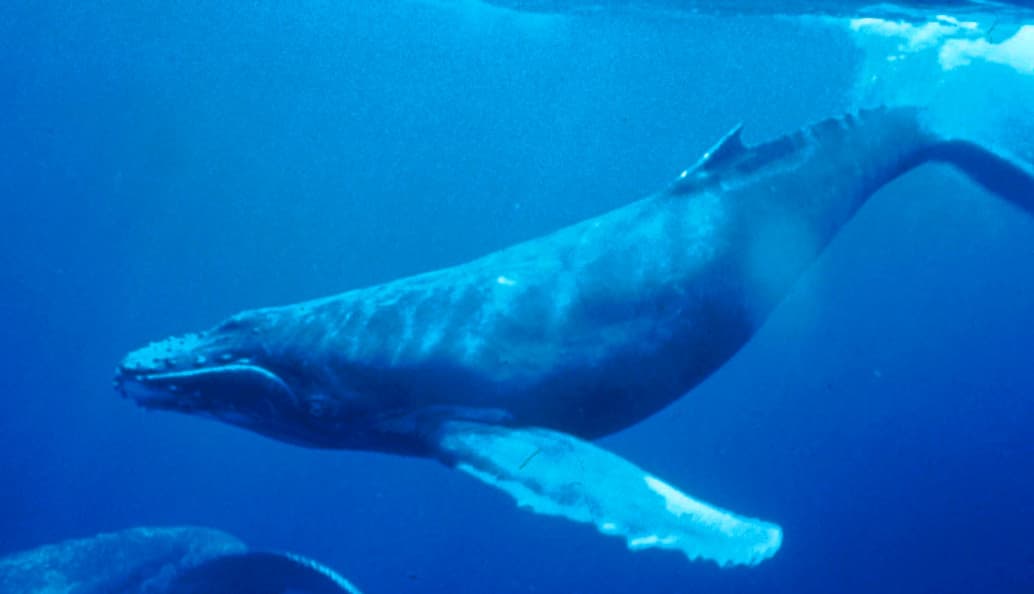
Male humpback whales sing some of the longest and most complex songs in the animal kingdom. A single song can last 20 minutes, and whales repeat it for hours. The song carries through hundreds of kilometres of ocean. Scientists believe males sing to attract mates and to communicate with other whales, but there is still a lot we do not fully understand about why they sing.
Humpbacks travel thousands of kilometres every year in one of nature's great migrations. They spend summer in cold polar waters where food is plentiful, then swim to warmer tropical waters like the Caribbean to have their calves. A newborn humpback calf is already about four metres long at birth - bigger than most family cars.
When feeding, humpbacks use a remarkable trick called bubble-net feeding: a group of whales dives in a circle and blows bubbles from below a school of fish, creating a 'net' of rising bubbles that traps the fish. Then the whales lunge upward through the middle with their mouths wide open. It is one of the most clever team-hunting strategies in the animal world.
Whale-watching boat trips run from Saint Vincent during the migration season. Passengers are taken out to deep water and, if they are lucky, they see and hear these magnificent animals close-up. Even just hearing the humpback blow - a great whoosh of mist as the whale exhales - is an experience people never forget.