
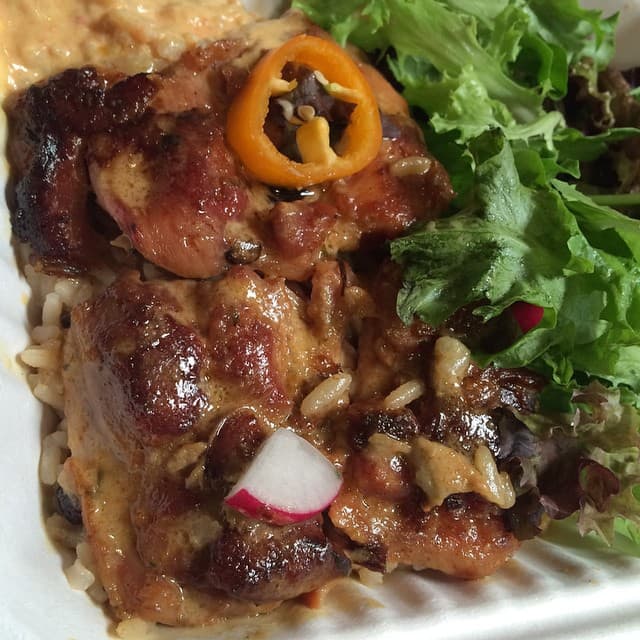
The magic of pelau starts with a technique called 'browning' the meat: pieces of chicken are tossed in hot caramelised sugar until they turn a beautiful deep brown colour. This gives the dish its distinctively sweet, rich base that makes Vincentian pelau different from plain rice and chicken. Green seasonings - a blend of herbs including chive, thyme and shadow beni - are stirred in next.
Pigeon peas give pelau its characteristic texture and a gentle earthy flavour. Coconut milk is poured in near the end, making the rice creamy and fragrant. Some cooks also add pumpkin, carrots or slices of sweet pepper, turning the pot into a rainbow of colour. The whole dish simmers slowly until the rice has absorbed every drop of liquid and each grain is perfectly cooked.
Pelau is party food. You will find huge pots of it at cricket matches, carnival celebrations, Independence Day gatherings and beach lime-outs (Caribbean slang for a relaxed hangout). A batch of pelau can easily feed twenty or thirty people, which is one reason it is such a community-favourite dish - sharing big pots of food is very much part of Vincentian culture.
The word 'pelau' is thought to come from 'pilaf', a rice dish eaten across the Middle East and Central Asia that was brought to the Caribbean through trade routes and the movement of people centuries ago. Today's Vincentian pelau is quite different from the original, but it is a reminder of how foods travel and transform as they move around the world.