
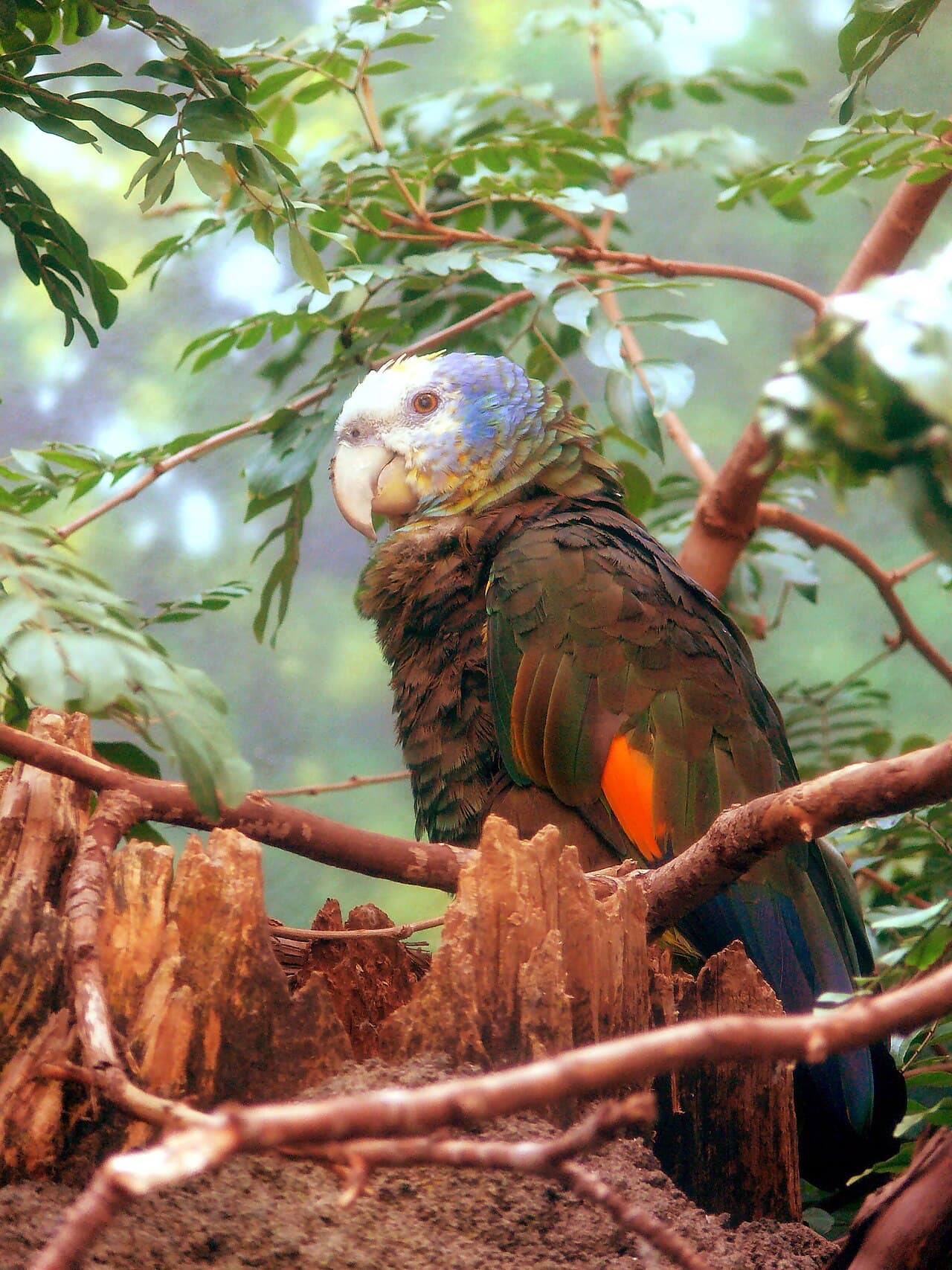
These parrots live in the dense rainforest on the slopes of Saint Vincent's mountains, especially in areas with tall trees that provide fruit and nesting holes. They eat fruits, seeds, berries and flower buds, and spend much of their day moving through the canopy searching for the ripest food. They are clever birds that remember where the best fruit trees are season after season.
Saint Vincent parrots mate for life, which means a pair stays together year after year. They nest inside deep holes in old tree trunks, where the female lays one or two eggs. Both parents take turns keeping the eggs warm and bringing food to the chicks once they hatch. Young parrots stay with their parents for many months, learning the skills they need to survive.
The species is considered endangered, which means there are not very many of them left. The main reason is loss of forest - when trees are cut down, the parrots lose their home and food. Conservation organisations and the Saint Vincent government work hard to protect the remaining forest and to educate local people about why these remarkable birds matter.
The Saint Vincent Botanic Gardens in Kingstown has an aviary where visitors can see these parrots up close and learn about conservation efforts. Seeing one in the wild, however, is an unforgettable experience - a flash of brilliant colour moving through the green canopy, calling loudly as if announcing itself to the forest.