
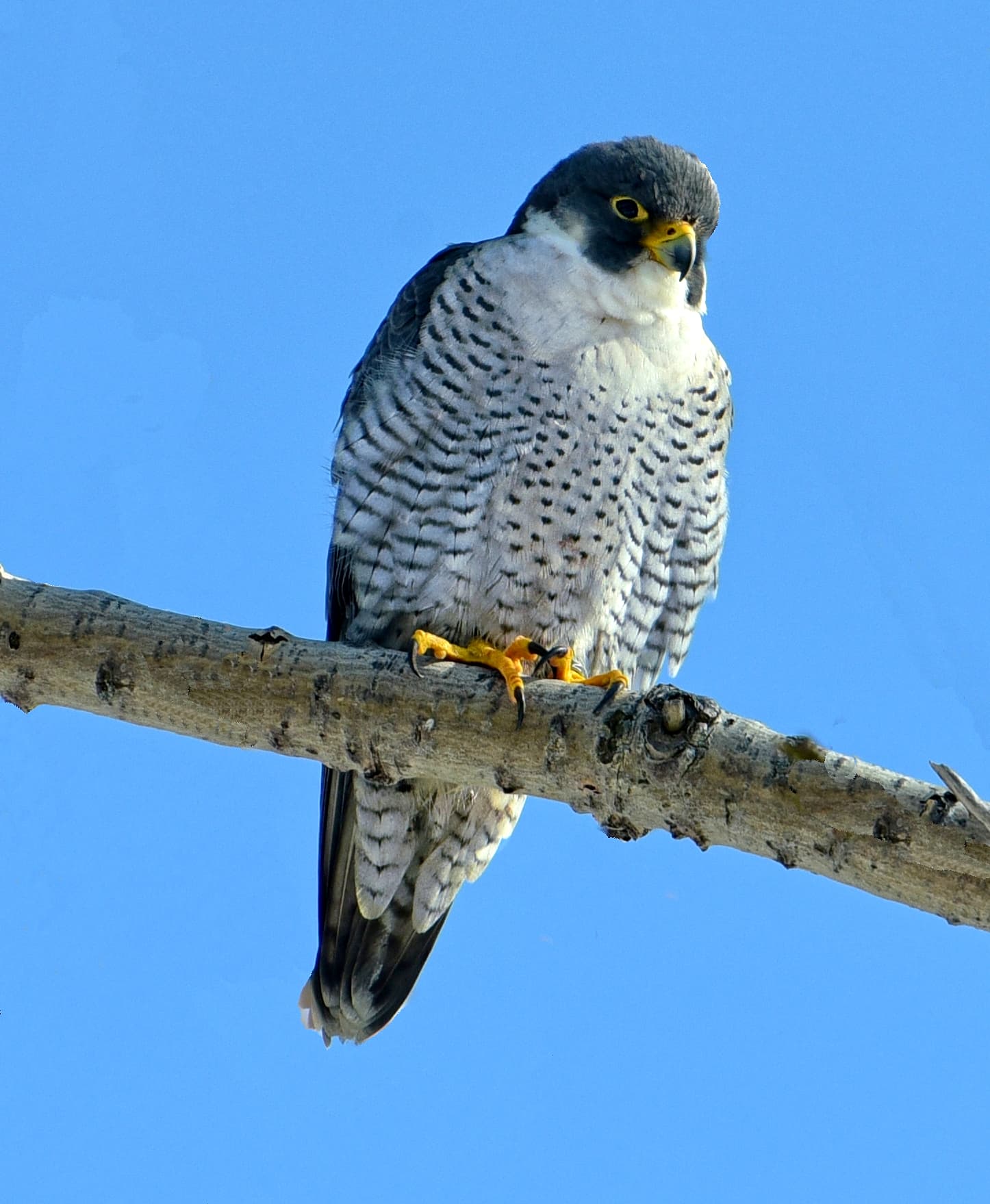
Peregrine falcons are not huge birds - they are roughly the size of a large crow - but they are built for incredible speed. Their wings are long and pointed like swept-back jet fighter wings, and their chests are powerful muscles packed in tight. Even their nostrils are specially shaped to help them breathe while diving at full speed.
A peregrine hunts mainly other birds. It climbs high into the sky, spots a pigeon or starling below, and then folds its wings and drops in a breath-taking stoop. The impact of the strike is what does the job. The whole process can take just a few seconds.
For a while in the 20th century, peregrine falcons became very rare across Europe because of pollution. Thanks to careful conservation work - people working hard to protect them - their numbers have recovered wonderfully. Today peregrines can even be found nesting on city skyscrapers, which look just like cliff faces to a falcon.