
Classroom lesson Β· Wildlife Β· πŸ‡ΈπŸ‡§ Solomon Islands

Dugong

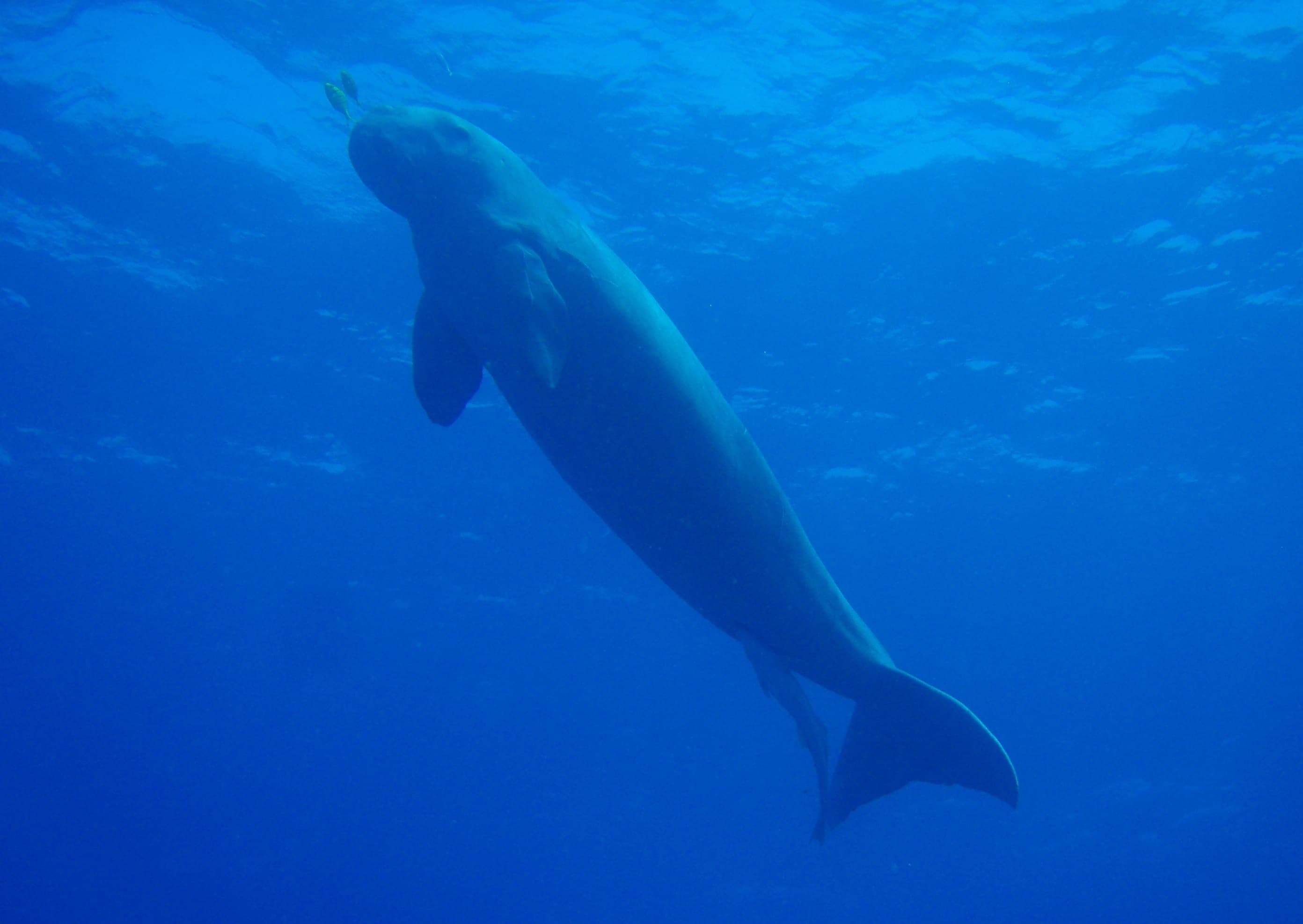
A gentle sea mammal that grazes on underwater grass

Photo Β· Wikimedia Commons

What is it?

The dugong is a large, gentle sea mammal that lives in warm coastal waters around the Solomon Islands and across the Indo-Pacific. It moves slowly through shallow seagrass meadows, grazing just like a cow in an underwater field. Dugongs are sometimes called 'sea cows' β€” and long ago, sailors who glimpsed them from a distance thought they might be mermaids!

Tell me more

Dugongs can grow to about three metres long and weigh as much as 400 kilograms. Despite their size, they are completely peaceful β€” their only food is seagrass. They use their broad, bristly snouts to uproot the grass from the seafloor, leaving little feeding trails behind them in the sand.

Unlike fish, dugongs must come up to the surface to breathe air. They surface every few minutes with a quiet, slow breath, then sink back down. A dugong's tail is shaped differently from a dolphin's β€” it has a forked, pointed shape, a bit like a whale's flukes.

In the Solomon Islands, dugongs are considered special animals by many coastal communities. Traditional customs protect certain areas where dugongs live, and local rangers work to keep the seagrass beds healthy. Seagrass meadows are important not just for dugongs but for juvenile fish, sea turtles, and the whole reef ecosystem.

In the classroom

Walk your class through this in 15 minutes.

Talk together

Discussion prompts

  1. 01Dugongs are mammals, not fish β€” so how are they similar to you, and how are they different?
  2. 02Seagrass meadows feed dugongs and shelter young fish. What happens to the other animals if the seagrass disappears?
  3. 03If you were designing a plan to protect dugongs in Marovo Lagoon, what three rules would you put in place?
Try this

Classroom activity

Draw a seagrass meadow cross-section from the side, showing: the sandy seafloor, seagrass growing upward, a dugong grazing, a sea turtle resting, and small fish swimming among the grass. Label each part and add an arrow showing where the dugong goes to breathe.