
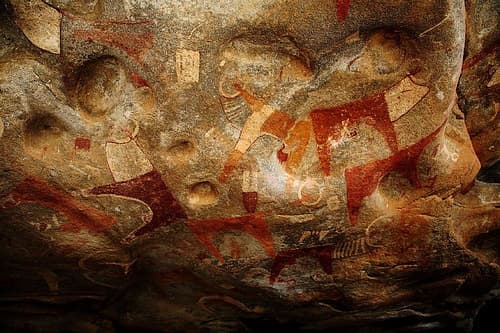
The name 'Laas Geel' means 'watering hole for camels' in Somali, because the rocky shelter collects rainwater that animals come to drink. The people who sheltered in these caves thousands of years ago decorated the walls with scenes from their daily life - their cattle, their ceremonies, and the world around them.
What is remarkable about the Laas Geel paintings is how bright they still are. Usually ancient paintings fade over thousands of years, but these caves have a natural rock overhang that protects the art from rain and sun. The colours look almost as if they were painted a few decades ago, not ten thousand years ago.
The artists used natural minerals to make their paints - red ochre from iron-rich earth, white from chalk, and dark brown from manganese. They had no brushes made in factories; instead they used sticks, animal hair, feathers and even their own fingers. This means that some of the marks on the walls were left by actual human hands from ten thousand years ago.