
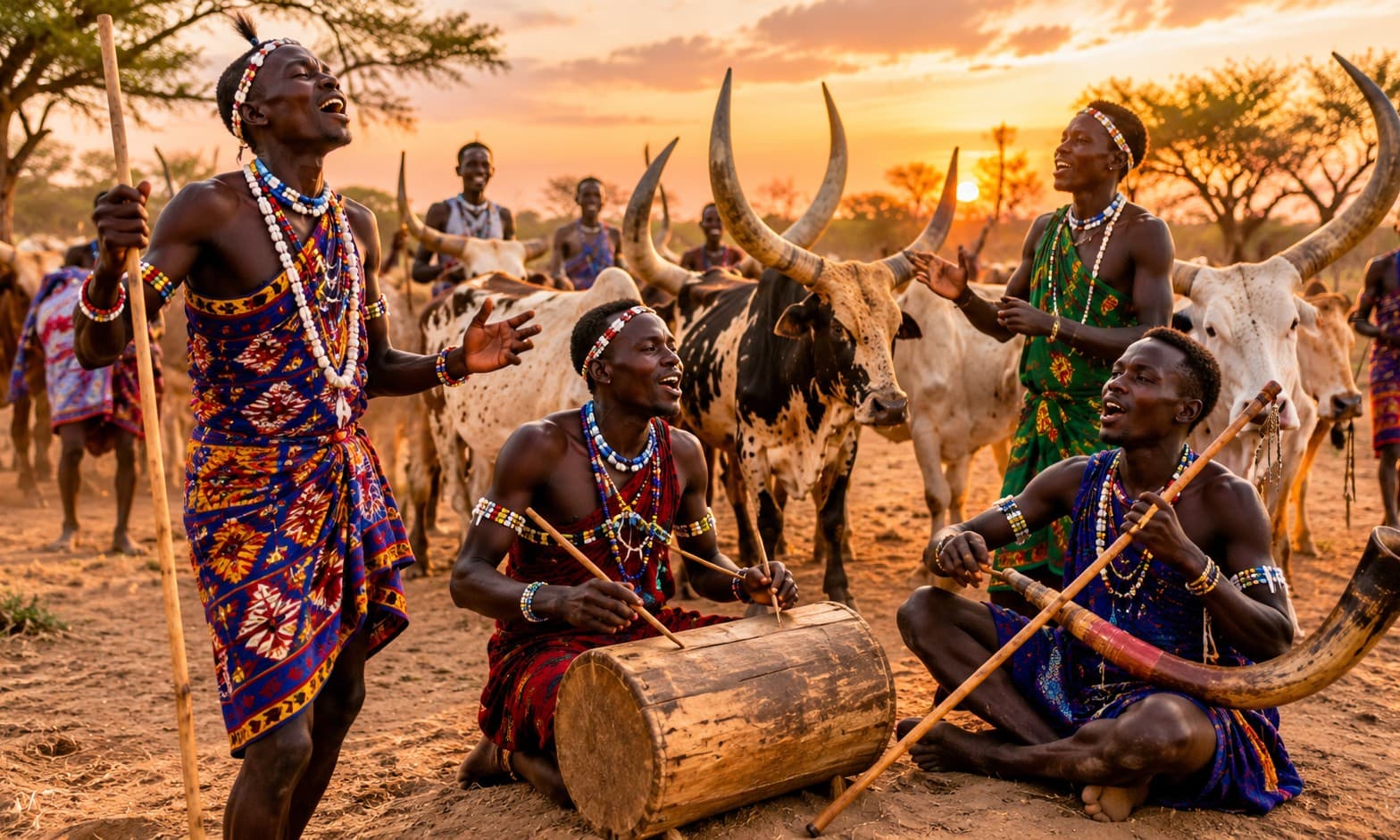
In Dinka culture, a young man often receives a special ox when he grows up. He gives this ox a name, composes songs about it, and spends hours watching and caring for it. The songs describe the ox in vivid, poetic language - comparing its horns to the arc of the moon, its colour to the light at dawn, and its stride to a river flowing wide.
Cattle songs are performed at celebrations - weddings, festivals, and community gatherings. The singer stands tall, lifts his arms to mimic the shape of his ox's horns, and sings in a deep, resonant voice. Others clap and respond. The performance can last many minutes and is taken very seriously as a form of creative expression.
For the Dinka, cattle are not just animals - they are symbols of wealth, family connections, and community bonds. Different coat colours and horn shapes are given special poetic names in the Dinka language. Knowing and using these names correctly is a mark of education and cultural knowledge.
Cattle songs have been studied by musicians and poets from around the world because they are so original and detailed. They show how humans everywhere find ways to express love, pride, and beauty - whether writing a poem about a mountain, a river, or a favourite ox.