
Classroom lesson ยท Wildlife ยท ๐Ÿ‡ธ๐Ÿ‡ธ South Sudan

Hippopotamus

The heavyweight river giant of the White Nile

Photo ยท Wikimedia Commons

What is it?

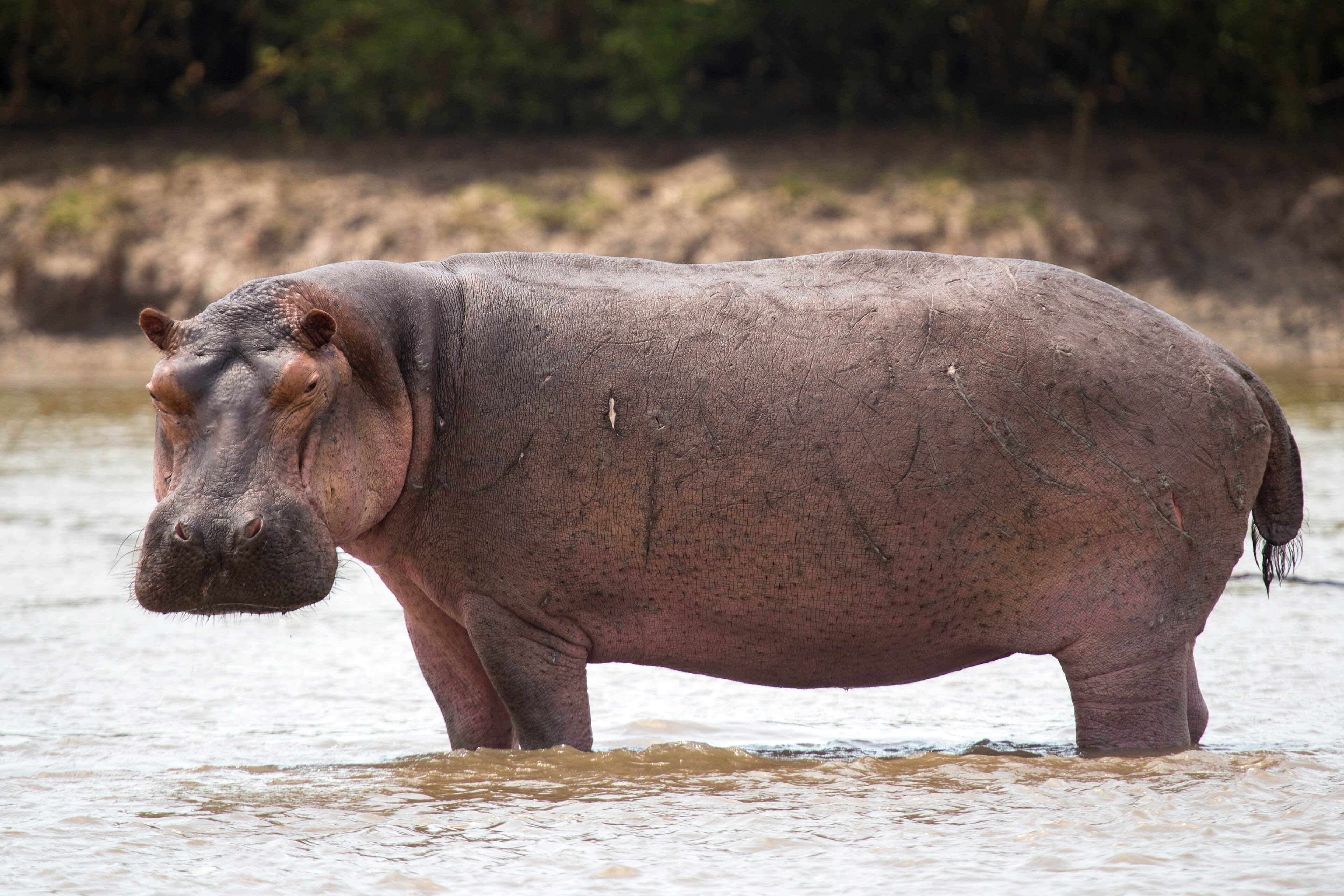
Hippopotamuses โ€” hippos for short โ€” are the third-largest land animals on Earth, and the White Nile and Sudd wetlands in South Sudan are home to some of Africa's largest hippo populations. Hippos spend up to 16 hours a day in the water, keeping cool in the hot African sun. At night, they come ashore to graze on grass, sometimes travelling several kilometres before dawn.

Tell me more

A hippo's skin looks tough, but it is actually quite sensitive to the sun. To protect themselves, hippos produce a reddish, oily liquid from their skin that acts as a natural sunscreen and keeps their skin moist. Scientists once thought it was sweat, but it is a unique substance found nowhere else in the animal kingdom.

Hippos are surprisingly good swimmers. Despite weighing up to 3.5 tonnes, they can walk along river and lake beds, bounce off the bottom to rise to the surface, and even 'run' underwater in slow motion. Baby hippos can swim before they can walk well, and they are sometimes born underwater.

In the Nile and the Sudd, hippos play an important role. Their dung (poo) falls into the river and feeds algae and fish โ€” turning them into underwater fertiliser factories. Nile tilapia, the fish that South Sudanese families love to eat, partly depend on this nutrient cycle.

Hippos live in groups called pods or bloats. The group spends the day clustered together in the water, ears twitching, occasionally yawning to show their enormous tusks. A hippo's yawn is not tiredness โ€” it is a way of saying 'I am here and I am very large.'

In the classroom

Walk your class through this in 15 minutes.

Talk together

Discussion prompts

  1. 01Hippos make their own sunscreen. What do you do to protect yourself from too much sun?
  2. 02Hippos' dung feeds fish. Can you think of other animals whose actions help other species without them realising?
  3. 03A group of hippos is called a 'bloat.' Why do you think it got that funny name?
Try this

Classroom activity

Write a 'day in the life' diary entry for a South Sudan hippo. Morning: waking up in the river. Afternoon: cooling off, yawning. Night: walking to find grass. Use three paragraphs, one for each part of the day. Include one scientific fact you learned in each paragraph.