
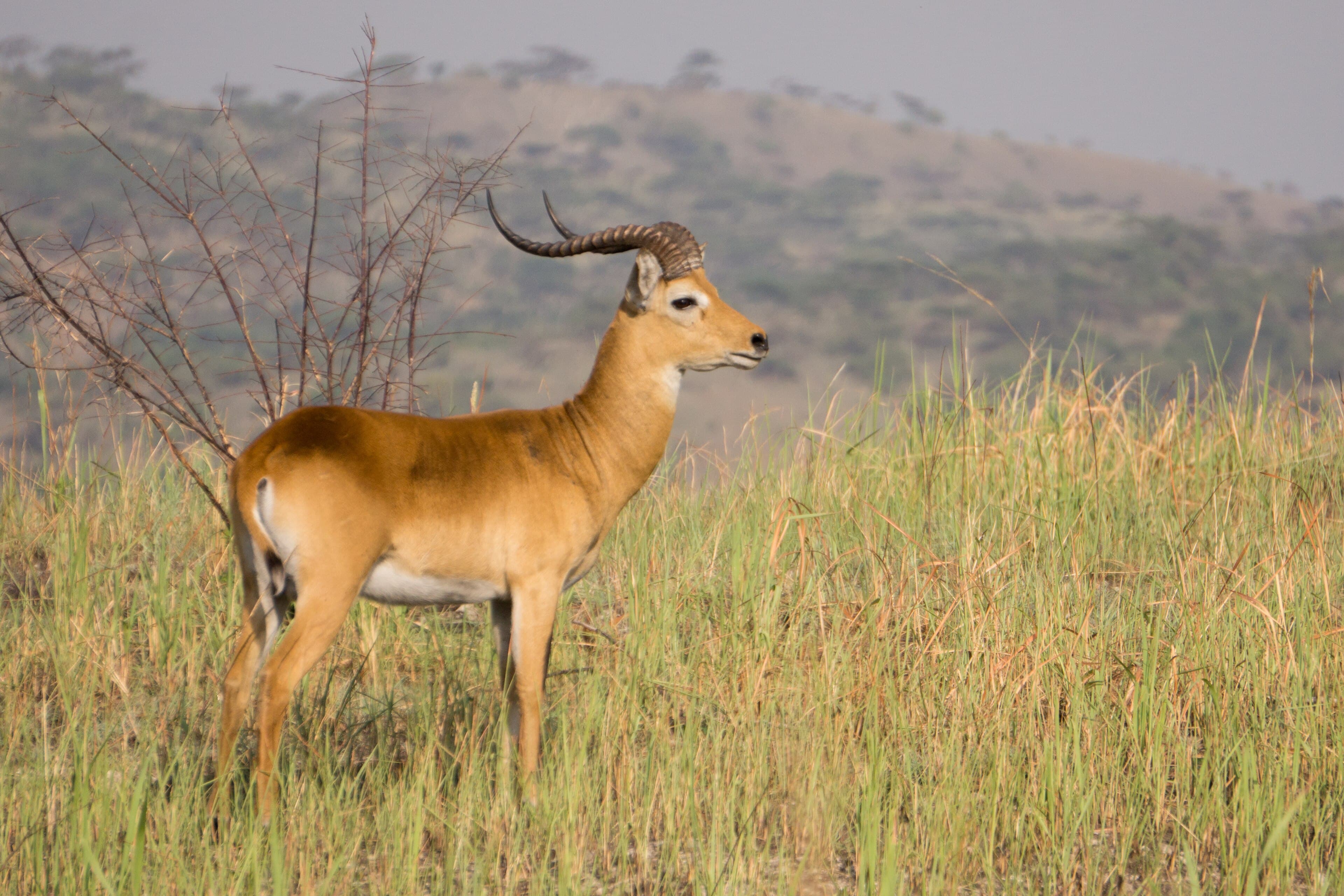
Kob are part of the same family as springbok and impala. Males have curved, lyre-shaped horns that grow up to 70 cm long. They use these horns when competing with other males for territory. The white patches on their ears are thought to help members of the herd see each other and stay together while running.
The migration follows the rains. When the dry season comes, the kob move south and west toward wetter pastures. When the rains return, they travel back north. Calves born during the journey can stand within minutes and run alongside their mothers within hours - an essential skill when predators are watching.
South Sudan is the best - and in some areas the only - place on Earth to see this migration. Scientists from around the world come to study the kob, and local communities have lived alongside these herds for thousands of years, learning their patterns and celebrating their return.
Lions, leopards, and African wild dogs all follow the kob herds, feeding on the weaker animals at the edges. This keeps the whole herd healthy and the grassland in balance. Every species in the savannah - from the grass itself to the vultures circling above - plays a part in the story of the kob migration.