
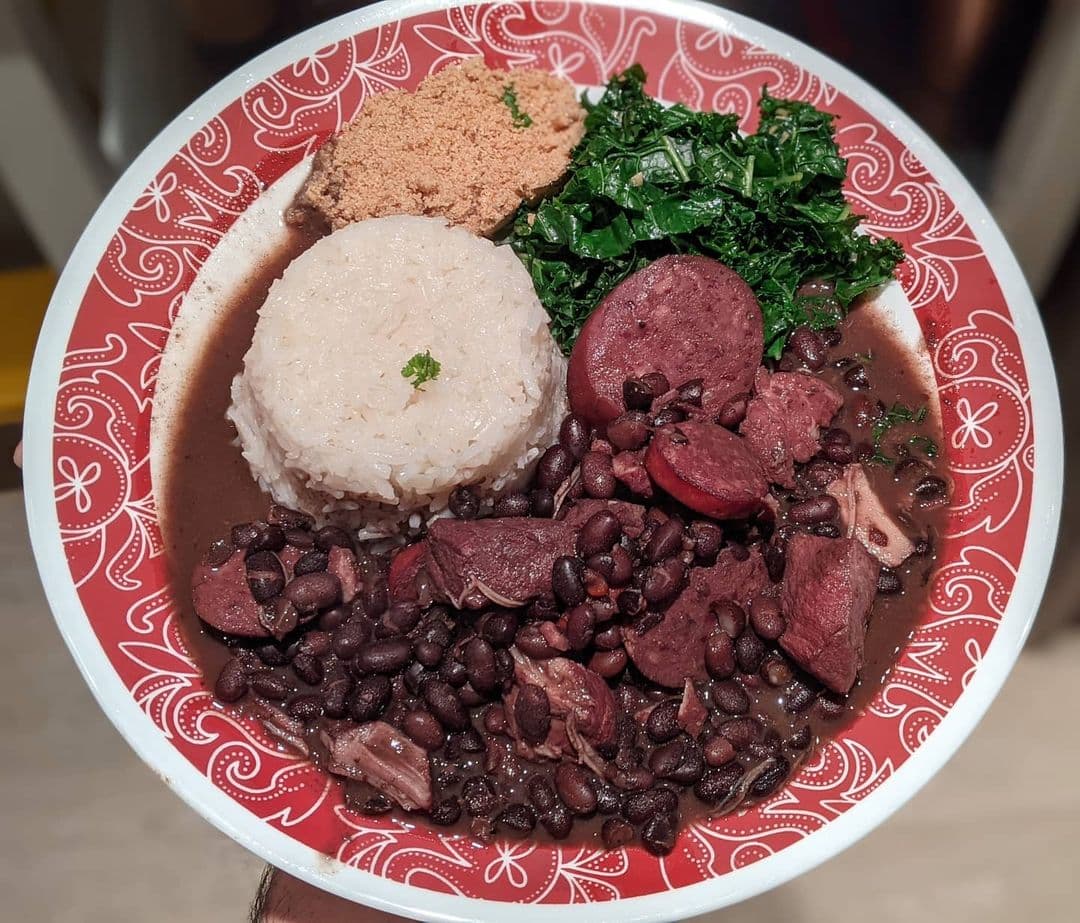
Beans are an important crop in Timor-Leste, grown on the hillsides by farming families who dry and store them for use throughout the year. When these beans are slowly cooked into feijoada, they absorb the flavours of all the herbs around them and become deeply savoury. A pot of feijoada on the stove fills the whole house with a spiced, earthy smell.
The Timorese version differs from its Portuguese or Brazilian cousins because of the local herbs added during cooking: lemongrass gives it a citrusy lift, fresh turmeric turns the broth a warm golden colour, and chopped bird's-eye chillies bring a sharp heat that Timorese people enjoy. These additions tell the story of local ingredients transforming a dish brought from far away.
Feijoada is often cooked in a large pot and left to simmer for several hours - the longer it cooks, the richer and more flavourful it becomes. Families eat it scooped over steamed rice or tukir, and leftover feijoada the next day is considered by many people to taste even better than it did the night before.
Like batar daan, feijoada is a dish of sharing. If you arrive at a Timorese family's home while feijoada is on the stove, you will be invited to sit and eat. The willingness to share a big pot of food with anyone who shows up is considered a mark of generosity and good character.