
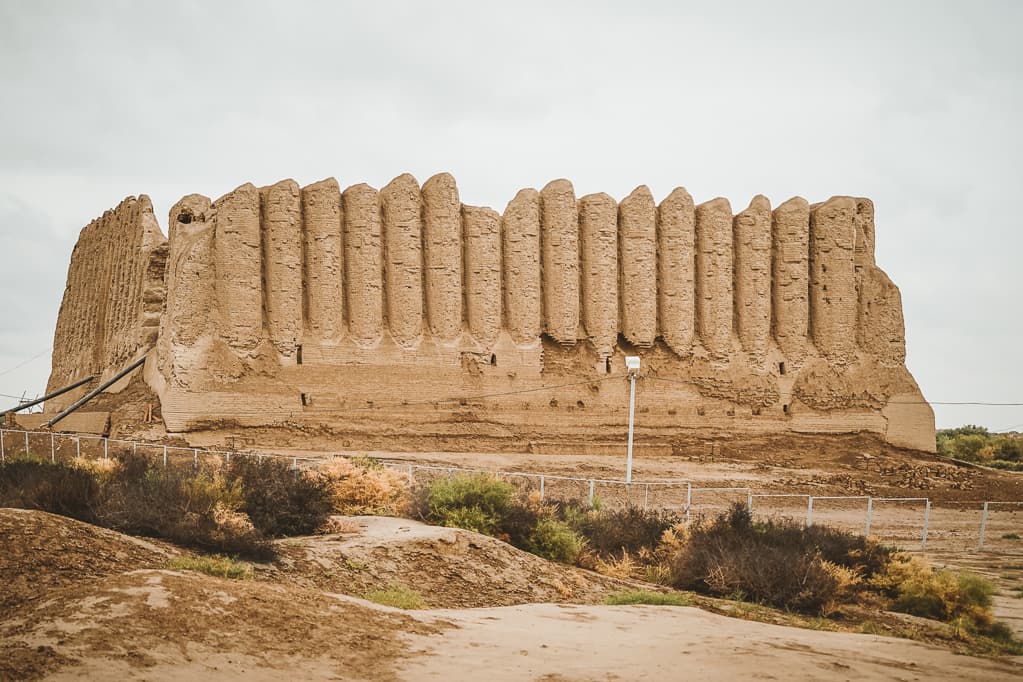
The Silk Road was not one single road but a web of routes used by merchants, explorers and travellers for over a thousand years. They carried silk, porcelain, spices, gold and ideas across thousands of kilometres. Merv was one of the best places to stop and rest on this enormous journey, because it had water, markets and craftspeople.
What you see at Merv today are the remains of five different cities, one built after another over many centuries. There are enormous walls of sun-dried mud brick, old domes made from baked clay, and the outlines of palaces and gardens that you can still trace on the ground. The biggest fortified area covers about 60 square kilometres.
Scholars and craftspeople from many countries met in Merv and shared knowledge. Astronomers mapped the stars, mathematicians solved problems and weavers perfected their carpets. Because so many cultures crossed paths here, Merv was a melting pot of ideas long before the internet existed.
Archaeologists still dig at Merv today and find beautiful things: painted pottery, bronze coins, glass bottles and carved stone. Each object tells a tiny story about the real people who once bought and sold and lived here when the city was alive and bustling.