
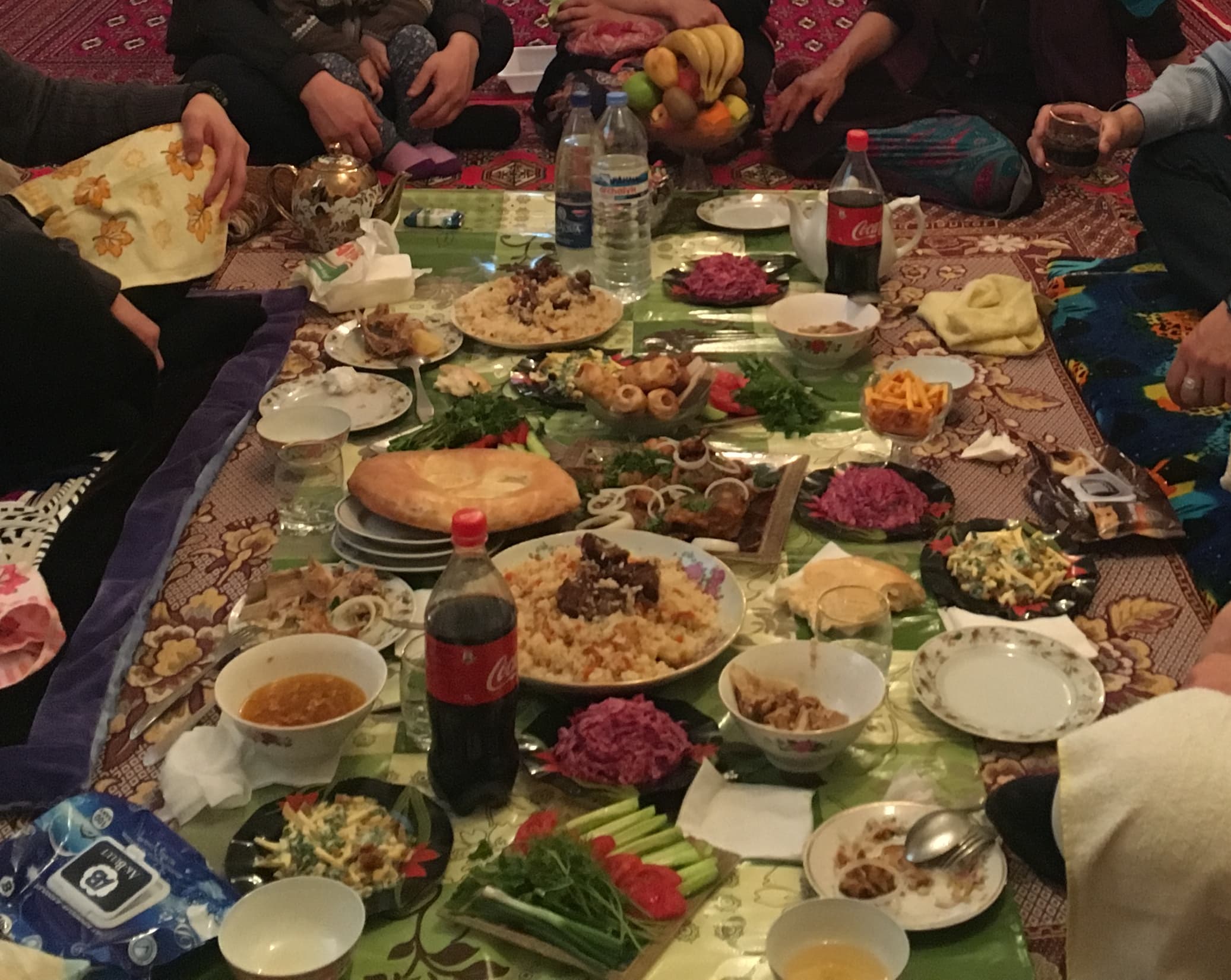
Making manty is often a family activity. The dough is rolled out flat, cut into squares, and then each person adds a spoonful of filling and folds the edges together in a particular pinching pattern. Different families have different folding styles, and children learn the technique from their parents and grandparents.
The dumplings are cooked in a mantovarka - a tall pot with stacking trays full of holes so the steam rises through all the layers at once. A large batch can steam many dumplings at the same time. The steam keeps the filling moist and the dough soft rather than chewy.
Manty are served with a dollop of yoghurt or sour cream on top, sometimes with a splash of melted butter and a pinch of dried chilli. The yoghurt cools the hot dumpling down a little and adds a gentle tang that balances the rich, savoury filling.
Similar dumplings exist in many countries under different names - jiaozi in China, momo in Nepal, pierogi in Poland. Food historians think they spread along the Silk Road, carried by traders who shared recipes just as they shared silk and spices. Manty is a tiny edible piece of history.